Warsh Signals a Prolonged Inflation Battle
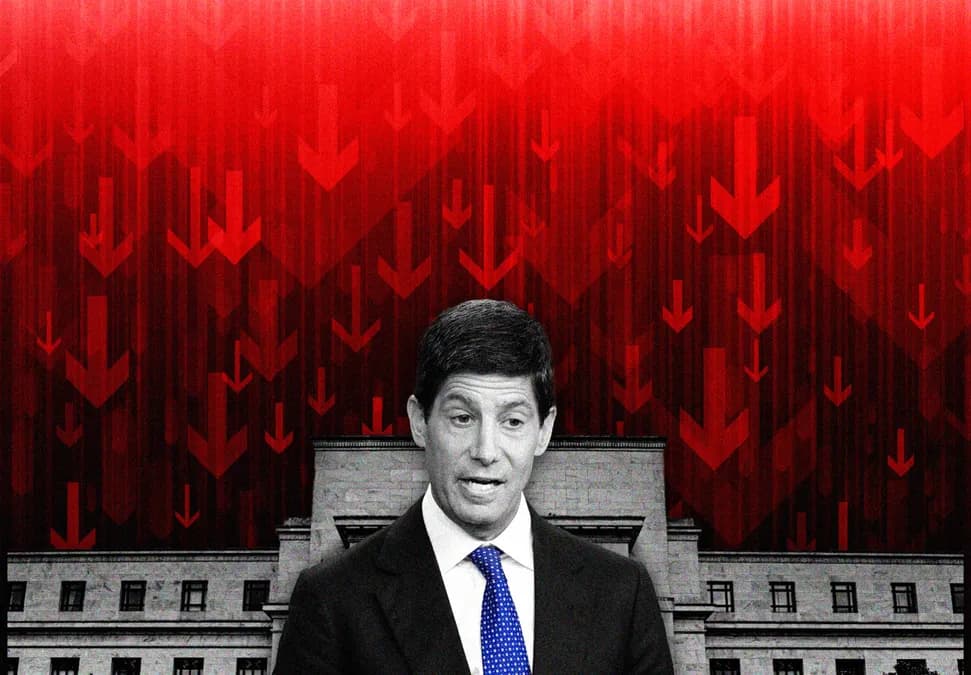
Federal Reserve Chair Kevin Warsh has delivered a message to financial markets with the clarity and bluntness that has become his trademark: the central bank's campaign against inflation is not winding down. It is, if anything, entering a more determined phase. The Kevin Warsh Fed rate hike decision has crystallized a view among investors and economists that the path back to the Fed's 2% inflation target remains long and difficult — and that the central bank under Warsh's stewardship has no intention of blinking first.
The signal carries weight precisely because Warsh has never been shy about prioritizing price stability over short-term market comfort. His communication style leans deliberate and direct, leaving little room for the kind of interpretive ambiguity that traders have historically exploited. When the Fed's rate action arrived, it did not come wrapped in the hedged language of a committee still debating its next move. It came as a statement of institutional resolve.
Markets, predictably, did not take the news quietly.
Understanding the Fed's Hawkish Shift Under Warsh

The Federal Open Market Committee's willingness to push rates higher reflects a recognition, now baked firmly into the Fed's public posture, that inflation does not yield to half-measures. Bureau of Labor Statistics CPI data has illustrated repeatedly that price pressures in the services sector, housing costs, and energy remain stickier than initial forecasts suggested. The Fed's dual mandate — maximum employment and stable prices — has effectively entered a phase where price stability commands the foreground.
Read next Altman: OpenAI IPO 'Ill-Advised' in 2026 | AI ValuationsWarsh's approach draws on a fairly orthodox reading of monetary policy history: the longer a central bank tolerates above-target inflation, the more painful the eventual correction becomes. This is not an abstract concern. The Fed's own FOMC meeting statements in recent cycles have acknowledged that the transmission lag between rate hikes and their full economic effect means policymakers must act ahead of where inflation stands today, not where it stood last quarter.
Bond market strategists have noted that the Fed's current trajectory implies a higher-for-longer stance on the federal funds rate — a scenario that demands a recalibration of assumptions that investors built during the era of near-zero rates. The term premium on U.S. Treasuries has begun to reflect that repricing. Former Fed officials familiar with similar tightening cycles have pointed out that Warsh's willingness to accept near-term market volatility in exchange for credibility on inflation is a defensible trade, historically speaking.
The architecture of this hawkish shift is not simply about one rate decision. It reflects a broader judgment that getting inflation expectations durably anchored at 2% requires more than a few months of data improvement. It requires conviction.
Market Reactions to the Fed's Rate Hike Signal

The Kevin Warsh Fed rate hike signal landed with force across equity and fixed income markets. Stocks sold off sharply in the immediate aftermath, with the Dow Jones Industrial Average shedding more than 600 points as investors recalibrated their assumptions about the pace and terminal level of rate increases. That kind of single-session drop is not noise — it reflects genuine portfolio repositioning.
Volatility spiked in both equity and bond markets simultaneously, a combination that removes the traditional safe-haven cushion that Treasuries have historically offered during equity drawdowns. When rates are rising aggressively, long-duration bonds absorb losses alongside stocks, compressing the diversification benefit that a standard 60/40 portfolio relies on. Investors who have not adjusted their duration exposure face a particularly difficult environment.
The reaction in short-term rate futures markets was equally telling. Traders pushed out their expectations for any potential rate pause, pricing in additional tightening over the coming quarters. Currency markets reflected the same dynamic, with the U.S. dollar strengthening as rate differentials widened against major trading partners whose central banks remain on less aggressive trajectories.
The message encoded in those market moves is that participants now take the Fed's stated hawkish posture at face value. Warsh has established, at least for now, that the central bank will not be talked out of its inflation mandate by falling stock prices alone.
What a Longer Inflation Fight Means for Stocks and Bonds
Sustained Fed tightening reshapes the investment landscape in ways that compound over months, not just days. Higher rates erode the present value of future earnings, which disproportionately penalizes growth-oriented stocks that trade on expectations of cash flows years into the future. Sectors like technology and consumer discretionary, which benefited enormously from the decade-long low-rate environment, face structural multiple compression as the discount rate climbs.
For fixed income, the calculus is equally uncomfortable. Bond holders face mark-to-market losses on existing positions as yields rise. New issuance gets cheaper for buyers, but that benefit only accrues to investors who either held significant cash reserves or have the patience and capital to average into higher-yielding instruments over time.
Credit spreads bear watching as a secondary indicator. Investment-grade and high-yield corporate bond spreads tend to widen when the Fed signals prolonged tightening, because the cost of refinancing for corporations rises and default risk perceptions shift. Companies that loaded up on cheap variable-rate debt during the low-rate era face materially higher interest burdens. That pressure flows through to earnings estimates and, by extension, to equity valuations.
Real assets and commodities introduce a different dynamic. Historically, hard assets have served as partial hedges against inflation, though their behavior under aggressive monetary tightening is more complex — dollar strength tends to weigh on commodity prices denominated in U.S. currency, introducing cross-currents that complicate simple inflation-hedge strategies.
Historical Context: When the Fed Means Business on Inflation
The most instructive precedent for understanding what a prolonged Fed inflation fight looks like is the tenure of Paul Volcker, who took the helm of the Federal Reserve in 1979. Volcker inherited an economy where inflation had been running above 10% for years, eroding purchasing power and destabilizing expectations. His response — driving the federal funds rate to nearly 20% by mid-1981 — was brutal in its immediate economic effects. The U.S. entered a severe recession. Unemployment climbed past 10%. Yet by the mid-1980s, inflation had been broken, and the credibility the Fed established during that period underpinned decades of relative price stability.
The 2022-2023 post-pandemic tightening cycle offered a more recent, if compressed, reminder of how rate hike campaigns unfold. The Fed began raising rates in March 2022, ultimately delivering 525 basis points of cumulative hikes — the most aggressive tightening cycle in four decades. Markets endured a prolonged drawdown across both equities and bonds throughout that period. The S&P 500 fell more than 25% from its January 2022 peak before stabilizing. That cycle demonstrated that while rate hikes eventually work to slow demand and tame prices, the journey extracts real economic and portfolio costs.
Warsh has observed both episodes closely. His academic and policy work has consistently emphasized that central bank credibility — once lost — is extraordinarily expensive to rebuild. In that sense, the current Kevin Warsh Fed rate hike posture is less about any single meeting outcome and more about establishing an institutional commitment that markets cannot second-guess.
What Investors Should Watch Next
Several indicators will signal whether Warsh's inflation fight is gaining traction or whether additional tightening lies ahead. Monthly CPI and PCE deflator releases from the Bureau of Labor Statistics and the Commerce Department will remain the most closely watched data points. Particular attention will go to core services inflation ex-housing — a measure the Fed itself has flagged as a persistent pressure point.
Labor market data carries almost equal weight. Wage growth running above 4% on an annualized basis historically makes it difficult to bring services inflation sustainably to target. FOMC meeting statements and the quarterly Summary of Economic Projections — the so-called dot plot — will offer the clearest window into how the committee's consensus view on the rate path evolves.
Bond strategists advise keeping close watch on the 2-year Treasury yield, which has historically led rate expectations more accurately than the 10-year. If the 2-year continues pushing higher, the market is telling you the Fed is not done. If it plateaus or begins to retreat, that signals a growing conviction that peak rates are near.
Equity investors should monitor earnings revision trends, particularly in rate-sensitive sectors. Falling forward estimates amid a hawkish Fed are a compounding headwind. Cash flows matter more now — not hypothetical future growth, but what companies earn and return today.
The overriding signal from Warsh is that discipline, not accommodation, defines this chapter of Fed policy. Investors who position accordingly are, at minimum, starting from an honest read of the moment.
Source: MarketWatch.com - Top Stories