Warsh Signals a Prolonged Inflation Battle
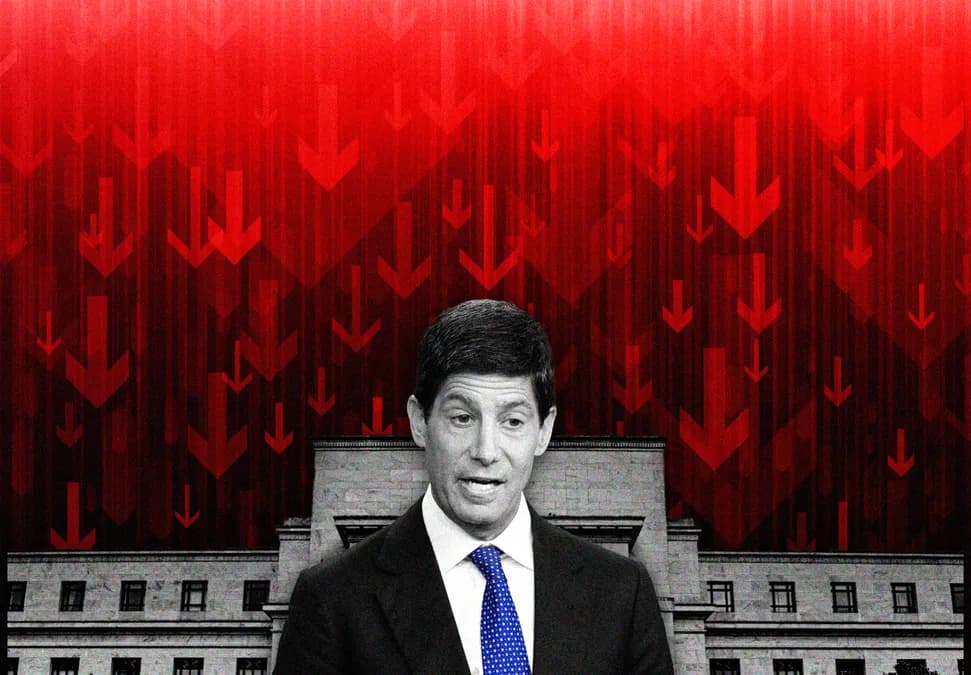
Federal Reserve Chair Kevin Warsh has delivered a message that investors can no longer dismiss as noise: the central bank's commitment to bringing inflation to heel is unconditional, and it will not blink simply because financial markets are in pain. In a posture that recalls the most hawkish chapters of Fed history, Warsh has drawn a clear line — rate hikes are not finished, and the battle against elevated prices has further to run than markets had hoped.
That declaration carries weight precisely because of who is delivering it. Warsh, long regarded as one of the most intellectually rigorous monetary policy hawks in the Fed's orbit, has never been inclined toward the kind of reassuring ambiguity that soothes Wall Street in the short term at the cost of policy credibility over the long run. His signal is deliberate. His audience is not only traders parsing every syllable for rate-path clues — it is the broader economy, where inflation expectations, once unanchored, become extraordinarily costly to reassert.
The Federal Open Market Committee meets on a fixed schedule, with eight regularly scheduled meetings per year. Each one is now a live event. Warsh's stance makes clear that the committee's disposition has not softened, and that investors pricing in an early pivot are operating on a fundamentally flawed assumption.
Why the Fed Is Holding the Line on Rate Hikes

The arithmetic of inflation is unforgiving. The Fed's statutory mandate requires price stability, which the FOMC has defined as a 2 percent annual rate of inflation measured by the Personal Consumption Expenditures price index. When PCE inflation runs meaningfully above that target — as it has through a prolonged stretch of elevated price pressure across goods, services, and shelter — the central bank has only one credible instrument available to it: the federal funds rate.
Read next Altman: OpenAI IPO 'Ill-Advised' in 2026 | AI ValuationsRate hikes work through several transmission channels simultaneously. Higher short-term borrowing costs slow consumer credit demand, cool business investment, and — critically — signal to wage-setters and price-setters that the Fed is not prepared to accommodate an inflationary spiral. The Bureau of Labor Statistics' Consumer Price Index readings have consistently demonstrated that services inflation, which is more closely tied to labor costs, has proven stickier than the transitory goods-price spikes that many economists initially flagged in the early stages of the post-pandemic cycle.
Warsh understands this dynamic intimately. The Fed rate hike inflation calculus is not merely about today's CPI print. It is about forward guidance credibility. If the central bank communicates resolve but then softens at the first sign of market volatility, it teaches investors — and more importantly, the real economy — that the pain threshold is shallow. Warsh appears determined not to make that mistake.
The CME FedWatch tool, which aggregates federal funds futures contracts to derive market-implied probabilities for each FOMC meeting outcome, has in recent weeks reflected a gradual repricing toward a higher-for-longer rate regime. That repricing is still incomplete. The full implications of Warsh's hawkish posture have not yet been absorbed by markets pricing future rate decisions.
Market Reaction: Stocks and Bonds Under Pressure

Equity markets have registered their displeasure sharply. The Dow Jones Industrial Average shed hundreds of points in the session following Warsh's signal, a reaction that underscores just how much of the prior bull-market framing had been built on the assumption of an accommodative Fed pivot. When that assumption cracks, the repricing is immediate and broad.
Bond markets are equally unsettled. The relationship between policy rate expectations and Treasury yields means that a more prolonged hiking cycle drives up yields across the curve — compressing prices on existing bonds and raising the cost of capital for governments, corporations, and households alike. The two-year Treasury yield, the maturity most sensitive to near-term Fed rate expectations, climbed as investors recalibrated their models.
Sharp swings across both stocks and bonds are not an aberration under these conditions — they are the expected price of a genuine tightening cycle. Volatility is, in a real sense, the mechanism through which monetary policy tightens financial conditions. When asset prices fall and risk premiums widen, households feel less wealthy, corporate borrowing becomes more expensive, and economic activity slows. That is the transmission channel working as designed.
Wall Street strategists have been quick to revise their year-end forecasts. The consensus that had leaned toward rate cuts materializing before year-end has been substantially undermined. A number of bond market analysts now argue that the terminal rate — the peak federal funds rate in this cycle — may need to move higher than the FOMC's own previous projections had suggested.
What a Longer Rate Hike Cycle Means for Investors
For equity investors, a prolonged Fed rate hike inflation fight reshapes the valuation framework in fundamental ways. Higher discount rates compress the present value of future earnings, which hits long-duration growth stocks disproportionately hard. The sectors that thrived in a near-zero interest rate environment — high-multiple technology, speculative early-stage names, profitless growth stories — face the most sustained pressure.
Value-oriented sectors with pricing power, by contrast, tend to show more resilience. Energy, financials, and certain industrial segments have historically navigated tightening cycles with greater stability, though no sector is fully immune when broad financial conditions tighten.
Fixed income is not the safe harbor it was in prior decades. When rates are rising, bond holders face mark-to-market losses on existing positions. Cash and short-duration instruments become relatively more attractive as the yield curve adjusts. Investors who had extended duration in search of yield during the low-rate era are now bearing the consequences of that positioning.
The practical implication for portfolios is a period of elevated uncertainty and potentially elevated volatility across asset classes. Position sizing, risk management, and a clear-eyed assessment of duration exposure are more consequential now than they were twelve months ago.
Historical Parallels: When the Fed Stayed the Course
The Volcker era remains the defining case study in Fed resolve. Between 1979 and 1982, then-Chair Paul Volcker raised the federal funds rate to levels that would be almost unthinkable by contemporary standards — peaking above 20 percent — in a deliberate effort to wring double-digit inflation out of the American economy. The cost was severe: two recessions in quick succession, unemployment climbing above 10 percent, and enormous political pressure on the Fed to relent.
Volcker did not relent. The result, over the medium term, was a structural break in inflationary expectations that set the stage for the long expansionary period of the 1980s and 1990s. The lesson that central bankers drew from that episode was that credibility, once surrendered, is extraordinarily costly to reclaim.
Warsh appears to have internalized that lesson. A Fed that signals toughness and then retreats when markets sell off teaches the wrong lesson — to investors, to businesses, and to the wage-bargaining process. The short-term pain of holding the line is preferable to the long-term cost of a second inflationary spiral that forces an even more disruptive tightening cycle.
The 1994 tightening cycle offers a second, less severe parallel. Alan Greenspan's FOMC doubled the federal funds rate in twelve months, triggering the so-called "bond market massacre" and sharp equity losses. Yet the economy absorbed the tightening, inflation remained contained, and the mid-1990s expansion continued. Staying the course produced a better outcome than the alternatives.
What to Watch Next from the Federal Reserve
The next FOMC meeting is the immediate focal point for markets. Investors will parse the post-meeting statement and the Chair's press conference for any shift in the language around the "data-dependent" framing that the Fed has used to preserve flexibility. Watch specifically for changes in the characterization of inflation risks — whether the committee describes them as "balanced" or continues to flag upside concern.
Beyond the meeting itself, the monthly CPI and PCE releases from the Bureau of Labor Statistics are the data points with the greatest power to shift the rate-path calculus. A meaningful, sustained deceleration in core inflation — which strips out food and energy to capture underlying price trends — is the condition that would give Warsh room to pause. Until that evidence accumulates convincingly, the hiking bias stands.
The labor market also demands close attention. The Fed's dual mandate means that a sharp deterioration in employment conditions could create genuine tension between price-stability and maximum-employment objectives. Nonfarm payrolls and the unemployment rate will be watched alongside inflation data at every FOMC cycle.
What Warsh has made clear, above all else, is that the Fed's rate hike inflation strategy will not be abandoned on the basis of market discomfort alone. That is, ultimately, the most important signal of all.
Source: MarketWatch.com - Top Stories