Warsh Signals a Prolonged Inflation Battle
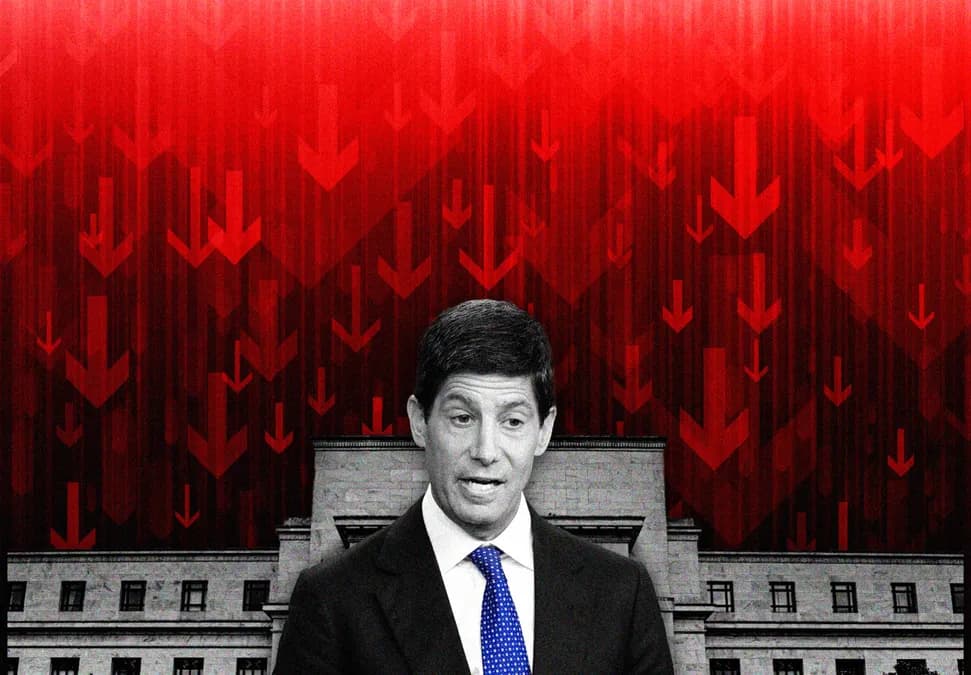
Federal Reserve Chair Kevin Warsh has delivered a message that investors would be unwise to dismiss: the central bank's commitment to crushing inflation is not a short-term posture. It is a sustained campaign, and Warsh intends to see it through. His latest signals around the Fed's rate hike path have made clear that policymakers are prepared to hold an uncomfortable line for as long as inflation demands it.
This is not the language of a central banker hedging toward an early pivot. It is the vocabulary of discipline — the kind of communication that sets expectations not just for this quarter, but for the months and possibly years ahead. Markets, which had been nursing hopes of a near-term retreat from restrictive policy, received a pointed reminder of who controls the timeline.
The Fed rate hike inflation dynamic is rarely simple, and Warsh appears to understand that simplicity here would be dangerous. Investors who read his stance as anything less than resolute do so at their own risk.
Why the Fed Is Taking a Hard Line on Inflation

Price stability is the bedrock of the Fed's dual mandate, and once inflation embeds itself in expectations, uprooting it requires far more than a few rate adjustments. That lesson was hard-learned during the 1970s, when the Fed repeatedly loosened policy before inflation was genuinely subdued, only to watch it resurge. The Volcker-era response — Paul Volcker raising the federal funds rate to nearly 20 percent between 1980 and 1981 — remains the defining example of what it looks like when a central bank finally commits without equivocation.
Read next Altman: OpenAI IPO 'Ill-Advised' in 2026 | AI ValuationsWarsh's approach carries echoes of that resolve. The U.S. Bureau of Labor Statistics has published CPI and PCE readings in recent months that, while off their cycle peaks, remain meaningfully above the Fed's 2 percent target. Core PCE, the Fed's preferred inflation gauge, has proved particularly resistant to declining smoothly. Services inflation — driven by shelter costs, healthcare, and labor-intensive sectors — has not retreated at the pace that goods deflation once masked. Warsh's hard line reflects a sober reading of that data.
Former Fed Vice Chair Roger Ferguson, among other institutional economists, has long argued that the Fed's credibility is its most valuable policy asset. Credibility, once lost, requires punishing interest rate regimes to restore. Warsh, whether by instinct or design, appears deeply aware of that calculus. Backing down before inflation is convincingly beaten would risk repricing inflation expectations upward — a far worse outcome than prolonged restriction.
The transmission mechanism matters here. Rate hikes do not reduce inflation instantaneously. Higher short-term rates raise borrowing costs, which slow credit growth, dampen business investment, reduce consumer spending on credit-sensitive goods, and — over time — ease labor market pressure. Each of those channels operates on a lag. The Fed's own research has historically estimated that the peak impact of a rate increase on economic activity arrives roughly twelve to eighteen months after the hike. That lag is precisely why Warsh cannot afford to declare victory prematurely.
Market Reaction to Warsh's Rate Hike Stance
Markets rarely respond calmly when a Fed chair closes the door on an anticipated pivot. Warsh's rate hike posture has unsettled equities and fixed income alike, with the Dow Jones Industrial Average dropping sharply as investors recalibrated the duration of restrictive policy. Stocks with elevated valuation multiples are particularly exposed, since higher discount rates mechanically compress the present value of future earnings.
Bond markets have repriced as well. When the Fed signals that the terminal rate is higher — or that cuts will come later than expected — yields on the longer end of the Treasury curve tend to move, sometimes dramatically. The result is a portfolio environment where neither the typical equity allocation nor the traditional bond hedge performs as expected. Volatility spikes in both asset classes simultaneously.
This dynamic is not new. During the 2022-2023 tightening cycle, the fastest pace of Fed rate hikes in four decades produced double-digit losses in U.S. Treasuries — a historically rare event that blindsided portfolios built on the assumption that bonds would cushion equity drawdowns. Warsh's current signaling threatens a similar repricing if investors have once again misjudged how long rates will stay elevated.
What a Longer Inflation Fight Means for Consumers and Borrowers
For households, the sustained Fed rate hike inflation campaign translates into one immediate reality: borrowing is expensive and likely to remain so. The average 30-year fixed mortgage rate, which tracks closely with 10-year Treasury yields, stays elevated when the Fed keeps short-term rates high and signals no imminent reversal. First-time homebuyers face affordability constraints that compress the market. Existing homeowners who locked in low rates effectively cannot move without absorbing a significant payment increase.
Auto loans, credit card rates, and home equity lines of credit follow a similar trajectory. The Federal Reserve's consumer credit data has shown outstanding revolving balances at elevated levels even as rates rise — meaning American households are carrying more high-cost debt, not less. For lower- and middle-income households, this is a direct compression of discretionary income. Every percentage point in the fed funds rate is felt concretely at the kitchen table.
Small businesses face the same arithmetic. Commercial lending rates rise in step with the policy rate. Capital expenditures that were viable at 3 percent financing become marginal or uneconomic at 7 or 8 percent. Hiring plans slow. Investment in equipment and expansion is deferred. These are the intended secondary effects of monetary tightening — reduce aggregate demand, ease price pressure — but they carry real costs for the productive economy.
Investor Strategies in a Sustained High-Rate Environment
A Fed committed to running a prolonged inflation fight demands that investors reconsider allocations built for a low-rate world. Duration risk — the sensitivity of bond prices to interest rate changes — becomes an active concern rather than a theoretical one. Long-dated Treasuries and investment-grade corporates with extended maturities carry substantial price risk if rates rise further or stay elevated longer than current pricing implies.
Short-duration fixed income offers a different proposition. Three- to six-month Treasury bills and short-maturity corporate bonds provide yields that were essentially unavailable a few years ago, with far less interest rate sensitivity. Money market funds have seen substantial inflows for precisely this reason.
Within equities, value-oriented sectors with pricing power — energy, industrials, and certain consumer staples — have historically outperformed in inflationary environments. Technology and growth stocks, which derive much of their market value from earnings projected years into the future, face a structural headwind when discount rates rise. Dividend-paying stocks with reasonable payout ratios offer some protection, but investors should distinguish between genuine earnings power and yield-chasing in a rate-stressed environment.
Real assets — including commodities, real estate investment trusts with inflation-linked leases, and Treasury Inflation-Protected Securities — remain relevant hedges, though TIPS in particular require careful attention to breakeven inflation rates to assess whether the protection is already priced in.
Outlook: How Long Could the Fed's Inflation Campaign Last?
The Volcker precedent is instructive without being perfectly applicable. Volcker's campaign lasted roughly three years at its most aggressive phase, from 1979 to 1982, before inflation was broken and rate cuts became sustainable. The structural drivers of inflation today differ from the supply-shock and wage-price spiral dynamics of the late 1970s, which means the timeline could be shorter — or longer, depending on how entrenched services inflation proves.
Warsh's signal is that the Fed will not guess. It will watch the data, hold its position, and not flinch at market turbulence. Fed watchers at institutions including the Brookings Institution and the Peterson Institute for International Economics have consistently argued that premature easing is the most dangerous mistake a tightening cycle can make. Warsh appears to have internalized that warning.
For investors and borrowers, that means planning around a scenario in which elevated rates are not a temporary inconvenience but an extended condition. The inflation fight has longer to run. Warsh has drawn his line, and the evidence suggests he intends to hold it.
Source: MarketWatch.com - Top Stories