Warsh Signals a Prolonged Inflation Battle
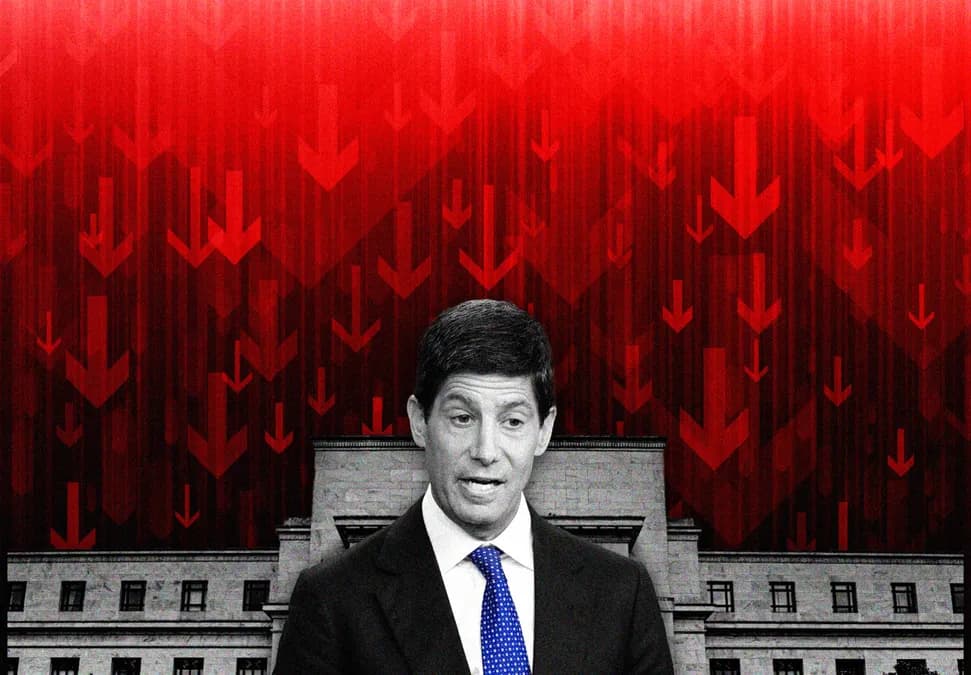
Federal Reserve Chair Kevin Warsh sent a signal this week that few investors wanted to hear: the battle against inflation is far from over, and the Fed intends to keep fighting it. His message, delivered with the authority of a central banker steeped in monetary history, makes one thing clear — expectations of a quick policy reversal are misplaced.
Warsh has made his intentions unmistakable. He means business on inflation. Full stop.
The announcement crystallized what policy watchers had suspected: this Fed is not interested in half-measures. The Fed rate hike inflation cycle, which markets periodically hoped was winding down, appears to have a longer runway than consensus had assumed. For borrowers, investors, and every household managing a budget against stubborn price increases, the implications are immediate and serious.
Understanding the Fed's Hawkish Shift

The Federal Reserve's hawkish posture under Warsh represents a deliberate break from the more accommodative framing that briefly colored Fed communications when inflation showed early signs of moderating. That window, it now appears, was interpreted too generously by financial markets.
Read next Altman: OpenAI IPO 'Ill-Advised' in 2026 | AI ValuationsConsider the core challenge: inflation that embeds itself in wages, services, and expectations does not respond to small-bore rate increases. It requires sustained pressure. The Bureau of Labor Statistics' Consumer Price Index and the Personal Consumption Expenditures index — the Fed's preferred inflation gauge — both reflect an economy where price levels, even when decelerating, remain well above the Fed's 2% target.
Every Fed rate hike inflation decision carries a dual burden: it must restrain demand today while also signaling to markets, businesses, and wage negotiators that the central bank will not flinch when data becomes uncomfortable. That credibility is the real policy instrument.
Former Fed Governor Randall Kroszner, an economist who has written extensively on monetary policy credibility, has argued that central banks which abandon tightening cycles prematurely often find themselves forced into far more painful adjustments later. The lesson is one Warsh appears to have absorbed fully.
Market Reactions to the Fed's Firm Stance

Markets dislike uncertainty, but they dislike being wrong even more. When a Fed chair signals that the Fed rate hike inflation path is steeper and longer than consensus expected, repricing across asset classes is swift and often disorderly.
Equities face a recalibration of valuation multiples. Higher rates compress the present value of future cash flows — meaning growth stocks, which trade on earnings projected years out, bear the sharpest adjustment. Bond markets see yields rise and prices fall as investors mark down the likelihood of near-term cuts. The repricing is mechanical, not emotional.
The transmission does not stop at financial markets. Credit spreads widen as the cost of capital rises. Corporate treasurers defer refinancing decisions, hoping for better conditions that may not materialize. Small businesses, which rely heavily on floating-rate credit lines, feel the squeeze faster than their large-cap counterparts.
Warsh's message, then, is not merely a policy announcement. It is a reset of the mental model investors had constructed around the Fed's tolerance for persistent inflation — and resets of that magnitude invariably produce turbulence.
What a Longer Inflation Fight Means for Consumers and Borrowers
Thirty-year fixed mortgage rates move in tandem with expectations about the Fed's policy path. So do auto loan rates, credit card APRs, and the cost of student debt refinancing. When the Fed signals that the Fed rate hike inflation response will be prolonged, every household carrying variable-rate debt faces higher monthly obligations.
The housing market illustrates the pressure vividly. After years of historically low rates that drove home prices sharply higher, a sustained tightening cycle squeezes affordability from both ends: higher mortgage rates inflate monthly payments while elevated home prices — sticky downward — refuse to fall far enough to offset the rate increase. Transaction volumes dry up. Prospective buyers sit on the sidelines indefinitely.
Small business credit tightens meaningfully too. Lines of credit that renewed at accommodative rates become materially more expensive, compressing margins for enterprises already managing input cost inflation. The Fed rate hike inflation dynamic is a double burden for many business owners operating on thin margins.
Consumers carrying revolving credit card balances face some of the most direct exposure. Average APRs on credit cards track the fed funds rate closely. In a prolonged tightening environment, the real cost of carrying that debt compounds in ways that erode household balance sheets faster than most borrowers anticipate.
Historical Context: How Long Do Inflation Cycles Last?
History offers a sobering benchmark. The inflation fight that defines modern central banking began in October 1979 when Federal Reserve Chair Paul Volcker orchestrated a sharp pivot to monetarist targeting, engineering a severe recession to break price expectations that had become deeply entrenched. The fed funds rate reached 20% by mid-1981. Unemployment climbed above 10%. The recession that followed was the deepest since the Great Depression.
But it worked — precisely because Volcker did not relent at the first sign of economic pain. The Volcker shock demonstrated that the credibility dividend from completing an inflation fight vastly outweighs the short-term cost of stopping prematurely.
More recent cycles confirm the pattern. The Fed's tightening campaign from 2004 to 2006 required 17 consecutive rate increases over two years to achieve its objectives. Even measured cycles demand sustained commitment. When inflation stems from supply-side shocks interacting with elevated demand, resolution consistently takes longer than initial models project.
Warsh brings this institutional memory explicitly to bear. His signal that the fight has further to run is not alarmism — it is the application of hard-won historical literacy to the present moment.
What Investors Should Watch Next
The next critical data points are clearly defined. Monthly CPI releases from the Bureau of Labor Statistics and PCE data from the Bureau of Economic Analysis will determine whether the disinflation trend is durable or fragile. Labor market reports matter equally — wage growth outpacing productivity is inflationary in itself, and a tight labor market supplies the fuel for a second-wave price dynamic.
Fed meeting minutes will be parsed with forensic attention for any shift in tone. The difference between "additional firming may be appropriate" and "holding policy steady" can move yield curves by meaningful increments within minutes of publication. That is not hyperbole; it is the current reality of a rate-sensitive market.
Real yields deserve particular focus. When the gap between nominal rates and realized inflation stays positive and elevated, monetary policy is genuinely restrictive. If real yields compress — because inflation surprises to the upside or nominal rates ease — it signals the policy stance may be insufficient.
Warsh's message has been heard. Whether markets have fully priced the implications is another question. The Fed rate hike inflation response is not finished, and history suggests that the most consequential errors in monetary policy come not from tightening too long, but from stopping too soon.
Source: MarketWatch.com - Top Stories