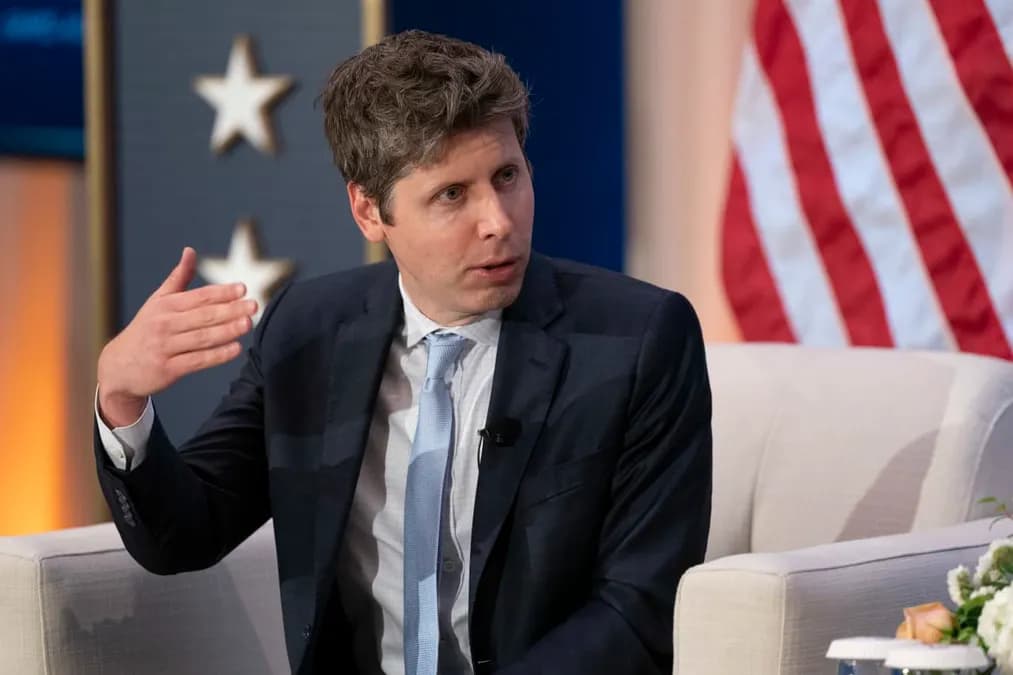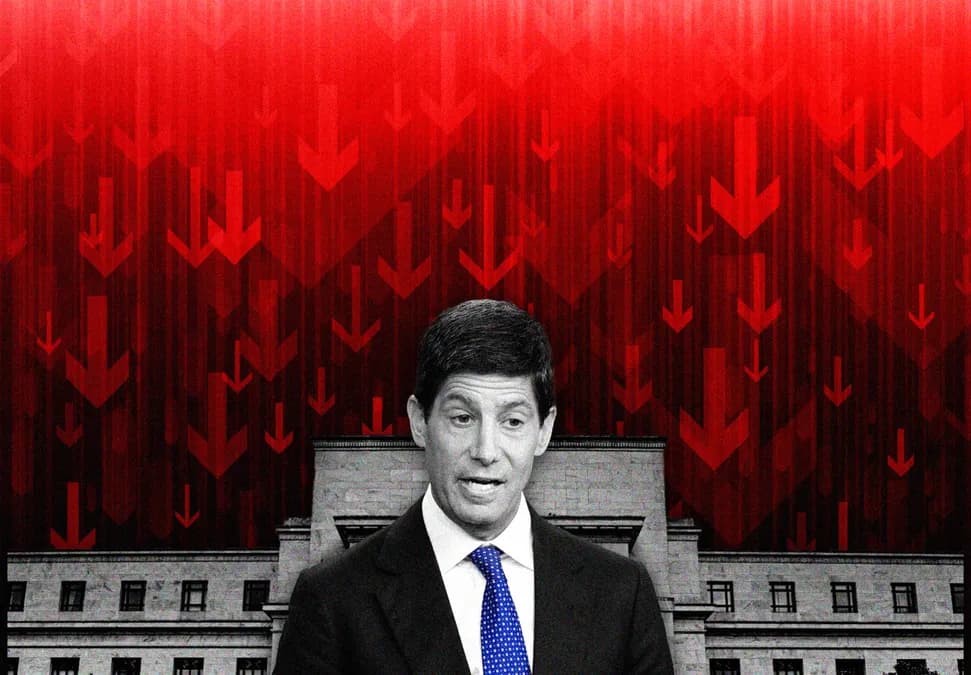
Federal Reserve Chair Kevin Warsh has delivered a pointed message to financial markets: the central bank's campaign against inflation is not winding down, and anyone betting on a near-term policy pivot is likely to be disappointed. The signal has landed with force, rattling equity markets and sending bond yields climbing as investors recalibrate expectations for how long the current tightening cycle will persist.
Warsh Draws a Hard Line on Inflation
The message out of the Federal Reserve could not be clearer. Warsh has made it plain that the institution he leads is committed to restoring price stability, and that commitment will not bend to short-term market discomfort. When a Fed chair telegraphs resolve this explicitly, history suggests that markets are wise to take it seriously.
Inflation, measured by the Bureau of Labor Statistics' Consumer Price Index, remains a stubborn adversary. After peaking at a four-decade high of 9.1 percent in June 2022, price pressures have moderated but not disappeared. The Fed's preferred inflation gauge, the Personal Consumption Expenditures price index, has similarly remained above the central bank's 2 percent target for an extended stretch — a fact that underwrites Warsh's hawkish posture.
The implication is direct: a Fed that has not yet seen its 2 percent target materially within reach has no political or analytical basis for standing down. Warsh appears to understand that credibility, once lost, is expensive to rebuild.
Why the Fed Is Not Done Raising Rates

Rate decisions at the Federal Open Market Committee are driven by data, but they are also driven by narrative — the story the Fed tells about where inflation is headed and how determined policymakers are to get there. Warsh's latest communication is an exercise in narrative reinforcement.
Read next Altman: OpenAI IPO 'Ill-Advised' in 2026 | AI ValuationsThe federal funds rate, the benchmark rate the Fed controls directly, influences borrowing costs across the economy — from 30-year mortgage rates to corporate credit lines. When the Fed raises this rate, it increases the cost of money, slowing spending and investment, which in turn cools demand and, eventually, prices. The transmission mechanism is well understood, but the lag is long. Monetary policy, economists generally agree, operates with a delay of 12 to 18 months before its full effects register in the real economy.
That lag is central to why Warsh would insist the fight has longer to run. Even if the most recent rate increases are beginning to bite, the full disinflationary effect of prior hikes has not yet been absorbed. Stopping too soon risks allowing inflation expectations to re-anchor at a higher level — a scenario that would ultimately require even more aggressive tightening later. Fed-watchers on Wall Street widely characterize this as the central bank's greatest fear: a premature pivot that invites a second wave of inflation, eroding the institution's hard-won credibility.
Market Reactions to the Fed's Hawkish Stance

Markets rarely take kindly to the prospect of prolonged monetary tightening. The Dow Jones Industrial Average shed roughly 600 points in a session that underscored just how sensitive equities have become to Fed policy signals. Rate-sensitive sectors — technology stocks, real estate investment trusts, utilities — bore the brunt of the selloff, as investors recalculated the discount rates applied to future earnings.
Bond markets told a similar story. When the Fed signals that rates will stay higher for longer, Treasury yields tend to rise to reflect the new expected path of policy. Higher yields, in turn, compete with equities for investor capital, applying downward pressure on stock valuations. The dynamic is mechanical and well understood by institutional investors, but that does not make it painless.
Sharp swings in both stocks and bonds are the predictable consequence of a Fed that is choosing to err on the side of doing too much rather than too little. Volatility is, in a sense, the price of credibility.
What Investors Should Expect Next
For investors trying to position around Fed policy, the near-term picture carries several important features. First, do not expect the Fed to blink at the first sign of market turbulence. Warsh's message is precisely calibrated to disabuse markets of any notion that equity declines will prompt a policy reversal. The Fed has a dual mandate — maximum employment and stable prices — but in the current environment, the price stability side of that mandate commands undivided attention.
Second, the path of future rate decisions will remain tightly tethered to incoming inflation data. If the CPI and PCE readings come in hotter than expected in the months ahead, the probability of additional rate increases rises. If they soften materially, the case for a pause strengthens. Investors should track these releases as first-order inputs into their interest rate outlook.
Third, duration risk in fixed income portfolios deserves scrutiny. In a higher-for-longer rate environment, longer-dated bonds are particularly vulnerable to price declines. Investors who built portfolios around the assumption of a quick return to near-zero rates may need to reassess their exposure. Cash and short-duration instruments become more competitive when the Fed is actively pushing rates upward.
Historical Context: How Long Do Inflation Fights Last?
The 1979-1981 period under Fed Chair Paul Volcker provides the starkest precedent for what a determined inflation fight looks like. Volcker, facing inflation that had climbed above 13 percent, drove the federal funds rate to nearly 20 percent — a move that deliberately triggered two recessions in quick succession. By 1983, inflation had fallen below 4 percent. The process took roughly four years from Volcker's appointment in 1979 to meaningful price stability.
The more recent 2022-2023 tightening cycle offers a faster but still instructive comparison. The Fed raised rates by more than 500 basis points in roughly 16 months — the most aggressive pace of monetary tightening in four decades. Inflation fell significantly from its peak, but progress slowed as it approached the 3 to 4 percent range. The "last mile" of disinflation — bringing inflation down from that level to the 2 percent target — proved considerably more difficult than the initial deceleration from double-digit highs.
Economists who study monetary transmission cycles often note that the final stages of an inflation fight are the most politically and economically taxing. Growth slows, unemployment may rise, and the temptation to declare victory prematurely intensifies. Central bank chairs who resist that temptation — and Warsh appears to be signaling that he intends to — tend to achieve more durable price stability, but at real short-term cost to employment and growth.
The median tightening cycle in developed economies over the past 50 years has lasted between 18 and 36 months from the first rate increase to the first rate cut. That arithmetic suggests investors should not be penciling in policy easing as an imminent event.
Key Takeaways for Investors and Consumers
Several practical conclusions follow from Warsh's signal. For equity investors, expect continued volatility as markets reprice growth expectations against a backdrop of sustained higher rates. The era of cheap money that drove asset valuations to historic highs is not returning quickly, and portfolios built on that assumption warrant reexamination.
For fixed income investors, the case for short-duration instruments strengthens in a higher-for-longer environment. Money market funds and short-term Treasuries now offer yields that were unthinkable just a few years ago, making them a credible alternative to riskier assets for the cash portion of a portfolio.
For consumers carrying variable-rate debt — credit cards, adjustable-rate mortgages, home equity lines of credit — Warsh's message translates directly into sustained borrowing cost pressure. Paying down high-rate debt aggressively is sound financial hygiene regardless of the macroeconomic backdrop, but it is particularly prudent when the Fed is signaling an extended tightening posture.
For businesses, the cost of capital is structurally higher than it was during the post-2008 zero-rate era. Capital allocation decisions — whether to fund an acquisition, build new capacity, or return cash to shareholders — should reflect a realistic assessment of financing costs that may remain elevated for longer than consensus forecasts currently suggest.
Warsh has drawn a line. The inflation fight, by his accounting, has longer to run. Investors who respect that signal — and position accordingly — will be better prepared for the road ahead.
Source: MarketWatch.com - Top Stories