Kevin Warsh Signals Resolve on Inflation
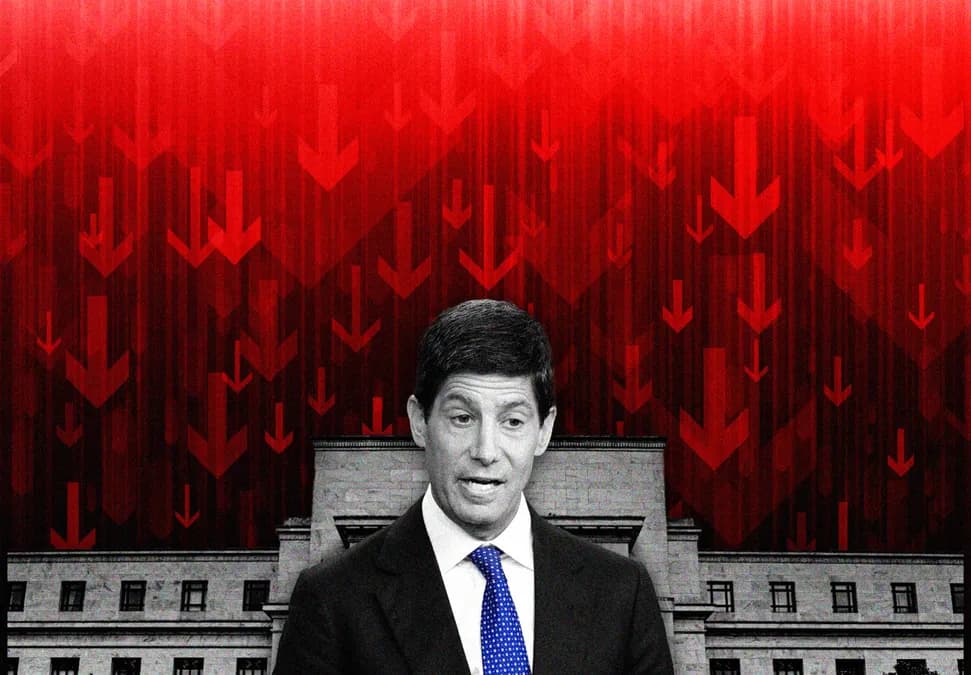
Federal Reserve Chair Kevin Warsh has delivered a clear message to financial markets: the central bank's campaign against inflation is not a short-term exercise in optics, and it will not be abandoned because investors find it uncomfortable. Warsh, signaling the kind of institutional resolve that markets have learned to take seriously, has positioned the Fed as a body prepared to hold its ground even as borrowing costs rise and asset prices face pressure.
This posture matters precisely because credibility is the Fed's most powerful instrument. The Fed rate hike inflation dynamic depends almost entirely on whether households, businesses, and financial markets believe the central bank will follow through. When that belief wavers, inflation expectations become unanchored, and the entire transmission mechanism of monetary policy weakens. Warsh appears determined not to let that happen.
The historical precedent for this kind of resolve is instructive. When Paul Volcker assumed the chairmanship in 1979, he inherited an economy with inflation running above 13 percent, according to Bureau of Labor Statistics records from that period. Volcker's willingness to push the federal funds rate above 20 percent by 1981 was brutal for the economy — unemployment climbed toward 11 percent — but it broke the inflationary psychology that had embedded itself in wage negotiations and price-setting behavior across the economy. Warsh, by signaling that the inflation fight has further to run, is invoking that same tradition of institutional seriousness.
Why the Inflation Fight Has Further to Run

Inflation does not surrender on schedule. That is perhaps the central lesson of every major tightening cycle the Fed has undertaken. Price pressures can moderate at the headline level while remaining entrenched in the services sector, in shelter costs, or in wage growth that exceeds productivity gains. The Fed's preferred inflation gauge, the Personal Consumption Expenditures Price Index published by the Bureau of Economic Analysis, has historically proven stickier in its core reading than headline measures suggest.
Read next Altman: OpenAI IPO 'Ill-Advised' in 2026 | AI ValuationsThe challenge Warsh faces is structural as much as cyclical. Supply chains can normalize and commodity prices can fall, producing welcome relief in goods inflation, but services inflation — which accounts for roughly 60 percent of the core PCE basket — tends to respond more slowly to rate increases. Shelter costs, which move with a lag in official statistics even as real-time rental data shifts, can keep measured inflation elevated long after underlying conditions have begun to cool.
This is why credentialed economists and experienced Fed watchers consistently argue that the central bank must demonstrate sustained commitment rather than episodic pressure. Jason Furman, former chair of the Council of Economic Advisers and a Harvard economist who has studied Fed tightening cycles extensively, has noted in public forums that rate hikes work with "long and variable lags" — the phrase originally coined by Milton Friedman — meaning that the full disinflationary effect of any given tightening cycle takes 12 to 18 months or more to materialize in economic data. Warsh's signal that more work remains is not alarmism; it reflects that timeline honestly.
Market Reaction to the Rate Hike Signal

Financial markets rarely welcome the news that monetary tightening will persist longer than hoped. The initial reaction to Warsh's messaging has reflected that discomfort. Equities face pressure when the rate environment becomes more restrictive because higher risk-free rates reduce the present value of future corporate earnings, making stocks comparatively less attractive against safer fixed-income instruments.
The 2022-2023 tightening cycle offers a useful reference point. Between March 2022 and July 2023, the Federal Open Market Committee raised the federal funds rate by more than 500 basis points — the steepest and fastest cycle in four decades. The S&P 500 fell roughly 20 percent from its peak during that period, and the bond market suffered one of its worst drawdowns in modern history as yields surged. Markets eventually stabilized, not because the Fed pivoted prematurely, but because inflation data began confirming a credible disinflationary trajectory.
The lesson for investors now is that volatility in the near term is not synonymous with permanent damage. Sharp swings in both stocks and bonds are a predictable feature of any serious tightening cycle. They reflect the market's process of repricing risk and return in a higher-rate world. That adjustment is uncomfortable, but it is also how monetary policy is supposed to work.
How Rate Hikes Work to Tame Inflation
The mechanism by which a Fed rate hike curbs inflation operates through several channels simultaneously, and understanding them helps clarify why the process takes time. The most direct channel is the cost of credit. When the Fed raises its benchmark rate, borrowing becomes more expensive for businesses and consumers alike. Mortgage rates rise, auto loan rates climb, and credit card financing costs increase. This reduces demand for goods and services financed by debt, slowing the economy and easing upward pressure on prices.
A second channel operates through financial conditions more broadly. Higher rates strengthen the dollar, which reduces the cost of imports and helps contain inflation in traded goods. Asset price declines — in equities and real estate — reduce household wealth, which in turn moderates consumption growth. Neither effect is instantaneous, but both contribute to the overall disinflationary impulse.
The expectations channel may be the most powerful of all. If households and businesses believe the Fed will maintain pressure until inflation returns durably to its 2 percent target, they moderate their own price-setting and wage demands accordingly. This is why Warsh's public signaling is itself a policy tool, separate from the mechanical effect of any specific rate decision. Words from a Fed chair carry weight because they shape the behavior of millions of economic actors who are constantly updating their forecasts.
What Investors Should Watch Next
Several data series will determine how this chapter of the Fed rate hike inflation story resolves. The monthly CPI release from the Bureau of Labor Statistics remains the most-watched indicator, but investors who want to anticipate Fed thinking should pay particular attention to the core PCE deflator, which strips out volatile food and energy prices and serves as the central bank's formal target measure.
Labor market data is equally critical. Wage growth that persistently exceeds 3 to 3.5 percent — roughly the sum of the Fed's 2 percent inflation target and long-run productivity growth — is generally incompatible with a return to price stability without a meaningful increase in unemployment. Monthly non-farm payroll reports and the Employment Cost Index, which tracks compensation growth across the economy, will tell investors whether labor market conditions are cooling at a pace consistent with Warsh's objectives.
FOMC meeting statements and the quarterly Summary of Economic Projections, the so-called "dot plot," will also be scrutinized for any shift in how policymakers view the appropriate level of the policy rate over the coming 12 to 24 months. Any upward revision to the terminal rate projection would reinforce Warsh's current message.
Bottom Line: Warsh's Inflation Commitment and Its Implications
What Warsh has communicated is something specific and consequential: the Fed will not flinch. That is the essence of his signal. Investors who expected a quick pivot, or who believed that market turbulence would soften the central bank's resolve, have received a direct correction.
The implications extend beyond any single rate decision. A Fed chair who demonstrates genuine commitment to the inflation target — who absorbs market pressure without capitulating — reinforces the institutional credibility that makes monetary policy effective in the first place. The alternative, a Fed that abandons its inflation fight whenever financial conditions tighten, produces exactly the wrong signal: that price stability is a secondary concern, and that sufficiently large market declines can purchase a policy reversal.
Volcker's legacy endures not because his rate hikes were popular in 1981, but because they worked. Inflation fell, credibility was restored, and the economic expansion that followed lasted nearly a decade. Warsh appears to understand that precedent clearly.
For investors, the practical takeaway is to update their frameworks accordingly. Longer-duration assets face a more challenging environment when the inflation fight has further to run. Sectors with pricing power hold up better than those dependent on cheap financing. And patience, rather than anticipation of an early pivot, is likely to be better rewarded. The Fed chair has drawn a line. Markets would do well to take him at his word.
Source: MarketWatch.com - Top Stories