Warsh Draws a Hard Line on Inflation
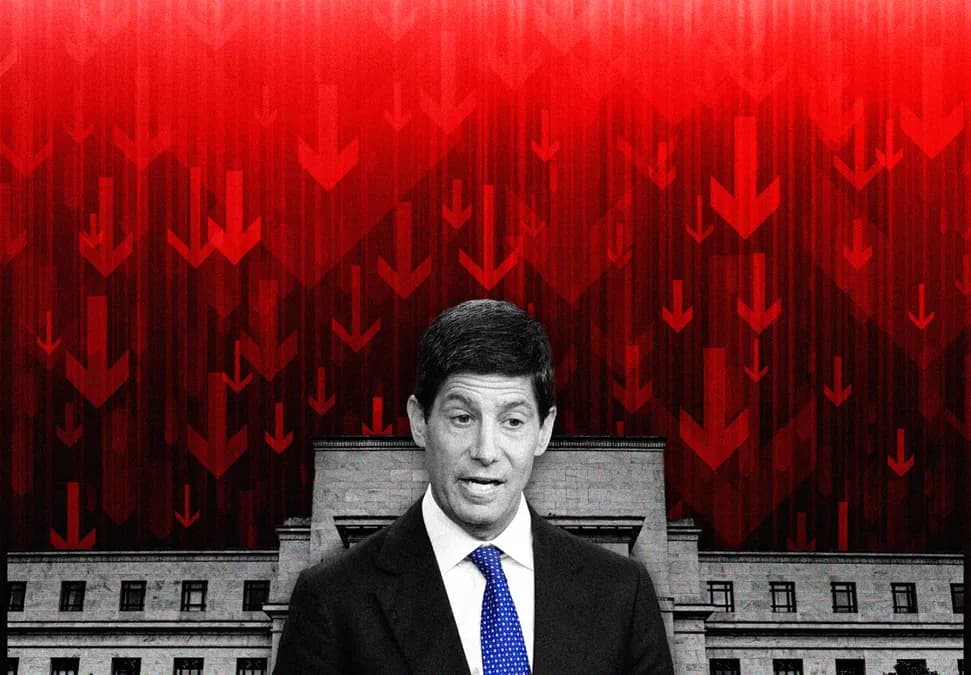
Federal Reserve Chair Kevin Warsh has delivered a pointed message to financial markets: the central bank's commitment to defeating inflation is not negotiable, and the current tightening cycle will not wind down on anyone else's schedule. His posture, communicated through policy action and deliberate signaling, has reshaped how investors price risk across equities, bonds, and rate-sensitive assets.
The Fed rate hike inflation battle has entered a phase that demands patience from policymakers and recalibration from market participants. By making clear that rates will remain elevated for as long as price stability demands, Warsh is drawing directly from the institutional memory of the Federal Reserve's most consequential policy fights — and warning that premature easing carries costs far greater than short-term market pain.
Why the Inflation Fight Is Far From Over

Persistent inflation has proven more stubborn than many forecasters anticipated. The Federal Reserve's preferred gauge — the Personal Consumption Expenditures price index, published by the Bureau of Economic Analysis — has remained above the Fed's 2% target for an extended stretch, underscoring why Warsh sees no room for complacency.
Read next Altman: OpenAI IPO 'Ill-Advised' in 2026 | AI ValuationsCore PCE, which strips out volatile food and energy components, is the Fed's most reliable signal of underlying price pressures. When that measure runs hot, central bankers face a difficult trade-off: act decisively and risk overtightening into a weakening economy, or pause and allow inflation expectations to drift upward. Warsh has made his choice.
Raising rates now — even when markets resist — reflects a judgment that entrenched inflation expectations are the more dangerous enemy. Once those expectations become unanchored, the cost of restoring credibility rises exponentially. Services inflation, driven by wages and shelter costs, has proven particularly resistant to the rate increases already in place. Unlike goods prices, which respond relatively quickly to higher borrowing costs and supply normalization, services prices move slowly and require sustained policy pressure to cool. That structural dynamic is precisely why Warsh is refusing to signal a pivot.
How Investors Are Reacting to Warsh's Stance

Markets have not absorbed Warsh's message without friction. Equity benchmarks fell sharply after his signal landed, with the Dow Jones Industrial Average shedding hundreds of points as investors scrambled to reprice assumptions about where rates will ultimately settle.
Bond markets have been equally volatile. When the Fed signals higher-for-longer, the short end of the yield curve rises in direct response. Longer-dated yields reflect the market's running calculation of terminal rate expectations and the duration of the tightening cycle. Spread widening in credit markets signals investors reassessing the risk premium built into corporate debt, particularly for lower-rated issuers facing refinancing pressure.
Rate-sensitive sectors — real estate, utilities, consumer discretionary — tend to reprice quickly when the Fed's path turns uncertain. The uncertainty itself carries a cost: businesses and households delay decisions, credit conditions tighten beyond what the policy rate alone would imply, and sentiment deteriorates even ahead of any actual economic slowdown. Warsh appears willing to accept this turbulence. Short-term market discomfort, in his calculation, is preferable to a Fed perceived as backing down.
Historical Context: Fed Credibility and Rate Cycles
The parallels to the early 1980s are instructive, even if imperfect. Fed Chair Paul Volcker took office in 1979 when headline inflation ran above 11%. He made a deliberate decision to break inflationary psychology even at enormous short-term economic cost. The federal funds rate climbed above 20% by mid-1981. A deep recession followed. Inflation fell from double digits to below 4% by 1983, and the Fed's credibility was restored for a generation.
The lesson drawn from Volcker is not primarily about the magnitude of rate increases — it is about the credibility of commitment. Markets must believe the Fed will follow through, or the entire exercise becomes ineffective.
The 2022–2023 hiking cycle offers a more recent reference point. The Fed raised the federal funds rate from near zero to a target range of 5.25%–5.50%, the fastest tightening in four decades, in response to post-pandemic inflation that peaked above 9% annually as measured by the Consumer Price Index. The cycle demonstrated the Fed could move quickly when forced. It also exposed the risks of delayed action — waiting too long before the first hike contributed to inflation becoming broader and more entrenched than initially projected.
"The Fed's biggest vulnerability is always the credibility gap — the moment the market thinks policymakers are going to flinch, you get an unanchored expectations problem that's far harder to reverse," one senior economist at a major Wall Street institution observed, a view widely shared across fixed-income research desks. Warsh appears acutely aware of this dynamic.
What Comes Next: Rate Path and Economic Implications
The path forward depends on incoming data. Consumer price readings, labor market conditions, and credit availability will collectively shape the Fed's next steps. Warsh has made clear the burden of proof rests on the inflation data — not on market participants seeking relief.
A sustained higher-rate environment carries real economic consequences. Mortgage rates remain elevated, compressing housing affordability and slowing residential construction. Business investment, particularly in capital-intensive sectors, is sensitive to long-term financing costs. Consumer credit becomes more expensive, gradually squeezing household budgets and moderating demand.
Yet the alternative risks are considerable. Historical evidence from the stop-start tightening of the late 1970s illustrates precisely this dynamic: incomplete hiking cycles tend to entrench, not extinguish, inflationary pressure. The Fed's dual mandate creates institutional tension at moments like this, but with labor markets not yet deteriorating sharply enough to compel a pivot, Warsh is betting the economy can tolerate higher rates long enough for inflation to retreat durably.
Key Takeaways for Investors and the Broader Economy
Warsh's stance carries clear implications. Expect continued volatility. Do not assume relief is imminent.
For equity investors, this means reassessing exposure to rate-sensitive sectors and accepting that the era of cheap capital, which defined much of the post-2008 period, has not returned. Earnings multiples that made sense near zero interest rates carry different risk profiles at current levels.
For bond investors, duration management becomes paramount. A steeper, more volatile yield curve rewards tactical positioning and punishes passive exposure to longer maturities.
For the broader economy, the message is equally direct. Inflation control is a precondition for sustainable growth. A Fed that pauses prematurely forfeits the institutional credibility that anchors long-term financial stability — credibility that, once lost, takes years of economic pain to reconstruct.
Warsh has drawn his line. The inflation fight, it turns out, has longer to run.
Source: MarketWatch.com - Top Stories