Warsh Sends a Clear Signal on Inflation
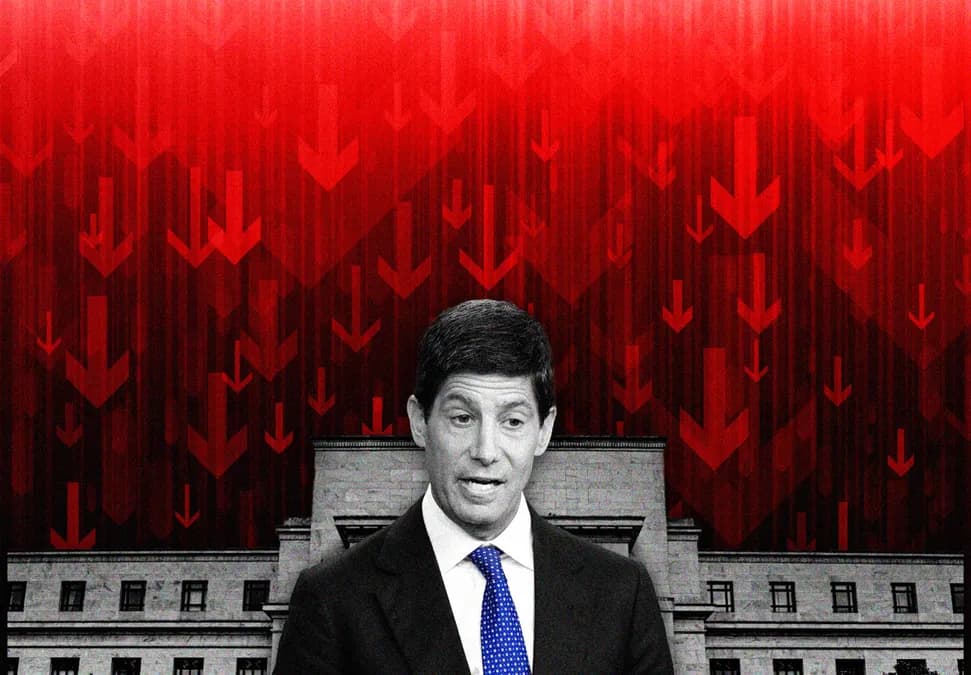
Federal Reserve Chair Kevin Warsh has delivered a message investors are finding difficult to ignore: the campaign to bring inflation back to the Fed's 2% target is far from finished, and he is prepared to keep tightening monetary policy until the job is done. The clarity of that signal — hardened through the Fed's latest rate decision — has rattled financial markets, underscoring that the central bank under Warsh is not inclined toward the kind of policy pivots that markets have periodically priced in over recent quarters.
This is not ambiguity dressed up as resolve. Warsh's posture represents a deliberate choice to prioritize price stability over near-term market comfort, a stance that carries serious consequences for equities, credit markets, and household finances alike. The Fed rate hike inflation dynamic — where tighter policy slows spending but takes months or years to fully cool prices — means the pain ahead is both real and intentional.
Understanding the Fed's Hawkish Shift

To understand why Warsh is drawing this line, it helps to examine what the Fed is actually responding to. The Bureau of Labor Statistics has consistently shown that while inflation has retreated from its multi-decade peaks, the so-called "last mile" of disinflation — getting price growth from around 3% down to 2% — has proven stickier than many forecasters initially projected. Core PCE inflation, the Fed's preferred measure, has lingered above the target for an extended period, driven in part by persistent services inflation in categories such as shelter, insurance, and healthcare.
Read next Altman: OpenAI IPO 'Ill-Advised' in 2026 | AI ValuationsWarsh, who previously served as a Federal Reserve governor and has been a vocal advocate for monetary discipline, has long argued that central banks must act with conviction when inflation expectations risk becoming unanchored. His hawkish shift reflects a judgment that the Fed's credibility — hard-won over decades and nearly squandered during the post-pandemic inflation surge — cannot be bargained away for short-term market stability.
What distinguishes the current moment is the combination of factors the Fed is navigating simultaneously: a labor market that, while cooling, remains resilient enough to sustain consumer spending; a fiscal environment in which federal deficits continue to inject demand into the economy; and a global commodity picture that remains sensitive to geopolitical disruptions. Against this backdrop, Warsh's choice to signal continued tightening reflects not stubbornness, but a reading of underlying data that suggests premature easing would be a costly mistake.
Market Reactions: Stocks and Bonds Under Pressure

Markets responded swiftly and sharply to Warsh's signal. The Dow Jones Industrial Average shed roughly 600 points in the session following the Fed's action, with broad-based selling across sectors most sensitive to interest rate risk. Technology stocks, whose valuations are particularly exposed to changes in the discount rate, bore a disproportionate share of the losses. Bond markets moved in kind, with yields rising as investors recalibrated their expectations for how long the current rate environment will persist.
The simultaneous pressure on stocks and bonds is notable. It undermines one of the foundational assumptions of traditional portfolio construction — that bonds serve as a hedge when equities fall. When the driver of losses is monetary tightening rather than an economic shock, both asset classes can move lower together. This dynamic, which investors experienced acutely in 2022, has resurfaced as a feature of the current market environment rather than an anomaly.
The volatility is unlikely to be a one-off. Markets are repricing not just the next meeting's decision, but the entire rate path stretching across the next 12 to 18 months. When a Fed chair signals that the fight is longer than markets had priced, the adjustment is rarely orderly. Expect continued sharp swings in both equities and fixed income as data releases land and Fed officials offer their interpretations.
What Investors Should Expect Next
Prudent investors should prepare for a higher-for-longer rate environment rather than a sharp, early pivot. Research from institutions including the Peterson Institute for International Economics has highlighted that inflation episodes rooted in both supply disruptions and demand excess tend to require sustained policy tightening — not a few quarters of rate hikes followed by rapid cuts. The Warsh Fed appears to have internalized this lesson.
For equity investors, this means reassessing valuations built on the assumption of a benign rate environment. Price-to-earnings multiples that seemed defensible with rates near the zero lower bound look stretched when the risk-free rate sits meaningfully higher. Analysts at major investment research desks have noted a rotation away from long-duration growth assets and toward sectors that generate cash flows in the near term: energy, industrials, and select financials, which benefit from a steeper yield environment.
Credit markets warrant equal attention. Corporate spreads have begun to widen as investors price in both the higher cost of refinancing and the increased probability of defaults among borrowers who took on floating-rate debt during the era of near-zero rates. The Brookings Institution has previously cautioned that monetary tightening cycles tend to expose financial fragilities that were obscured during periods of easy money — and those exposures are beginning to surface.
For consumers, the most immediate impact comes through mortgage rates, auto loans, and credit card borrowing costs, all of which respond relatively quickly to changes in the federal funds rate. Household balance sheets that looked manageable a year ago are now under incrementally greater strain.
Historical Context: Fed Tightening Cycles and Their Outcomes
The current episode has unavoidable echoes of the Volcker era. Between 1979 and 1981, then-Fed Chair Paul Volcker engineered one of the most aggressive monetary tightening campaigns in modern history, pushing the federal funds rate above 20% to break the back of double-digit inflation. The cure was painful — a deep recession in 1981 and 1982, with unemployment peaking above 10% — but it successfully restored price stability and anchored inflation expectations for the better part of four decades.
Warsh's task is different in scale but similar in character. He is not fighting inflation at 14%, as Volcker was. But the lesson Volcker's tenure teaches is that half-measures, or premature declarations of victory, risk allowing inflation to re-accelerate. The stop-and-start tightening of the 1970s — when the Fed raised rates, then cut them prematurely, then had to raise them again — produced the worst of both worlds: persistent inflation and recurring recessions.
The risk of repeating that error is precisely what Warsh appears determined to avoid. By signaling that the Fed's resolve is durable — not contingent on a quarter or two of improving data — he is attempting to do the work that forward guidance is supposed to do: shape expectations before the data forces his hand.
Key Takeaways for Investors and Consumers
Several practical implications flow from the Fed's current posture.
First, the rate cutting cycle that many had hoped would arrive within the next few quarters now appears considerably further off. Any market rally built on the expectation of imminent Fed easing should be treated with skepticism.
Second, volatility is the appropriate base case, not the exception. When monetary policy is in active conflict with the risk appetite embedded in asset prices, swings of the magnitude seen after the Fed's latest action are the norm rather than the outlier.
Third, the inflation fight has tangible costs that will be felt unevenly. Lower-income households, which spend a higher share of income on necessities and carry more variable-rate debt, face a disproportionate burden. Businesses dependent on cheap financing face harder choices about capital allocation and workforce.
Finally, Warsh's credibility now rests on follow-through. A Fed chair who draws a clear line and then retreats when markets react badly loses something difficult to recover. For now, the signal he has sent is unambiguous. The more important question — the one markets will spend the next several months trying to answer — is whether that signal will hold when the pressure mounts further.
The inflation fight, it turns out, has longer to run than anyone hoped.
Source: MarketWatch.com - Top Stories