Warsh Signals a Prolonged Inflation Battle
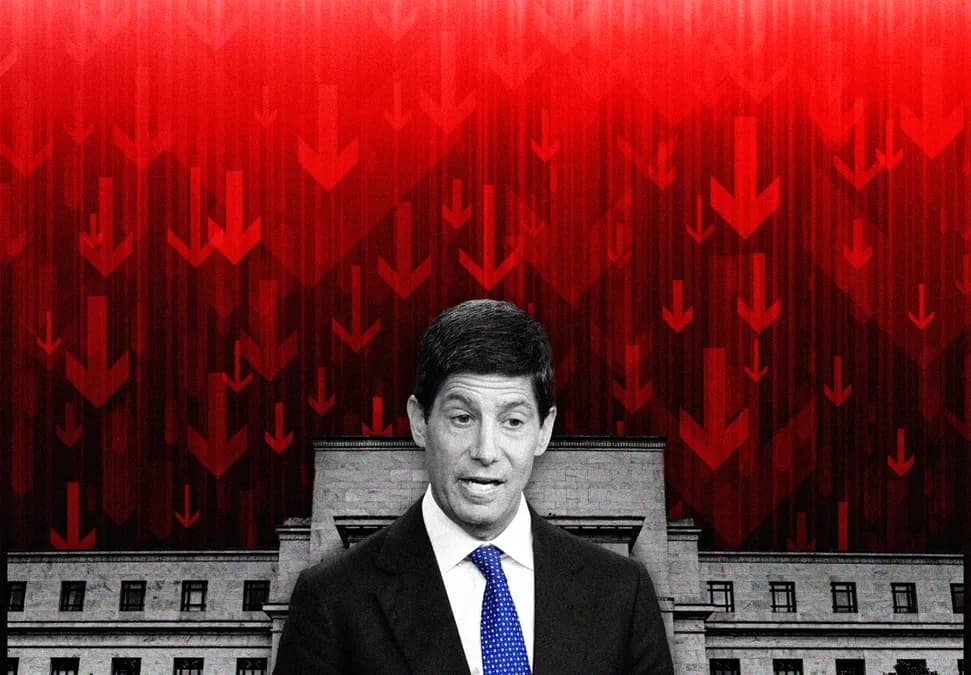
Federal Reserve Chair Kevin Warsh has delivered a message to markets with the clarity of a policy official who intends to be taken seriously: the campaign to extinguish inflation is far from finished. In sending that signal, Warsh is positioning himself — and the institution he leads — as willing to absorb market turbulence rather than flinch in the face of it. For investors who had grown accustomed to a Fed that pivoted quickly when financial conditions tightened uncomfortably, the tone shift is significant.
The message is not merely rhetorical. Rate hike decisions carry real costs — for borrowers, for businesses reliant on cheap capital, and for equity valuations built on the assumption of accommodative monetary policy stretching indefinitely into the future. When a Fed chair signals that more tightening lies ahead and that the central bank means business, the practical consequences ripple through every corner of the financial system.
Warsh's posture echoes a lesson central bankers have learned, often painfully, across multiple cycles: inflation that is not decisively addressed early tends to become structurally embedded, requiring even sharper medicine later. That dynamic shaped the defining monetary policy episode of the modern era — and its shadow still falls over every debate about how aggressively the Fed should act today.
Understanding the Fed's Current Stance on Inflation

To understand why Warsh is drawing a firm line, it helps to understand what the inflation data has been communicating. The Fed's preferred inflation gauge, the Personal Consumption Expenditures (PCE) price index, as well as the more widely cited Consumer Price Index (CPI), have both remained stubbornly above the central bank's 2 percent target for an extended period. When price pressures persist at elevated levels across services, shelter costs, and food categories simultaneously, the Fed faces pressure to demonstrate that its credibility as an inflation-fighter remains intact.
Read next Altman: OpenAI IPO 'Ill-Advised' in 2026 | AI ValuationsCentral bank credibility is not an abstraction. It is the invisible infrastructure underpinning long-term interest rates, wage negotiations, and consumer expectations. When households and businesses believe inflation will remain high, they behave accordingly — demanding higher wages, front-loading purchases, and pricing in persistent cost increases. These behaviors can become self-reinforcing, transforming a temporary price shock into something far more durable.
The Fed's dual mandate — maximum employment alongside price stability — creates an inherent tension during inflationary episodes. Raising rates enough to meaningfully cool inflation risks cooling the labor market alongside it. Warsh's signal that the fight has longer to run suggests the Fed's internal calculus currently weights price stability as the more urgent priority, even at some cost to the employment side of the ledger.
What 'Means Business' Looks Like in Practice

The most instructive historical parallel for what a determined Fed rate hike cycle looks like in practice is the Volcker era of the early 1980s. Paul Volcker, who chaired the Federal Reserve from 1979 to 1987, drove the federal funds rate above 20 percent to break the back of double-digit inflation that had plagued the U.S. economy through the 1970s. The cure was severe — two recessions in quick succession, unemployment climbing above 10 percent in late 1982 — but it worked. Inflation, which had exceeded 14 percent at its peak in 1980, fell to below 3 percent by 1983 and remained anchored for the better part of two decades.
Nobody in the current environment is anticipating anything approaching Volcker-era rate levels. But the episode illustrates a core principle: credible disinflation requires a central bank willing to stay the course even when markets are expressing severe discomfort. Warsh appears to understand that. "Means business" is not a phrase that accommodates premature pivots.
In practical terms, a Fed that means business on inflation keeps rate hikes on the table at successive policy meetings, resists the impulse to signal imminent cuts when financial conditions temporarily tighten, and communicates a threshold — typically a sustained, meaningful decline in core inflation metrics — that would need to be met before the posture shifts. Investors who price in early relief risk being caught flat-footed if those conditions are not met on the schedule the market has assumed.
Implications for Investors and the Broader Economy
A sustained Fed rate hike cycle carries distinct implications across asset classes, and history offers a reasonable guide even if specific outcomes remain uncertain. In the bond market, a higher-for-longer Fed funds rate places upward pressure on yields across the curve, eroding the value of existing fixed-income holdings and raising the cost of new issuance for corporations and municipalities alike. The 10-year Treasury yield serves as a benchmark for an enormous range of borrowing costs; when it moves meaningfully, almost every financing decision in the economy moves with it.
For the housing market, the transmission is even more direct. The 30-year fixed mortgage rate tracks closely with long-duration Treasury yields, meaning sustained Fed tightening translates into higher monthly payments for prospective homebuyers and reduced affordability. In markets that experienced significant price appreciation during the low-rate era, this creates a dual compression effect: existing homeowners reluctant to surrender historically low mortgage rates become less likely to list their properties, while potential buyers find themselves priced out by the combination of elevated home values and higher borrowing costs.
Equity markets face a more complex calculus. Higher rates raise the discount rate applied to future corporate cash flows, mathematically compressing valuations — particularly for growth-oriented companies whose earnings are weighted further into the future. At the same time, whether earnings hold up depends on how much the rate-induced demand slowdown bites into corporate revenues. The volatility that typically accompanies the middle innings of an aggressive tightening cycle reflects genuine uncertainty about which of those forces dominates.
Consumer spending, which accounts for roughly two-thirds of U.S. economic activity, faces headwinds as well. Credit card rates, auto loan rates, and personal loan rates all move higher in a rising rate environment, reducing household purchasing power and increasing the cost of carrying existing debt balances.
How Long Could the Inflation Fight Last?
The honest answer is that nobody knows with precision — and anyone who claims otherwise is offering confidence their data cannot support. What the historical record does suggest is that inflation episodes driven by a combination of supply constraints and demand stimulus tend to be stickier than those attributable to a single, identifiable shock. The 1970s inflation, for instance, was compounded by multiple oil shocks, fiscal stimulus, and the unwinding of price controls — a tangle that took years to unwind even after Volcker's aggressive action.
Independent economists who track inflation dynamics have noted that services inflation, in particular, has proven difficult to dislodge once entrenched. Unlike goods prices, which respond more quickly to supply chain improvements and demand shifts, services inflation is heavily influenced by labor costs, which tend to be sticky downward. If wage growth remains elevated, services inflation can persist even as goods deflation provides headline relief.
The Fed's own forward guidance, as expressed through tools like the Summary of Economic Projections and the dot plot, provides one window into how long policymakers themselves expect the fight to last. But those projections carry well-documented limitations — they are snapshots, not commitments, and they have frequently been revised as conditions evolved. What Warsh's signal provides is something arguably more durable: a sense of the Fed's tolerance for financial market stress relative to its determination to address inflation. That tolerance appears, at this juncture, to be higher than markets may have assumed.
What to Watch Next From the Federal Reserve
For market participants, several signposts will clarify whether Warsh's tough talk translates into sustained policy action. First and most immediately, incoming inflation data — both CPI releases and PCE reports — will either validate the Fed's concern or begin to argue for a less aggressive posture. A meaningful and sustained decline in core inflation metrics, stripped of volatile food and energy components, would provide the Fed the political and analytical cover to pause.
Second, labor market data matters enormously. The Fed is watching employment carefully not only because of its mandate but because wage dynamics feed directly into services inflation. A significant deterioration in payroll numbers or a meaningful rise in the unemployment rate could alter the cost-benefit calculation around further hikes.
Third, watch the Fed's own communication infrastructure: Chair Warsh's speeches, the minutes of Federal Open Market Committee meetings, and testimony before Congress. Central bank communication is policy by other means. When officials with Warsh's stature make unambiguous statements about intent, those statements are themselves a form of tightening — shaping expectations and behavior before any vote is cast.
The Fed rate hike cycle Warsh is steering may ultimately prove shorter or longer than current market pricing implies. What seems clear is that the chair has decided the Fed's credibility requires demonstrating that inflation control takes precedence over market comfort. That is a consequential decision, and its full effects will be measured not in days but in quarters.
Source: MarketWatch.com - Top Stories