Warsh Signals Fed's Commitment to Beating Inflation
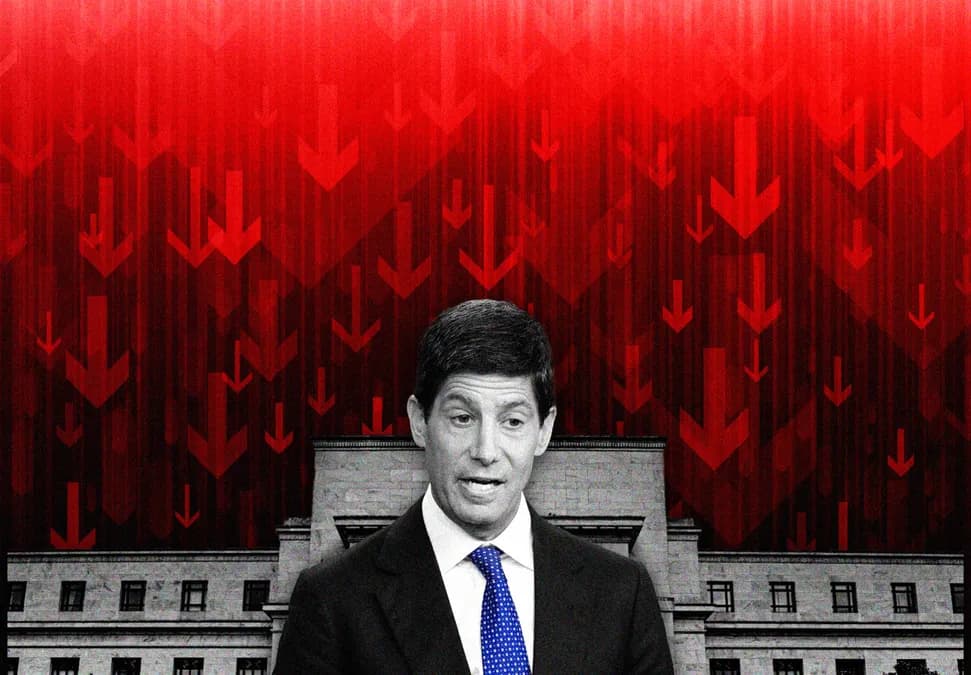
Federal Reserve Chair Kevin Warsh has delivered a message to financial markets with the clarity of a closing argument: the central bank's commitment to defeating inflation is not a matter for negotiation. Following the Fed's latest rate move, Warsh made clear that the institution he leads is prepared to hold the line — and press further if necessary — until price stability is genuinely restored. For investors accustomed to a Fed that would blink at the first sign of market turbulence, this represents a meaningful shift in posture.
The signal matters precisely because of what it implies about duration. A Fed rate hike cycle that ends prematurely risks embedding inflation expectations into wage negotiations, supply contracts, and household spending patterns in ways that are extraordinarily difficult to reverse. Warsh appears to understand this history. His communication has been calibrated not merely to move borrowing costs, but to reshape the expectations architecture of the entire economy — the underlying psychology that determines whether inflation persists or fades.
This is not a symbolic gesture. When a Fed chair communicates with this degree of resolve, markets and real economic actors respond accordingly. Mortgage lenders adjust rate sheets. Corporate treasurers revisit capital expenditure plans. Bond traders reprice duration risk across the curve. The Fed's credibility, built painstakingly over decades and nearly squandered in the post-pandemic inflation surge, is once again the central variable in the inflation equation.
Why the Inflation Fight Has Longer to Run

History offers a sobering benchmark. When Paul Volcker took the helm of the Federal Reserve in 1979, headline inflation was running above 11 percent. His solution — aggressive, sustained rate hikes that pushed the federal funds rate to nearly 20 percent by 1981 — did ultimately break inflation's back. But it took years, two recessions, and unemployment that peaked above 10 percent before price stability returned in any durable sense. The Volcker disinflation was not a sprint. It was a grinding, painful multi-year campaign.
Read next Altman: OpenAI IPO 'Ill-Advised' in 2026 | AI ValuationsThe more recent 2022-2023 tightening cycle offers a fresher case study. The Fed raised the federal funds rate from near zero to over 5 percent in roughly 18 months — one of the fastest tightening sequences in the institution's history. Core PCE inflation, the Fed's preferred gauge, came down from a peak of approximately 5.6 percent in early 2022 but remained stubbornly elevated above the 2 percent target well into 2024, demonstrating that the final mile of disinflation is invariably the most difficult to cover.
That final mile is where the current fight stands. Services inflation — driven by wages, rents, and the kinds of prices that don't respond quickly to monetary tightening — has proven particularly resistant. The Bureau of Labor Statistics has tracked persistent core services inflation even as goods prices have normalized. Shelter costs, which carry significant weight in both the Consumer Price Index and PCE calculations, often lag the real estate market by 12 to 18 months, meaning the statistical impact of housing disinflation works through the data slowly. A premature Fed pivot would risk declaring victory before the underlying structural pressures have genuinely resolved.
Economists at the Peterson Institute for International Economics have argued that supply-side improvements alone cannot return inflation to target without demand moderation — which is precisely what sustained, higher interest rates are designed to achieve. The implication is uncomfortable but clear: the job is not finished, and Warsh's hawkish stance reflects an accurate reading of the data landscape rather than ideological rigidity.
Market Reaction to Warsh's Hawkish Stance

Warsh's signal that the inflation fight has longer to run did not land gently on financial markets. Equity investors, who had spent months pricing in rate cuts and a return to the easy-money environment of the 2010s, found themselves recalibrating rapidly. The Dow Jones Industrial Average fell sharply in the immediate aftermath — a reminder that when the Fed reaffirms its tightening bias, the repricing across risk assets can be swift and unforgiving.
Bond markets similarly adjusted. Yields on the two-year Treasury note, which are highly sensitive to near-term Fed policy expectations, moved higher as traders unwound bets on imminent rate relief. The yield curve dynamics shifted in ways that typically signal a prolonged tightening environment rather than an approaching pivot. Volatility readings across both equity and fixed-income markets climbed, reflecting genuine uncertainty about the path ahead.
This kind of market turbulence is not incidental to the Fed's work — it is, in a sense, part of the transmission mechanism. Tighter financial conditions, achieved partly through higher rates and partly through the wealth effects of declining asset prices, reduce spending and slow credit creation. The pain of falling portfolio values and rising borrowing costs is how monetary policy actually reaches the real economy. Warsh's willingness to accept this volatility as a consequence of maintaining credibility is itself a policy signal.
Strategists at major investment banks have noted that the pattern of sharp swings in both stocks and bonds is characteristic of late-cycle tightening phases, where the market is uncertain whether the Fed will tip the economy into recession or engineer a soft landing. That uncertainty, rather than resolving quickly, tends to persist until there is unambiguous evidence of sustained disinflation.
What Investors Should Expect Next from the Fed
The immediate question for investors is not whether the Fed will hike again, but how many more moves remain in the cycle and how long rates will stay elevated once the hiking stops. Warsh's messaging has been designed to prevent the market from assuming that any pause signals an imminent pivot to cuts. The distinction between pausing and pivoting matters enormously for asset pricing.
Analysts at Brookings Institution have highlighted that the Fed's credibility on inflation is its most valuable long-term asset. Losing it — as happened in the 1970s under multiple Fed chairs who blinked at the first signs of economic weakness — can require years of painful policy to reclaim. Warsh appears determined not to repeat that error.
Investors should also expect continued volatility in rate-sensitive sectors, including real estate, utilities, and growth-oriented technology stocks. Companies with substantial floating-rate debt will face rising interest expenses, compressing margins in sectors already navigating slower demand. High-quality, short-duration fixed income is likely to remain more attractive than longer-dated bonds for as long as the Fed maintains its hawkish posture.
Implications for Everyday Borrowers and the Economy
The Fed rate hike cycle has direct consequences for millions of American households. The average 30-year fixed mortgage rate tracks broadly with longer-term Treasury yields and has already reached levels that have priced many first-time buyers out of the housing market. Home affordability, measured by the ratio of monthly mortgage payments to median household income, has deteriorated to multi-decade lows in many metropolitan areas.
Credit card interest rates, which are tied to the prime rate and therefore move in near lockstep with Fed policy, have pushed average APRs above 20 percent — a threshold that transforms even modest revolving balances into a financial burden. Auto loan rates have climbed correspondingly, increasing monthly payments on new vehicle purchases by hundreds of dollars compared to the near-zero rate environment of 2021.
For small businesses relying on lines of credit to manage working capital, higher rates add a direct cost to operations. Those cost pressures can be passed on to consumers — ironically contributing to inflation — or absorbed in reduced hiring and investment. This is the fundamental tension embedded in any tightening cycle: the medicine that treats inflation also carries real side effects for the productive economy.
Key Takeaways: Reading the Fed's Inflation Resolve
Kevin Warsh has made the Fed's position unambiguous. The inflation fight is ongoing, the central bank's resolve is firm, and investors who are waiting for a quick return to easy policy are likely to be disappointed. The historical record of inflation cycles, from the Volcker era to the most recent tightening sequence, demonstrates that durable price stability requires sustained commitment — not a few months of elevated rates followed by a rapid retreat.
Several points deserve emphasis. First, the Fed's credibility is a policy tool in itself; Warsh's hawkish communication is as consequential as any individual rate decision. Second, the structural components of current inflation — particularly services and shelter — are inherently slow to respond to monetary tightening, which means the calendar for success is longer than many market participants have assumed. Third, the market volatility that accompanies this phase of the cycle is not an aberration; it is the expected consequence of a policy recalibration of this magnitude.
For investors, borrowers, and economic observers, the most important discipline right now is resisting the temptation to extrapolate from short-term market moves. The Fed has drawn a line. Understanding what that line means — and how long it will hold — is the defining analytical challenge of the current economic moment.
Source: MarketWatch.com - Top Stories