Warsh Draws a Hard Line on Inflation
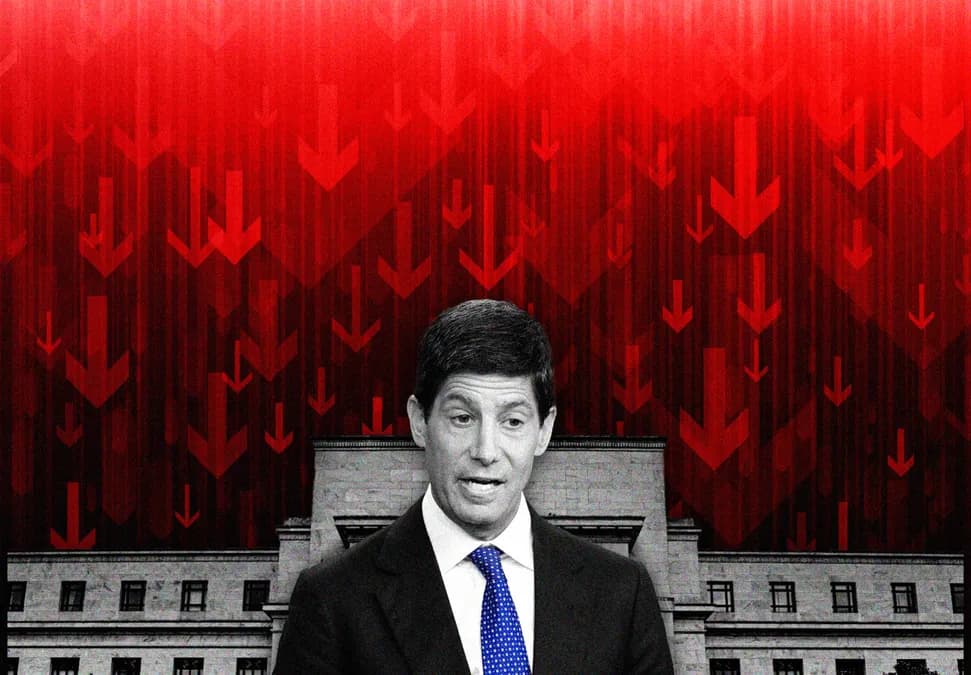
Federal Reserve Chair Kevin Warsh has delivered a message to markets that few investors wanted to hear: the central bank's commitment to crushing inflation is not a policy posture open to negotiation. When it comes to tamping down price pressures, Warsh means business — and the signal reverberating through trading floors is that the Fed rate hike inflation fight has considerably more road ahead than consensus estimates had previously priced in.
That message carries weight precisely because Warsh occupies the most powerful chair in global monetary policy. Unlike softened communiqués that leave room for interpretation, the clarity of his stance removes the ambiguity that markets had been quietly relying on. Investors who bet on a pivot, or at least a prolonged pause, are now recalibrating models and repositioning portfolios accordingly.
The posture is neither unprecedented nor irrational. Inflation, once entrenched, has a documented tendency to outlast the initial policy response. The Fed's credibility as an inflation-fighting institution depends on its willingness to hold uncomfortable positions even when the economic backdrop softens. Warsh appears to understand this dynamic — and appears willing to bear the political and market costs of demonstrating it.
What the Fed's Message Means for Investors

For investors, the immediate translation is straightforward: higher-for-longer is not a talking point. It is policy reality. Rate-sensitive assets — long-duration bonds, growth equities, residential real estate investment trusts — face continued headwinds as the cost of capital remains elevated and the terminal rate question stays open.
Read next Altman: OpenAI IPO 'Ill-Advised' in 2026 | AI ValuationsThe bond market, historically the most reliable interpreter of Fed intent, processes these signals through yield movements. When the Fed signals sustained tightening, the yield curve reprices, and that repricing cascades across virtually every asset class. Equities respond to the discount rate embedded in future cash flow valuations. Credit markets widen spreads when the cost of corporate borrowing rises alongside expectations of slowing economic activity.
Retail investors who entered markets during the era of near-zero rates may find this environment disorienting. They built portfolios calibrated for a Fed that was perpetually accommodative. Warsh's signal resets that assumption. The analysis coming from institutional strategists consistently underscores one point: underestimating the Fed's resolve in this cycle is a mistake with asymmetric downside.
The CME FedWatch tool, which aggregates market-implied probabilities of future rate changes from federal funds futures contracts, serves as a real-time barometer of how traders are absorbing Fed communication. Any shift toward pricing in additional hikes — or pricing out cuts — reflects a market that is beginning to accept the central bank's stated priorities at face value.
The Inflation Battle: Why It Has Longer to Run

Inflation's persistence owes less to any single shock than to a reinforcing feedback loop between wage growth, services pricing, and consumer expectations. Goods inflation, driven largely by supply chain disruptions, tends to resolve faster as logistics normalize. Services inflation — embedded in rent, healthcare, and professional services — tends to be stickier because it reflects labor costs that employers cannot easily reduce once workers have extracted wage gains.
The consumer price index's shelter component, for instance, notoriously lags real-time rental market data by six to twelve months. This means that even as new lease prices moderate in certain metropolitan markets, the measured CPI figure continues to reflect older contracts at elevated rates. That mechanical lag distorts the apparent progress on inflation and has repeatedly led to premature declarations of victory.
Warsh's hard line likely reflects an awareness of this structural lag. If the Fed eases prematurely — as the Arthur Burns-era Federal Reserve famously did in the early 1970s, triggering a resurgence of inflation that required far more painful medicine later — the credibility cost compounds. The lesson of that cycle is written into the institutional memory of every serious monetary policymaker: stopping too soon is worse than stopping too late.
Historical Context: Fed Tightening Cycles and Their Aftermath
The most instructive recent parallel to the current environment is the 2022-2023 tightening cycle, during which the Federal Reserve executed the most aggressive rate hiking sequence in four decades. Beginning in March 2022 from a near-zero starting point, the Fed raised the federal funds rate by a cumulative 525 basis points through mid-2023, reaching a target range of 5.25 to 5.50 percent. The pace — four consecutive 75-basis-point increases at one stretch — was extraordinary by postwar standards.
That cycle demonstrated both the effectiveness and the limits of rapid tightening. Headline inflation, which peaked above 9 percent on a year-over-year basis in June 2022 according to Bureau of Labor Statistics data, began retreating as rate hikes worked through the economy. But core inflation — the measure that excludes volatile food and energy components and that the Fed weights more heavily in its decision-making — proved more durable.
Historical tightening cycles also illustrate that the aftershocks of sustained rate hikes arrive on a delay. Credit conditions tighten as banks respond to higher funding costs by pulling back on lending. Small and mid-sized businesses, which depend heavily on revolving credit facilities and variable-rate loans, feel this contraction before it shows up in GDP data. The 2023 regional banking stress, concentrated in institutions with outsized exposure to held-to-maturity securities marked down by rising rates, provided a preview of how balance sheet vulnerabilities surface after prolonged tightening.
Implications for Stocks, Bonds, and the Broader Economy
Equity markets have historically struggled in environments where the Fed maintains an overtly restrictive posture with no clear easing timetable in view. The price-to-earnings multiple compression that accompanies rising rates is mechanical: when the risk-free rate rises, the premium demanded for holding equities expands, and valuations adjust downward even if underlying earnings hold steady.
Technology and growth-oriented sectors, which carry extended duration in their cash flows — meaning their profits are weighted far into the future and therefore discounted more aggressively as rates rise — face disproportionate pressure. Dividend-paying sectors, including utilities and consumer staples, may offer relative shelter but are not immune to repricing when Treasury yields compete for the same capital.
In fixed income, the implication of Warsh's stance is that the case for extending duration weakens. Short-term Treasuries offering competitive yields without the price volatility of long-dated paper represent a rational parking spot for risk-averse capital. The inverted yield curve — when short-term rates exceed long-term rates — that characterized much of the recent tightening era reflected exactly this calculus: markets expected near-term rates to remain high even as they anticipated eventual easing further out on the curve.
For the broader economy, sustained restrictive policy creates winners and losers. Savers, who endured years of negligible returns on deposits and money market instruments, benefit. Borrowers — consumers carrying credit card balances, homebuyers confronting elevated mortgage rates, businesses refinancing maturing debt — bear the cost. The distributional implications of tight money fall unevenly across income brackets.
What Comes Next: Outlook for Fed Policy
The Fed's forward path will be shaped by incoming data and by the credibility calculus that Warsh has now placed front and center. Two variables carry the most weight: the trajectory of core inflation and the resilience of the labor market. A labor market that remains tight, with low unemployment and steady wage growth, removes the most common argument for easing — that restrictive policy is generating unacceptable economic harm.
Fed communication in the form of meeting minutes, public speeches, and the Summary of Economic Projections — the so-called dot plot — will remain the primary channels through which policymakers telegraph their thinking. Each of these deserves close reading rather than headline-driven interpretation. The gap between what markets expect and what the Fed signals is, itself, a policy tool: closing that gap too abruptly generates volatility, while allowing it to persist erodes credibility.
Warsh's signal suggests the Fed is prepared to absorb market volatility as a cost of establishing that resolve. The fed rate hike inflation fight, by his reckoning, is not a sprint with a visible finish line. It is a sustained commitment — one that tolerates discomfort in pursuit of the price stability that durable economic growth requires.
Investors who internalize that message now, rather than waiting for conditions to force an adjustment, will be better positioned to navigate what remains a historically demanding policy environment.
Source: MarketWatch.com - Top Stories