The iPhone Duo Pencil That Never Was
Apple's product graveyard is more crowded than most consumers realize. Before the iPhone Duo reached store shelves, it nearly came bundled with a companion accessory that would have marked a significant shift in Apple's stylus strategy: a shorter, purpose-built Apple Pencil designed specifically for smartphone use. That accessory never made it to the keynote stage — at least not in the form anyone anticipated.
Bloomberg's Mark Gurman, the most consistently accurate Apple leaker in the industry and the reporter who has broken more Apple product news than any other journalist over the past decade, first surfaced the possibility in the lead-up to the iPhone Duo announcement. His reporting indicated Apple was actively exploring the concept but that internal momentum was soft. The qualifier was notable: Gurman didn't say the product was coming. He said Apple was "considering" it, and that it was "unlikely" the company would move forward. In Gurman's vocabulary, that phrasing is close to a quiet burial.
He was right. The iPhone Duo event came and went without a dedicated iPhone Apple Pencil. What Apple announced instead was different — and arguably more pragmatic.
Why Apple Considered a Shorter Apple Pencil for iPhone

The logic behind a dedicated Apple Pencil for iPhone Duo was not without merit. Apple Pencil adoption on iPad has grown steadily since the original model launched in 2015, with Creative Strategies analyst Carolina Milanesi estimating that stylus use correlates strongly with productivity workflows and creative tasks. The challenge for Apple was always translating that use case to a device people primarily hold in one hand.
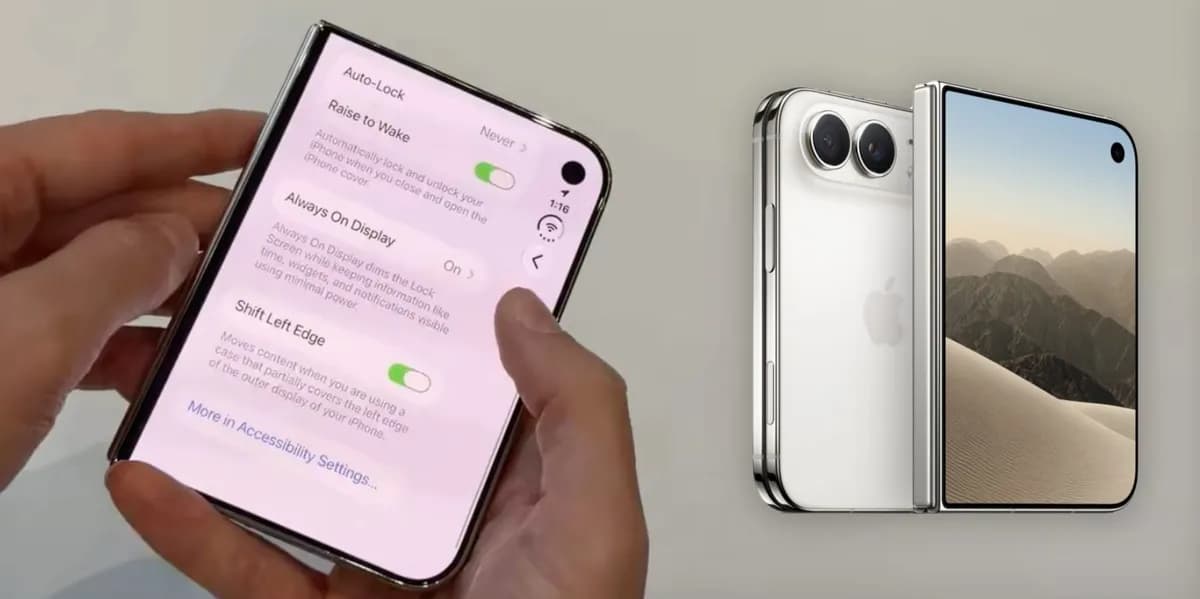
Read next iPhone Duo's Hidden Fake Bezel Setting ExplainedA smartphone stylus occupies an awkward space in product design. The iPhone Duo, with its larger display footprint, provided more screen real estate than any previous iPhone — enough to make handwriting, annotation, and sketching feel less cramped. Apple designers and engineers almost certainly ran internal tests. The form factor question alone would have consumed significant engineering effort: a full-size Apple Pencil is over 17 centimeters long, clearly impractical for a device most people carry in a pocket. A shorter version, closer in profile to the Apple Pencil Pro but scaled down further, was the natural answer.
There's also precedent in Apple's own portfolio for thinking this way. The company introduced the Apple Pencil mini alongside the iPad mini, demonstrating institutional awareness that stylus dimensions need to track with screen size. Applying that principle to the iPhone Duo wasn't a leap — it was a logical extension. That the engineering team explored it says less about ambition run amok and more about Apple doing what Apple does: prototyping aggressively across a wide range of possibilities before narrowing.
Analyst Ming-Chi Kuo, who tracks Apple's supply chain with a focus on component orders and manufacturing partners, has noted historically that Apple Pencil adoption rates remain relatively modest as a percentage of iPad sales. Bringing a stylus to iPhone would have required not just a new product but a shift in how iPhone users think about their device — a cultural lift, not just a technical one.
Why Apple Pulled the Plug Before Launch

Gurman's pre-launch framing — "considering" but "unlikely" — is worth unpacking. Apple cancels products at every stage of development. This is not a failure condition; it is the system working as intended. iPod accessories were scrapped mid-production cycle. Early MagSafe charging variants that appeared in supply chain leaks never reached retail. The AirPower mat is the most famous casualty, killed after years of public acknowledgment. Apple's internal product review process is designed to be ruthless about what ships versus what stays in the lab.
For a dedicated Apple Pencil for iPhone Duo, the obstacles were substantial. Manufacturing a shorter stylus with the same precision sensing capabilities as the full-size Apple Pencil Pro would require miniaturized components at a new cost structure. Apple would then face a classic positioning problem: how do you price an iPhone accessory stylus relative to the Apple Pencil mini, which starts at a price point anchored to iPad use? Undercut it and you fragment the Pencil lineup further. Price it higher and you invite consumer confusion.
There's also the ecosystem angle. Apple's software team would need to build and validate iPhone-specific stylus interactions across iPadOS-derived frameworks, system apps, and third-party APIs. The Apple Pencil's value on iPad comes partly from years of developer support and optimized app experiences — Notes, Freeform, Procreate, Affinity Designer. Those experiences don't automatically transplant to iPhone. That's a multi-year investment, not a single release cycle.
Gurman's reporting suggests Apple read all of those signals and concluded the timing wasn't right. The company didn't need to launch an iPhone Pencil to make the iPhone Duo a compelling product.
What Apple Announced Instead: USB-C Apple Pencil Support
What Apple did announce at the iPhone Duo keynote was more conservative and more immediately practical: support for the existing USB-C Apple Pencil. The device already in millions of iPad users' hands — or easily purchasable without creating a new product category — would work with iPhone Duo.
This decision has a certain Apple elegance to it. Rather than shipping a half-baked new accessory, Apple expanded the utility of a product that already exists in the market. For the subset of iPhone Duo users who are already iPad owners with an Apple Pencil, compatibility is a genuine value-add at zero additional cost. For users who want stylus functionality and don't own a Pencil yet, the purchase path is clear and the product is proven.
The USB-C Apple Pencil is the entry-level member of Apple's stylus family, positioned below the Apple Pencil Pro and Apple Pencil mini. It lacks the pressure sensitivity of the Pro tier and the compact design of the mini. But it works, it's available, and it didn't require Apple to solve the engineering, pricing, and positioning puzzles that a bespoke iPhone Pencil would have demanded.
What This Means for the Future of Apple Pencil on iPhone
The scrapped iPhone Duo Pencil doesn't close the door on this product category — it reveals where Apple currently stands. The company thought hard enough about an iPhone-native stylus to prototype it and brief supply chain partners on the possibility. That level of internal exploration doesn't evaporate. It informs the next generation of thinking.
The open industry question is whether Apple sees a standalone iPhone stylus as a near-term product or a longer-horizon bet. Creative Strategies analysts have pointed to note-taking and document annotation as the strongest stylus use cases on smaller screens — the same use cases that drove Apple Pencil adoption on iPad among business and education users. If the iPhone Duo's larger display unlocks those behaviors at meaningful scale, Apple will have the usage data it needs to justify a dedicated accessory in a future cycle.
For now, the USB-C Apple Pencil compatibility announcement functions as a low-commitment test. Apple can observe how many Duo users actually engage with stylus input before investing in a purpose-built product.
Final Thoughts: A Glimpse Into Apple's Decision-Making Process
Products that nearly launch but don't are among the most instructive artifacts in technology. The scrapped Apple Pencil for iPhone Duo tells a coherent story about Apple's current priorities: extend existing product lines where possible, resist shipping half-solutions, and let the market signal readiness before committing to a new category.
Gurman's reporting caught this process mid-flight. The fact that he hedged — "considering," "unlikely" — reflects both his sourcing discipline and something true about how Apple operates. Ideas exist in superposition inside One Apple Park Way until a product review meeting collapses them into ship or scrap.
The iPhone Duo launched without its own Pencil. Whether that turns out to be the right call depends on how Duo users behave with the USB-C Apple Pencil over the next twelve months. Apple is watching. The shorter stylus may yet have its moment.
Source: 9to5Mac