Why 3D Movies Are Making a Comeback in 2026
In December 2009, James Cameron's Avatar hit theaters and rewrote the record books, eventually becoming the highest-grossing film of all time. For a brief, blinding moment, 3D looked like the future of cinema. Then it became one of the biggest tech flops in consumer history. Nearly sixteen years later, I'm buying up every 3D Blu-ray I can find — and for the first time since that opening weekend in 2009, I actually think 3D movies worth watching are back on the menu.
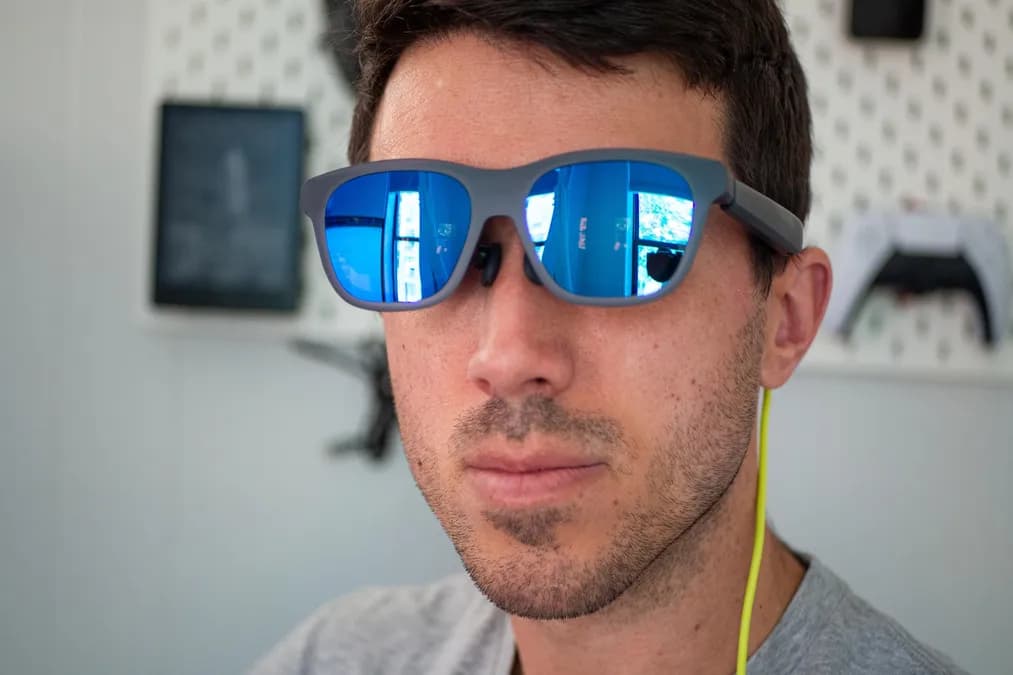
The shift isn't coming from Hollywood. It's coming from the hardware sitting on our faces. As The Verge reported in October 2026, the revival is being driven by a new wave of near-eye displays — the Xreal and Meta glasses, Apple's Vision Pro, and the broader category of wearable screens that have quietly matured while the living-room 3D TV sat in a landfill somewhere. The format that died on your couch in 2012 is being reborn on your head in 2026. That's not a marketing line. It's an engineering story.
I lived through the boom and the bust. I bought the glasses, the discs, the overpriced HDMI cables. I watched the whole thing collapse. So when I say the format is finally ready, understand that I'm not the easy sell here. I'm the guy who got burned.
The Technology That Finally Makes 3D Worth It
Here's the number that matters: brightness. A passive 3D TV from 2011 typically lost somewhere between 50 and 80 percent of its luminance the moment you put the glasses on. You were watching a dim, muddy image through cheap polarized plastic, and your brain spent the entire runtime trying to reconcile the disparity. That's the technical root of the infamous 3D headache.
Read next Laika's Wildwood: Stop-Motion Fantasy at TIFF 2026Near-eye displays invert the problem. Instead of asking a single panel to serve two eyes through filtered lenses, modern headsets and smart glasses give each eye its own dedicated display. There's no polarization tax, no shutter-timing race, no crosstalk between left and right frames. The brightness you see is the brightness the panel produces. Analysts who track display technology have pointed out for years that this is the fundamental reason near-eye 3D works where living-room 3D didn't — you're not fighting physics with accessories anymore, you're removing the conflict entirely.
Crosstalk deserves its own paragraph, because it's the silent killer of the first 3D era. Crosstalk is what happens when the left-eye image bleeds into the right-eye image, producing that ghostly double-edge on fast-moving objects. On early 3D TVs it was everywhere, and no amount of firmware updates fully eliminated it. Per-eye displays make crosstalk a non-issue by design. When the two images never share a screen, they can never contaminate each other.
Then there's resolution. A passive 3D TV split its 1080p panel between two eyes, meaning each eye got roughly 540 lines at best. Modern near-eye hardware feeds each eye a full, independent image. The result is a picture that's sharp, bright, and stable — three adjectives that almost never applied to 3D between 2010 and 2015.
Why 3D Failed the First Time — And What Changed
The first 3D wave didn't fail because audiences were stupid. It failed because the experience was genuinely worse than 2D for most people, most of the time. Industry post-mortems of the early-2010s 3D TV push consistently found the same complaints: dimness, eyestrain, headaches, and a chronic shortage of content actually worth the hassle. Consumers tried it at a friend's house, felt vaguely nauseated, and never bought in.
Consider the adoption curve. 3D TV shipments spiked around 2011 and 2012, then fell off a cliff. By the middle of the decade, major manufacturers had quietly discontinued 3D support across their flagship lines. ESPN shuttered its 3D channel in 2013 after roughly three years on air. The format didn't just underperform; it got actively abandoned by the companies that had spent hundreds of millions promoting it.
What changed isn't the movies. Avatar still looks extraordinary. What changed is that the delivery mechanism finally matches the ambition of the filmmakers. Cameron shot Avatar for a format that didn't yet have a competent home-viewing solution. In 2026, it does — it's just strapped to your head instead of sitting in your living room.
There's also a content angle nobody talks about enough. The 3D Blu-ray catalog never disappeared. Studios kept pressing discs long after TV makers walked away, because the theatrical 3D market in markets like China and Europe remained viable. That means there's a decade-plus library of genuinely well-shot 3D films sitting there, waiting for hardware that can do them justice.
The Case for Rebuilding Your 3D Blu-ray Collection
I started rebuilding mine six months ago. A used 3D Blu-ray player costs less than a decent dinner. Discs that were $35 new now go for a few dollars at resale. And the quality, played back through a modern near-eye display, is startling.
Here's why physical media matters specifically for this revival: streaming 3D has never worked well, and it still doesn't. The bandwidth required to deliver two full-resolution, high-frame-rate images simultaneously is brutal. Compression artifacts that are invisible in 2D become glaring in 3D, because your visual system is comparing the two images for depth cues and any mismatch reads as discomfort. A 3D Blu-ray delivers the full bitrate. That's the difference between a demo and an experience.
Home theater enthusiasts who've made the jump describe the same thing: the discs they wrote off a decade ago now look like reference material. The Avatar disc in particular, which was always considered a benchmark, finally has playback hardware that can show what the photographers actually captured.
If you're starting a collection, prioritize films that were shot natively in 3D rather than converted in post. Native 3D captures genuine interocular distance at the moment of photography. Conversions guess at it afterward, and the guessing shows. Animated films tend to fare well in either case, because the depth can be rendered perfectly from the original scene data.
What to Watch in 3D Right Now
Start with Avatar. That's not nostalgia talking. It remains the high-water mark of the format because Cameron built the entire production around depth as a storytelling tool, not a gimmick. Watch the forest sequences on a modern near-eye display and you'll understand immediately why the 2009 theatrical experience felt like a threshold moment.
From there, the catalog rewards exploration. Native-3D animated features hold up exceptionally well because the depth is geometrically perfect. Live-action films shot with stereoscopic rigs — as opposed to post-converted after the fact — offer the most convincing sense of presence. And the documentary space, largely ignored during the first boom, is where 3D's ability to convey scale and physical space really shines.
A practical note: adjust your interpupillary distance setting carefully on whatever headset you're using. It's the single biggest factor in comfort, and most people never touch it. Get it right and the eyestrain vanishes. Get it wrong and you'll blame the format — which is exactly what happened to an entire generation of TV buyers.
Is 3D Finally Here to Stay?
I'm not going to pretend the format is guaranteed a permanent place in the mainstream. Hardware categories rise and fall, and near-eye displays have their own adoption challenges. But the specific technical failures that killed 3D the first time — dimness, crosstalk, headaches, resolution loss — are solved. Not improved. Solved.
That's the distinction that matters. The first 3D wave asked consumers to tolerate a compromised image in exchange for depth. The current one doesn't ask for the tradeoff. You get full brightness, full resolution, and stable depth perception in the same frame. When the format stops costing you something, the calculation changes.
For those of us who saw Avatar in 2009 and spent the next fifteen years waiting for the home experience to catch up, 2026 is the payoff. The 3D movies worth watching were always there. We just finally have something worth watching them on.
Source: The Verge