Apple's September 2026 event landed with the usual wave of product announcements — a foldable iPhone, updated Pro models, smarter Siri features. What it didn't bring was something the rumor circuit had floated for months: AirPods with a camera built in. And honestly? That absence deserves a round of applause.
What Apple Actually Announced at Its September 2026 Event
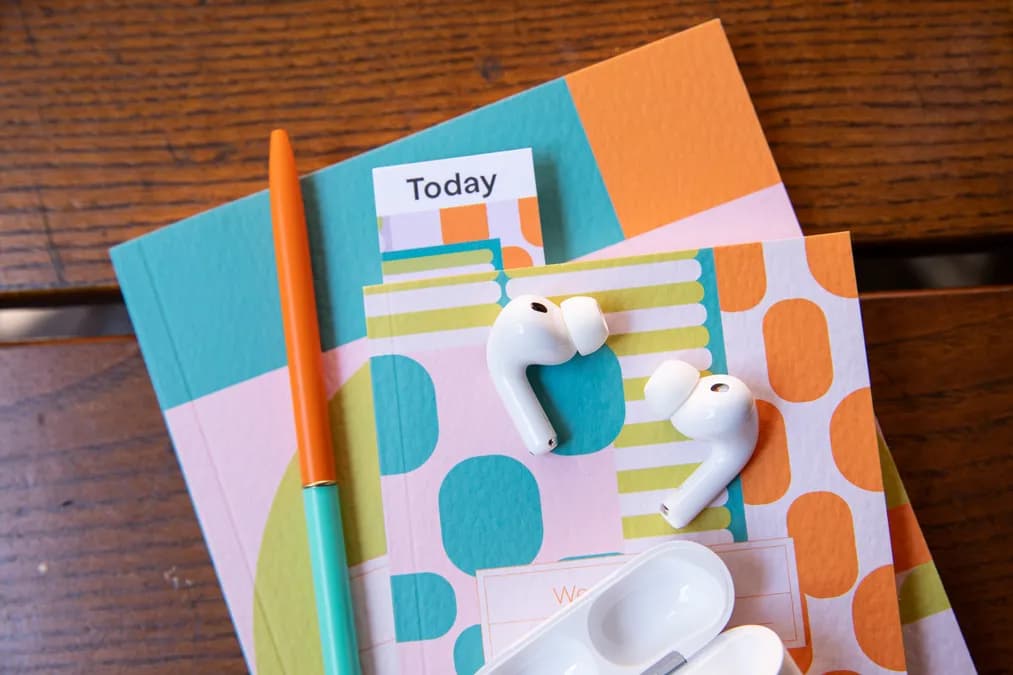
The headlining act at Apple's fall event was the iPhone Duo, the company's first foldable smartphone — a device that's been anticipated for years and finally arrived alongside the iPhone 18 Pro and Pro Max. For audio enthusiasts, the more quietly significant announcement came from the earbuds side of the stage: the AirPods 5 now ships with Active Noise Cancellation, a feature previously reserved for the pricier AirPods Pro line.
Apple also introduced Siri Recap, a feature that synthesizes information into digestible summaries — a signal that the company is pushing further into ambient, always-listening intelligence on its devices. Taken together, these announcements paint a picture of a company comfortable expanding capability in specific, considered directions. But a camera on your earbuds? Apple left that on the cutting room floor.
The AirPods Camera Rumor Mill — Where It Started
The idea of an AirPods with camera didn't appear from nowhere. Speculation had been bubbling in tech circles for a couple of years, fueled partly by Apple's visible interest in spatial computing — following the Vision Pro — and partly by a broader industry trend toward sensor-laden wearables. The premise had a certain surface logic: if smart glasses can carry cameras, why not earbuds?
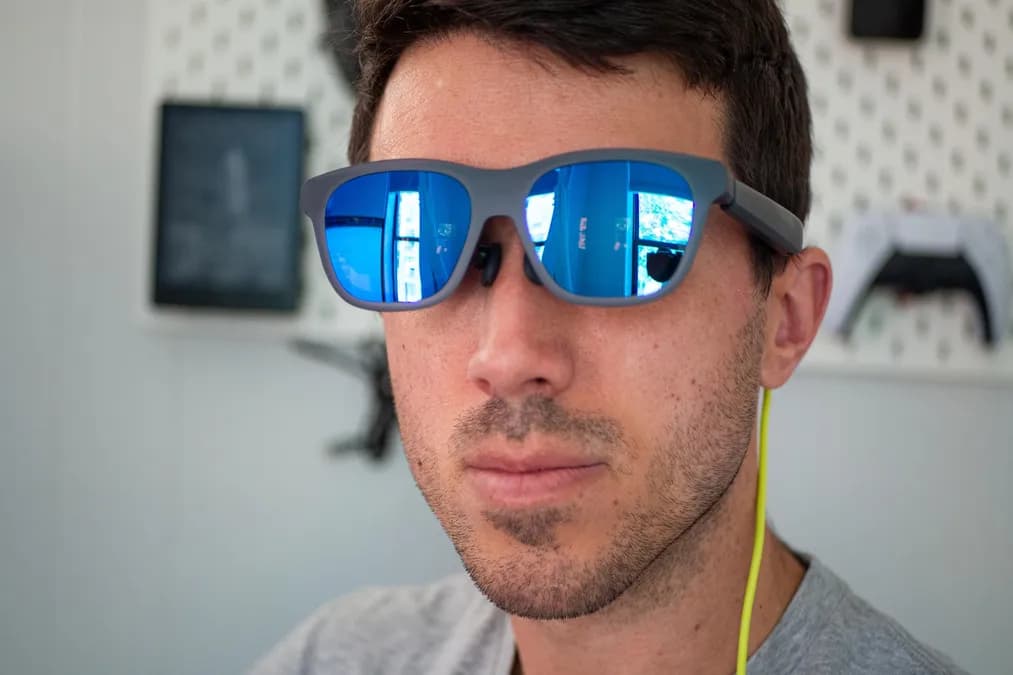
Read next Laika's Wildwood: Stop-Motion Fantasy at TIFF 2026Meta's Ray-Ban smart glasses gave the concept a commercial proof point. Those frames embed cameras and microphones in a form factor people already wear in public, and they sold well enough that the category became worth taking seriously. Competitors and analysts started asking whether earphones, which are even more ubiquitous than glasses, might be the next frontier for ambient sensing. The AirPods with camera narrative took hold.
It was a compelling rumor — but compelling and wise are different things.
Why Putting a Camera in AirPods Is a Bad Idea
Start with the physics. Modern AirPods Pro weigh around 5.3 grams per earbud. Camera modules capable of capturing useful video — even at modest resolution — add meaningful mass and, more critically, meaningful power draw. Audio hardware analysts have noted that camera sensors in compact form factors introduce thermal and battery constraints that are extremely difficult to manage at sub-6g weights. Noise cancellation already taxes the battery; stacking a live imaging pipeline on top would either balloon the earbud size to absurdity or produce runtime that barely lasts a commute.
Then there's the positioning problem. AirPods sit inside your ear canal or just outside it. A camera mounted there doesn't capture your field of view — it captures a semi-random slice of your shoulder, the ground, or the side of your face depending on how your ear anatomy and fit interact. Unlike glasses, where cameras naturally align with sight lines, earbuds point inward. Any workable implementation would require external camera placement on the stem, which creates a conspicuous protrusion that defeats the low-profile appeal of the product entirely.
Those are the engineering arguments. The privacy arguments are harder to dismiss.
A 2023 Pew Research Center survey found that 81 percent of Americans felt the potential risks of companies collecting data about them outweighed the benefits. That was before spatial computing became mainstream consumer hardware. The anxiety around always-on recording devices in public spaces is real, documented, and growing. The Electronic Frontier Foundation has been vocal for years about the dangers of ambient surveillance creep — the slow normalization of recording capability embedded in objects people wear near others without obvious disclosure. Earbuds are intimate, social objects. You wear them at coffee shops, on trains, in offices, at family gatherings. A microphone is one thing — people have broadly accepted that for functionality reasons. A camera is a categorically different ask.
There's a reasonable argument that most people wouldn't use an AirPods camera maliciously. That's almost certainly true. But the design of a product shapes its misuse potential regardless of intent. A camera that clips to your ear, streams to your phone, and sits flush against your head is effectively invisible at conversational distances. The social contract around consent — that a camera should be obvious enough for someone to notice — collapses entirely.
Privacy scholars have pointed to the Meta Ray-Ban situation as a preview of this friction. Those glasses, despite being commercially successful, generated significant public discomfort after users documented wearing them in public spaces without bystanders realizing they were being recorded. Earbuds would be stealthier still.
What Apple Did Right Instead — ANC on AirPods 5
Here's what actually matters to most people who buy earbuds: how they sound, and how well they block out the world. The decision to bring Active Noise Cancellation to the base AirPods model is the kind of genuine, meaningful upgrade that improves daily life in concrete, measurable ways.
Until now, ANC was a premium feature locked behind the AirPods Pro price point. Bringing it to the AirPods 5 means more people — students, commuters, office workers — get access to better focus and better audio without paying for the full Pro experience. It's a feature with a clear value proposition: research consistently shows that noise-canceling earphones reduce perceived stress in environments with ambient noise above 65 decibels, which covers most urban public transit systems globally.
That's the kind of innovation that doesn't make for breathless headlines, but it's the kind that shows up in someone's day every morning on the way to work. Apple made the right call prioritizing it over a camera gimmick.
The Bigger Picture: Apple's Cautious Approach to Cameras on Wearables
Apple's relationship with cameras on wearables has been deliberate to the point of seeming slow. The Apple Watch got its cellular chip years before it got anything approaching visual sensors. The company spent years studying the wearables market before committing to Vision Pro, and even that product — designed from the ground up around spatial awareness — is used in controlled, private settings rather than designed for continuous public-facing recording.
This is a pattern, not a coincidence. Apple's product philosophy, whatever its other contradictions, has generally been reluctant to ship features that outpace social norms around consent. Face ID generated pushback when it launched; the company spent considerable effort explaining how biometric data never leaves the device. That same sensitivity, applied to cameras on earbuds, produces a pretty obvious answer: not yet, and maybe not ever in this form factor.
Competitors have taken different approaches with varying results. The market is essentially running a live experiment on public tolerance for ambient wearable cameras, and the early returns suggest that tolerance is conditional and context-dependent. Apple watching that experiment play out before committing is, for once, the defensible move.
Why the Best Apple Innovation Sometimes Means Knowing What Not to Build
Steve Jobs once said that deciding what not to do is as important as deciding what to do. That's become something of a Silicon Valley cliché, but it retains its truth in product categories where capability and responsibility don't automatically align.
An AirPods with camera would be technically achievable, at some cost. It would be marketable — there are consumers who would buy it for the novelty alone. It might even find legitimate use cases in accessibility or hands-free navigation. But the gap between "can build it" and "should build it" is exactly where product judgment lives.
The September 2026 event gave us a foldable iPhone, better noise cancellation for everyone, and a smarter Siri. Those are real products solving real problems. The camera earbuds rumor gets to stay a rumor, and that's a more comfortable place for it than inside your ear canal at the coffee shop.
Some voids are better left unfilled.
Related coverage
Source: The Verge