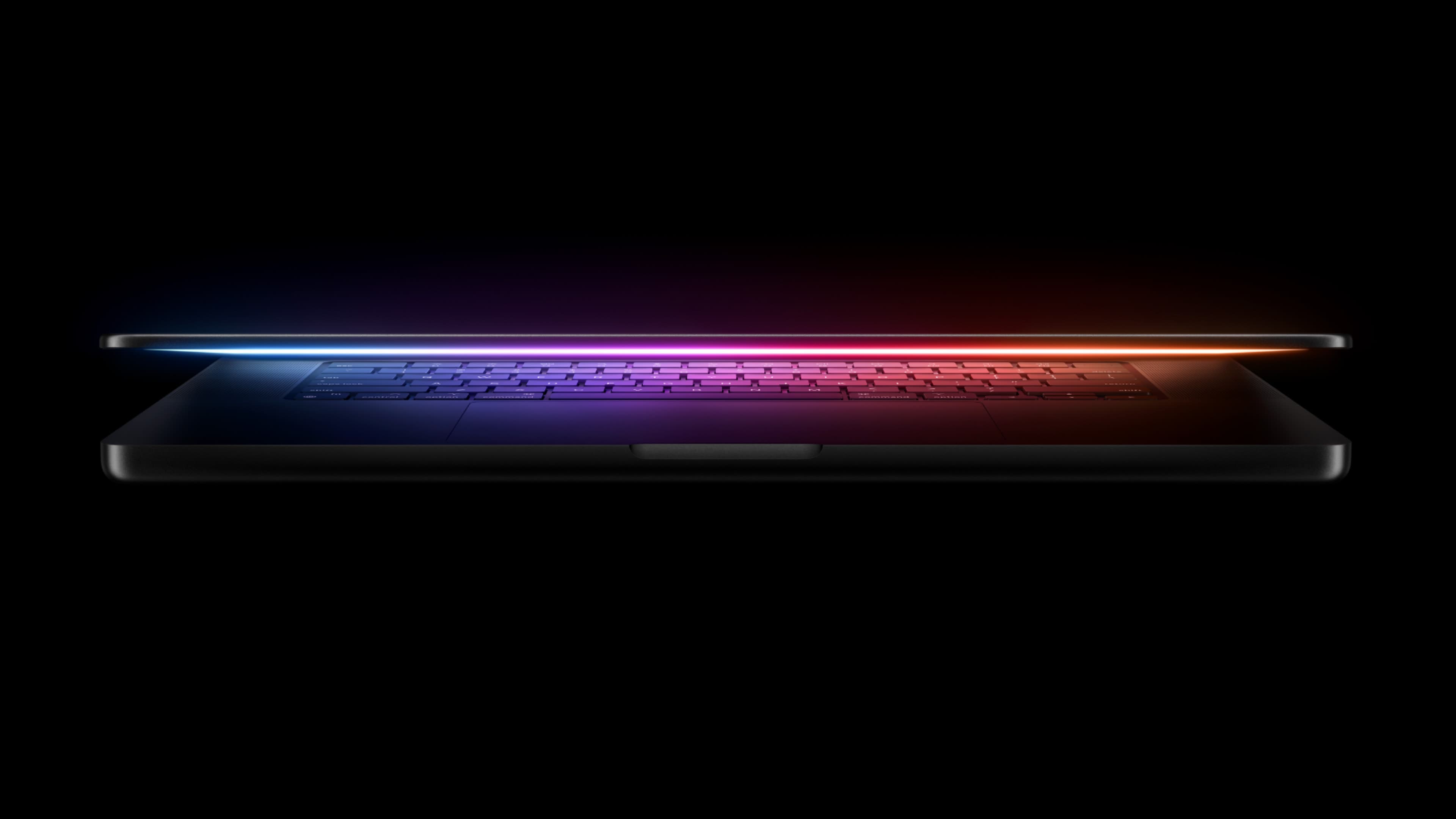
Apple's next-generation MacBook Pro has reportedly moved out of the lab and onto the desktop. According to Bloomberg's Mark Gurman, the rumored 14-inch and 16-inch MacBook Pro models with touch-enabled OLED displays are being tested against macOS 27.1, the software release Apple has scheduled for late October. The machines sitting inside that test cycle are not shipping units. They are prototypes running pre-release software — which, in Apple's development cadence, is one of the clearest signals that a launch window is genuinely close.
What Apple's macOS 27.1 Internal Testing Actually Signals
A software version number is a boring thing to get excited about, but in Apple's world it functions as a clock. macOS 27.1 arriving in late October tells us the 27.x branch is mature enough to support new silicon and new display hardware. When unreleased Macs appear in testing against a specific point release, it usually means Apple is validating drivers, color management, and touch input handling ahead of a hardware debut rather than in parallel with one.
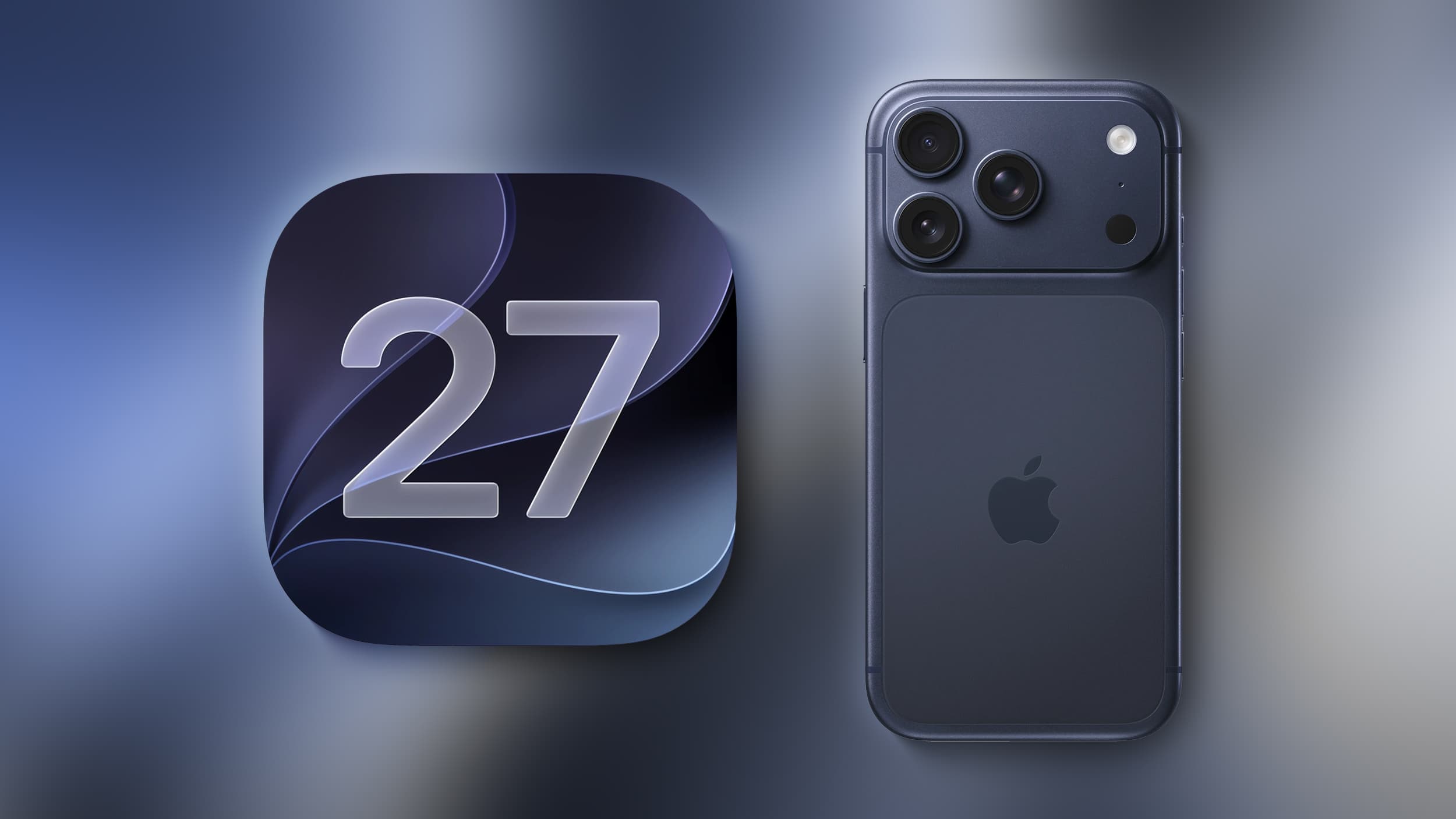
This is a pattern Apple has followed before. New Macs frequently ship alongside a companion OS update — often a point release — that contains the firmware and framework support the hardware needs. A touch layer on a Mac display would be the most consequential input change to the platform in two decades, and it would require coordinated changes across AppKit, SwiftUI, and the system's window management behavior. Testing that against 27.1 rather than waiting for macOS 28 fits a fall launch.
Gurman's reporting carries weight here because of his track record. At Bloomberg, he has called Apple's product timelines with unusual accuracy over roughly a decade, including the shift to Apple silicon, the MacBook Air redesign, and the Vision Pro's staged rollout. When he moves a product from "late 2026 or early 2027" into a firm "later this year" list, that is a meaningful narrowing of the window, not a hedge.
Key Features Expected in the Touch OLED MacBook Pro

The feature list attached to these machines has been consistent across reports. OLED panels for both the 14-inch and 16-inch sizes, touch input layered on top, M5 Pro and M5 Max chips, a thinner chassis, and a Dynamic Island replacing the notch. Each of those carries its own engineering consequence.
Read next iPhone Duo's Hidden Fake Bezel Setting ExplainedOLED is the headline. Tandem-structure OLED panels — the type Apple introduced on iPad Pro — deliver higher peak brightness and better longevity than conventional OLED, and they allow for true blacks and per-pixel dimming. On a laptop, that matters for HDR content, for pro color work, and for battery life when displaying dark interfaces. Touch input on a Mac has been the subject of internal debate at Apple for years; the company has publicly dismissed it while competitors across the Windows ecosystem shipped touchscreen laptops in volume.
The Dynamic Island would be a design consolidation. Rather than the current camera housing notch, Apple would shrink the visible intrusion into a pill-shaped cutout with software that expands around it — a pattern already familiar from iPhone. The thinner chassis, meanwhile, follows Apple's long-running push to reclaim internal volume as chips shrink and cooling requirements ease.
Notably absent from the reported summary: any confirmation of pricing, exact panel suppliers, or a specific launch date. Gurman's reporting describes testing and intent, not a finalized product.
Release Timeline: Why Late 2026 Now Looks More Likely

The shift in Gurman's language is the story. Previously, he placed these laptops in a window spanning "late 2026 or early 2027." His newest report groups them with products arriving "later this year." That is a two-quarter narrowing, and it aligns with the macOS 27.1 timing.
There is a strategic logic to a 2026 launch rather than a slip to 2027. Apple's standard 14-inch and 16-inch MacBook Pro models are expected to move to M7 Pro and M7 Max chips next year. Pushing OLED models to 2027 would crowd them against that refresh and complicate the marketing story. Shipping the OLED tier in late 2026 gives Apple a distinct, higher-margin product to anchor the holiday quarter while leaving the standard line's refresh cycle intact.
It is also worth stating the limits of this reporting plainly. Testing against macOS 27.1 confirms internal validation. It does not confirm a ship date. Apple has killed products in late-stage testing before, and supply constraints on OLED laptop panels remain a real variable.
How OLED Models Will Sit Above the Standard MacBook Pro Line
The reported expectation is that these first OLED MacBook Pros will be distinct, higher-priced models positioned above the regular 14-inch and 16-inch machines. Apple has structured premium tiers this way repeatedly.
Consider the historical pricing ladder. The MacBook Pro 14-inch entered at $1,999 with M1 Pro in 2021; the 16-inch at $2,499. When Apple introduced the M3 Max configurations in 2023, top-end 16-inch builds crossed $7,000 with memory and storage. The company has never been shy about stretching a product line upward when the underlying component — display, silicon, or both — justifies it.
A first-generation OLED touch MacBook Pro would likely occupy a new top rung. Analysts have long noted that OLED laptop panels remain expensive relative to LCD, and Apple's tandem OLED implementation adds cost on top of that. The structural precedent — iPad Pro's OLED models arriving at a premium over their predecessors — supports the same expectation here.
Market context reinforces the timing. OLED adoption in premium laptops has climbed steadily over the past several years, with panel makers in Korea and China ramping capacity specifically for notebook-sized OLED. The premium segment has moved from near-zero OLED penetration to a meaningful share of high-end Windows machines. Apple entering that segment in force would validate a panel category its suppliers have spent years and billions building out.
MacBook Ultra Branding Rumors: How Much Weight Should They Carry
Macworld previously reported that these laptops would carry "MacBook Ultra" branding. That same report also said the iPhone Duo would be named the iPhone Ultra — a claim that did not hold. A single miss does not invalidate a publication, but it does mean the branding claim should be treated as unconfirmed.
Apple maintains a small, disciplined naming vocabulary: MacBook, MacBook Air, MacBook Pro, iMac, Mac mini, Mac Studio, Mac Pro. It introduced "Ultra" once, for the M-series chip tier and the Apple Watch Ultra, both of which denote genuinely distinct capability tiers. Extending "Ultra" to a MacBook line is plausible. It is not reported by Gurman, and it does not appear in the testing information at hand.
For now, treat the branding as speculation. The hardware — OLED, touch, M5 Pro and M5 Max, thinner design, Dynamic Island — has broader reporting support.
Should You Wait? What This Means for Mac Buyers Today
If you need a MacBook Pro now, buy one now. The standard 14-inch and 16-inch models remain excellent machines, and the OLED tier, when it arrives, will sit above them in price, not replace them.
If you are a professional whose work depends on display accuracy — colorists, photographers, HDR editors — the calculus changes. OLED's contrast and per-pixel dimming represent a real workflow improvement. Waiting until Apple confirms a launch makes sense for that buyer.
For everyone else, the decision rests on a single question: is touch input on a laptop worth a premium to you? Apple's answer, based on this reporting, appears to be that it is worth building. Whether it is worth buying is a question only the price tag will settle.