What Are Extreme Climate Events?
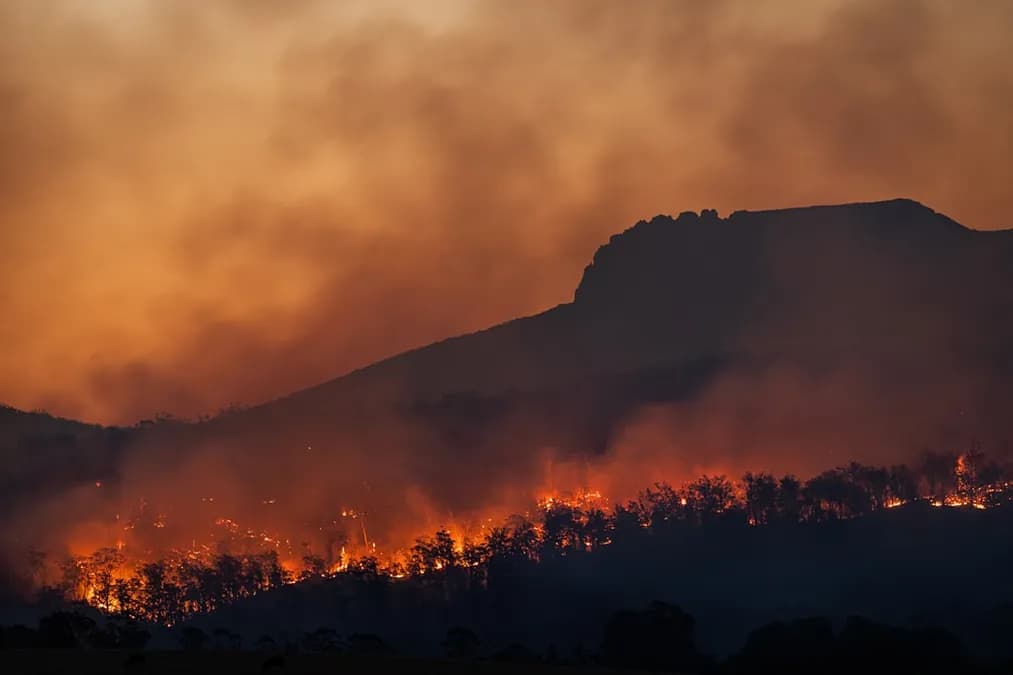
In June 2021, the village of Lytton, British Columbia, reached 49.6°C, breaking Canada’s national heat record before a wildfire destroyed much of the community the next day. That combination of record heat, dry vegetation, and fast-moving fire shows what scientists mean by extreme climate events: weather or climate conditions that sit far outside the historical range for a place and season, often with severe consequences for people, infrastructure, and ecosystems.
Extreme climate events include heat waves, intense rainfall, droughts, tropical cyclones, wildfires, coastal floods, compound events, and abrupt cold spells. A single event may last hours, as with flash flooding, or years, as with prolonged drought. What makes an event “extreme” is not only its physical intensity but also its rarity and impact. A 40°C day in Phoenix is not unusual; the same temperature in Portland, Oregon, can be deadly because buildings, public-health systems, and residents are less prepared.
Climate science distinguishes between weather and climate, but the two are linked. Weather is the day-to-day state of the atmosphere. Climate is the statistical pattern of weather over decades. Extreme events occur within weather systems, yet their odds and severity are shaped by the background climate. As that background warms, the distribution shifts. Events that once sat at the far tail become more common.
The Intergovernmental Panel on Climate Change’s Sixth Assessment Report, released across 2021 and 2022, concluded that human influence has already increased the frequency and intensity of hot extremes on land, heavy precipitation in many regions, and some agricultural and ecological droughts. The World Meteorological Organization has likewise reported that the past decade was the warmest on record, while NASA’s Goddard Institute for Space Studies finds Earth has warmed by roughly 1.2°C since the late 19th century, mainly because of greenhouse gas emissions from fossil fuels, land-use change, and industry.
The result is not a uniform worsening of every hazard everywhere. Some extremes are better understood than others. Heat waves carry the clearest global signal. Heavy rainfall is also strongly linked to warming because a warmer atmosphere can hold more water vapor, about 7% more per 1°C of warming under basic thermodynamics. Tropical cyclones are not necessarily becoming more numerous globally, but the strongest storms are expected to carry more rain and reach higher peak intensity. Climate change loads the dice; local geography, exposure, and preparedness determine much of the damage.
How Climate Change Is Making Extreme Events More Frequent
A heat extreme that occurred once every 50 years in the preindustrial climate is now about 4.8 to 5 times more likely at roughly 1°C of global warming, according to the IPCC AR6 assessment. At 1.5°C, the same kind of event is projected to become about 8.6 times more likely; at 2°C, about 13.9 times more likely. That is one of the clearest statistical summaries of how a small shift in global average temperature can produce large changes in extremes.
Read next How Climate Change Works: A Clear ExplainerThe mechanism is straightforward. Greenhouse gases trap additional heat in the climate system. More than 90% of the excess heat has been absorbed by the oceans, according to major assessments by the IPCC and ocean-observing programs, but the atmosphere, land, and ice are also changing. Warmer air raises the baseline for heat waves. Warmer seas add energy and moisture to storms. Earlier snowmelt can dry soils before peak summer heat arrives, increasing fire risk and agricultural stress.
Heavy rainfall follows another well-established pathway. Because warmer air can hold more moisture, storms can deliver more intense downpours when conditions are right. The IPCC reports that heavy precipitation has increased over many land regions since the 1950s, with human-caused climate change likely the main driver. This does not mean every rainstorm is caused by climate change. It means the storm forms in a wetter, warmer atmosphere than it would have a century ago.
Attribution science has made this connection more precise. The World Weather Attribution group, an international collaboration of climate scientists, compares observed events with climate-model simulations of a world without human-caused warming. After the 2021 Pacific Northwest heat wave, WWA found the event would have been “virtually impossible” without human-caused climate change and estimated that warming made such an event at least 150 times more likely. Later peer-reviewed studies using different methods also found a strong human fingerprint, though with varying estimates of magnitude.
Attribution studies have reached similar conclusions for other events. The 2022 heat wave in India and Pakistan was made about 30 times more likely by climate change, according to World Weather Attribution. The 2022 drought in the Northern Hemisphere’s extratropics, affecting parts of Europe, China, and North America, was made more likely by human-caused warming through higher temperatures and soil-moisture loss. These findings do not erase natural variability. They show that variability now operates on a changed planet.
Major Types of Extreme Climate Events
In 2022, the United States experienced 18 separate billion-dollar weather and climate disasters, causing at least $165 billion in damages, according to NOAA’s National Centers for Environmental Information. Those disasters included drought, wildfire, severe storms, flooding, winter storms, and Hurricane Ian. The diversity matters: extreme climate events are not one category but a family of hazards, each with different physics and risks.
Heat waves are the most direct expression of a warming climate. They strain the heart and kidneys, reduce labor productivity, buckle roads, disrupt rail systems, and increase electricity demand. Humid heat is especially dangerous because it limits the body’s ability to cool itself through sweating. During Europe’s 2003 heat wave, peer-reviewed estimates attributed more than 70,000 excess deaths to the event. In 2022, Europe again faced severe heat, with tens of thousands of heat-related deaths estimated across the continent.
Heavy rainfall and flooding are another major class. Extreme rainfall can overwhelm drainage systems, trigger landslides, contaminate water supplies, and destroy homes. In July 2021, catastrophic flooding in Germany and Belgium killed more than 200 people. World Weather Attribution found climate change made such extreme rainfall in the region more likely and more intense. In Pakistan in 2022, exceptional monsoon rains and flooding affected roughly 33 million people, according to United Nations reporting, damaging homes, crops, roads, and health facilities.
Droughts develop more slowly but can be just as destructive. Meteorological drought begins with a rainfall deficit; agricultural drought affects soil moisture and crops; hydrological drought reduces rivers, reservoirs, and groundwater. The American West’s megadrought, intensified by warming, has been described in Nature Climate Change research as among the driest 22-year periods in the region in at least 1,200 years. Heat worsens drought by increasing evaporation and plant water demand.
Wildfires are not purely climate events, since ignition sources, land management, housing patterns, and fire suppression all matter. But climate change increases the likelihood of hot, dry, windy conditions that allow fires to spread rapidly. In California, research has linked a large increase in autumn burned area to rising temperatures and drying fuels. In Canada’s record 2023 wildfire season, smoke affected air quality across North America, demonstrating how local extremes can become continental public-health events.
Tropical cyclones draw energy from warm ocean water. The IPCC finds that the proportion of intense tropical cyclones is likely to increase as the climate warms, and rainfall rates associated with these storms are expected to rise. Hurricane Harvey in 2017 produced more than 1,200 millimeters of rain in parts of Texas. Peer-reviewed attribution studies found climate change increased Harvey’s rainfall by a meaningful margin, with estimates commonly around 15% to nearly 40% depending on the method.
Compound events are especially dangerous. A heat wave during a drought can damage crops more severely than either hazard alone. A storm surge hitting during high tide and sea-level rise can flood farther inland. A blackout during extreme heat turns a weather hazard into a public-health crisis. These overlapping risks are a growing focus of climate research because real disasters rarely arrive in neat categories.
Real-World Impacts on Communities and Ecosystems
During Hurricane Ian in 2022, storm surge and winds devastated parts of southwest Florida, and NOAA later listed the storm among the costliest U.S. disasters on record. The financial losses were staggering, but the deeper story was vulnerability: older residents, low-lying neighborhoods, mobile homes, insurance gaps, and evacuation barriers shaped who suffered most.
Extreme climate events expose existing inequalities. People with air conditioning, flexible jobs, insurance, savings, and reliable transportation can often reduce their risk. People without those protections face higher danger. Outdoor workers are more exposed to heat. Renters may lack flood repairs or cooling upgrades. Rural communities may wait longer for emergency services. Indigenous communities can face threats to land, food systems, and cultural sites. In cities, neighborhoods with fewer trees and more asphalt can be several degrees hotter than wealthier, greener areas nearby.
Public health impacts are broad. Heat increases deaths from cardiovascular and respiratory disease. Wildfire smoke contains fine particles known as PM2.5, which can penetrate deep into the lungs and bloodstream. Flooding can spread pathogens, mold, and chemical contaminants. Drought can reduce crop yields and raise food prices. After disasters, mental-health burdens often persist for years, including anxiety, depression, and post-traumatic stress.
Ecosystems are also being pushed beyond familiar limits. Coral reefs suffer bleaching when ocean temperatures stay too high for too long; repeated bleaching leaves less time for recovery. Forests can shift from carbon sinks to carbon sources after severe drought, insect outbreaks, or fire. Rivers warmed by heat waves can become lethal for salmon and trout. In 2021, the Pacific Northwest heat dome contributed to mass mortality of intertidal marine life along parts of the coast.
Economic losses are rising because hazards are intensifying and more people and assets are located in risky places. NOAA’s Billion-Dollar Weather and Climate Disasters database shows that from 1980 through 2024, the United States recorded more than 400 events causing at least $1 billion in damage each, adjusted for inflation. The recent pace is far higher than in the early decades of the record. Climate change is one driver; population growth, coastal development, and aging infrastructure are also central.
What Can Be Done to Reduce Climate Extremes?
France’s heat-health warning system, expanded after the deadly 2003 heat wave, is credited with reducing mortality in later hot summers. That example points to a practical truth: societies cannot prevent every extreme event, but they can reduce the damage.
The first line of risk reduction is cutting greenhouse gas emissions. Every fraction of a degree matters. The IPCC estimates that limiting warming to 1.5°C rather than 2°C would substantially reduce exposure to extreme heat, heavy precipitation, drought, and ecosystem losses. Rapid emissions cuts in power, transport, buildings, industry, agriculture, and land use would slow the rate at which extremes intensify. Methane reductions can also bring near-term benefits because methane is powerful but relatively short-lived in the atmosphere.
Adaptation is the second line. Cities can expand tree cover, cool roofs, reflective pavements, shaded transit stops, and heat shelters. Building codes can require flood-resistant construction, better insulation, passive cooling, and fire-resistant materials in high-risk zones. Early-warning systems save lives when alerts are trusted, specific, and paired with transportation, cooling centers, evacuation support, and public communication in multiple languages.
Water management must change as rainfall patterns become more volatile. This includes restoring wetlands, reconnecting floodplains, upgrading storm drains, managing reservoirs for both drought and flood risk, and reducing groundwater overuse. Farmers can reduce risk through soil-moisture conservation, crop diversification, improved irrigation, drought-tolerant varieties, and better seasonal forecasts.
For wildfires, prescribed burning, Indigenous fire stewardship, defensible space around homes, grid maintenance, and land-use planning can reduce losses. In coastal regions, risk reduction may require seawalls in some places, restored marshes in others, and managed retreat where repeated rebuilding becomes untenable. No single measure works everywhere.
Insurance and finance also matter. If premiums, disaster aid, and rebuilding rules ignore rising risk, they can encourage development in hazardous areas. If they are designed carefully, they can support safer construction and relocation while protecting households from financial ruin. The goal is not only to recover after disasters but to rebuild in ways that lower the next loss.
The Future Outlook for Extreme Climate Events
At 2°C of global warming, the IPCC projects that a preindustrial once-in-50-year heat extreme would occur nearly 14 times as often and be about 2.7°C hotter. At 4°C, it would occur almost 40 times as often and be more than 5°C hotter. Those numbers describe a future that depends heavily on choices made this decade and beyond.
The future of extreme climate events is not fixed. Current policies, technology costs, energy choices, land-use decisions, and adaptation investments will shape the level of risk. The world has already warmed enough to make many extremes more dangerous, and some impacts are now unavoidable. Yet the difference between a 1.5°C, 2°C, and 3°C world is enormous for heat mortality, crop losses, flood risk, wildfire weather, water stress, and ecosystem survival.
Some regions face sharper risks than others. The Arctic is warming several times faster than the global average, disrupting sea ice, permafrost, and northern communities. Small island states and low-lying deltas face sea-level rise that worsens storm surge and coastal flooding. Mediterranean regions are projected to experience more severe heat and drought. South Asia faces dangerous combinations of heat and humidity, especially for outdoor workers and densely populated cities.
Science will continue to improve forecasts and attribution. Better satellite observations, high-resolution models, and event-by-event analysis are already helping officials understand which risks are rising fastest. But knowledge alone does not protect people. The decisive test is whether governments, businesses, and communities translate that knowledge into lower emissions, stronger infrastructure, healthier ecosystems, and more equitable disaster planning.
Extreme climate events are best understood as warnings with data attached. They show how much the climate has already changed, where societies are exposed, and what kinds of preparation work. The evidence from the IPCC, NOAA, WMO, NASA GISS, and attribution scientists points in the same direction: warming is increasing the odds and intensity of many extremes, especially heat and heavy rainfall. The severity of future risk depends on how quickly emissions fall and how seriously communities prepare for the climate already here.
Related coverage