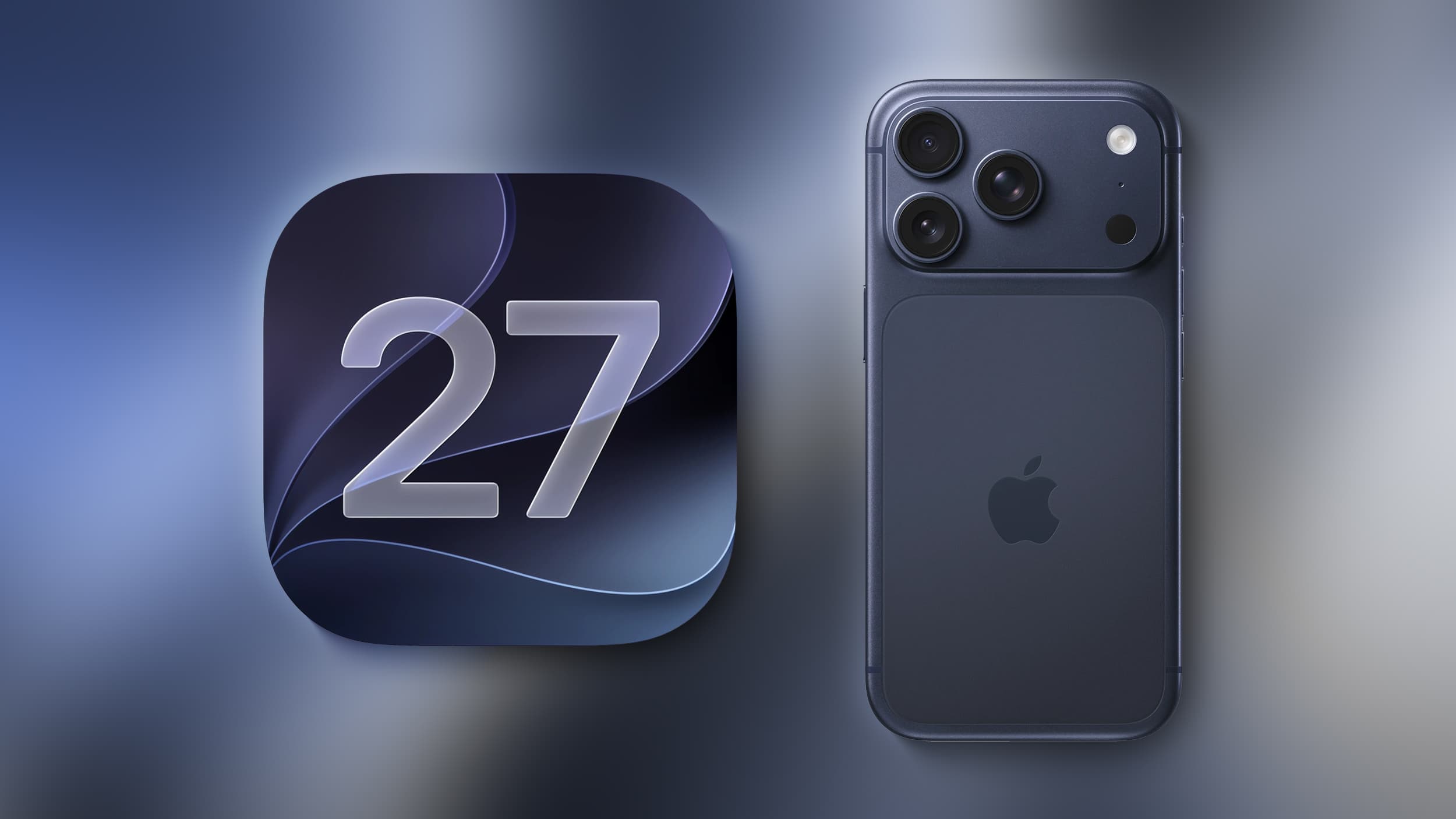
Craig Federighi Sits Down with MKBHD to Discuss iPhone Duo
Apple's senior vice president of Software Engineering does not grant interviews casually. When Craig Federighi sat down with Marques Brownlee — better known as MKBHD — this week to talk about the new iPhone Duo, the conversation carried immediate weight among Apple watchers. Federighi is the face of Apple software on stage each June, and his willingness to engage directly with a YouTube interviewer rather than a traditional print publication signals how seriously Apple is taking the messaging around one of its most unconventional iPhone releases in years.
The iPhone Duo is a device that naturally invites questions. A larger form factor, presumably designed around dual-screen or a significantly expanded display footprint, lands squarely in territory that Apple's own iPad has occupied for nearly a decade and a half. Federighi addressed that tension head-on during the interview, acknowledging the obvious: yes, consumers will look at the iPhone Duo and then look at their iPad and wonder which one they actually need.
That acknowledgment alone is notable. Apple executives typically deflect product-cannibalization questions with rehearsed talking points about how each product serves a distinct need. Federighi's willingness to sit with the discomfort of the question — rather than wave it away — suggests Apple has a considered answer, even if that answer is more nuanced than a simple "they're different products."
The iPhone Duo and iPad Overlap Explained
The overlap concern is not hypothetical. Research from firms including IDC and Canalys has consistently shown that the tablet and large-screen smartphone categories pull from overlapping consumer pools. When smartphone screens crossed the 6-inch threshold, tablet unit sales — particularly in the 7- to 9-inch segment — softened noticeably in several markets. The logic is straightforward: a device that fits in your pocket but offers a display large enough for video, reading, and productivity removes one of the primary reasons someone picks up a dedicated tablet.
Read next iPhone Duo's Hidden Fake Bezel Setting ExplainedThe iPhone Duo, by virtue of its design ambition, sits closer to that boundary than any iPhone before it. Apple itself has long noted that a substantial majority of iPad purchasers already own an iPhone. When that iPhone starts doing more of what an iPad does, the upgrade calculus changes for a meaningful slice of the market.
Federighi's framing during the MKBHD interview centered on the question of use context rather than raw screen size. His argument, as conveyed through the interview, is that the iPhone Duo remains a phone — carried on a person, always connected to cellular, available in a moment's notice — while the iPad occupies a different space in a user's day, one associated with sustained sessions at a desk, a couch, or a travel bag. The distinction sounds intuitive, but it requires consumers to accept that size alone does not define a product category. That is a harder sell than it used to be.
Why Apple Chose MKBHD for This Conversation

MKBHD's channel has over 18 million subscribers and a reputation for technically rigorous, visually polished reviews that attract exactly the kind of buyer Apple targets with its premium lineup. Choosing Brownlee for a conversation of this sensitivity was deliberate. His audience skews toward enthusiasts who research before they buy, who will watch a 20-minute video and compare it against a spec sheet, and who are likely already considering whether the iPhone Duo changes anything about how they use their other Apple devices.
Apple has used creator partnerships selectively but with increasing sophistication. Previous product executives have appeared with Brownlee for deep-dive technical discussions, and those conversations reliably surface in search results and social sharing for weeks after posting. For a device as conceptually bold as the iPhone Duo, reaching an audience capable of processing nuance — rather than just reading a headline — is strategically sound. Federighi is one of the few Apple leaders who can hold a conversation about software architecture, product philosophy, and consumer psychology within the same few minutes without it feeling forced.
Historical Context: Apple's Track Record with Overlapping Products
Apple has navigated internal competition between its own product lines before, and the company's track record is mixed. The iPad versus MacBook Air debate ran for years. When the iPad Pro arrived in 2015 with its 12.9-inch display, keyboard accessories, and Apple Pencil support, analysts at firms including Gartner raised immediate questions about where the MacBook Air sat in the lineup. Apple's answer at the time, delivered by Steve Jobs's successor with characteristic confidence, was that the products served different use modes. The market eventually validated that claim — both lines grew — but the period of consumer confusion was real and lasted longer than Apple probably wanted.
The iPhone Duo situation echoes that dynamic. There is also a precedent from within the iPhone line itself: when Apple introduced the iPhone Plus models, some buyers who had purchased a standard-sized iPad mini found that the larger iPhone addressed most of what they used the smaller tablet for. iPad mini sales dipped. Apple eventually refreshed that product, but the overlap was acknowledged in the numbers even if not from the stage.
What's different now is that Apple appears to be getting ahead of the narrative. Federighi speaking to Brownlee before the product fully settles in the market is a proactive step, not a reactive one.
What This Means for Buyers Deciding Between iPhone Duo and iPad
For the consumer standing in the Apple Store — or more likely, configuring both products in browser tabs — Federighi's comments offer a practical framework. The iPhone Duo is a phone that happens to have an expansive display. The iPad is a display that happens to have some phone-adjacent connectivity. The former stays with you; the latter waits for you.
That distinction matters for specific kinds of buyers. Someone who primarily uses their iPad for email, light document editing, and casual video consumption at home may find the iPhone Duo makes the tablet redundant for those tasks. Someone who relies on an iPad for extended creative work — illustration, video editing, spreadsheet-heavy financial analysis — will find no substitute in a phone, regardless of screen size.
Buyers who are dual-device households, where one person uses an iPhone and another uses an iPad for distinct purposes, face the least disruption. The group most likely to feel the squeeze is the solo user who bought an iPad primarily because their phone screen felt too small. That specific use case becomes genuinely harder to justify once the iPhone Duo is in the room.
Apple's pricing architecture will ultimately do as much work here as any interview. If the iPhone Duo commands a premium that puts it in iPad Pro territory, the products will naturally self-sort. If the price delta is narrow, consumers will make the call that Federighi addressed directly: what does my day actually look like, and which device fits it?
Takeaways from Federighi's Comments
Three things stand out from the Craig Federighi iPhone Duo conversation with MKBHD. First, Apple is not pretending the overlap doesn't exist. That transparency, even framed carefully, is a departure from the company's usual posture and signals confidence in how differentiated the Duo actually is in practice. Second, Federighi's emphasis on use context over specifications is Apple's preferred terrain — it is the same argument the company has made for years about why Mac and iPad coexist. Third, the choice of venue matters: a conversation with MKBHD reaches the exact consumer segment most likely to own both an iPhone and an iPad, and most likely to think carefully before adding a third device.
The iPhone Duo lands in a market that Apple shaped over 15 years of defining what phones and tablets are for. That Federighi felt it necessary to redraw those lines publicly is itself a signal. The lines needed redrawing.
Source: 9to5Mac