What Are Forests and Why Do They Matter for Climate
The Food and Agriculture Organization of the United Nations estimates that the world has lost about 420 million hectares of forest since 1990 through conversion to agriculture, pasture, infrastructure, and other land uses. That is an area larger than India. The figure is not just a land-use statistic. It is a climate statistic.
Forests cover roughly 31% of the world’s land area, according to the FAO’s Global Forest Resources Assessment. They are living systems made up of trees, soils, fungi, rivers, wildlife, and people. A forest is not simply a collection of trunks and leaves. It is a carbon store, a water pump, a habitat network, a food source, a weather regulator, and, for hundreds of millions of people, a cultural and economic foundation.
For climate, forests matter in two main ways. First, they absorb carbon dioxide from the atmosphere through photosynthesis and store it in wood, roots, leaves, dead organic matter, and soils. Second, when forests are cleared, burned, drained, or degraded, that stored carbon can be released back into the atmosphere as carbon dioxide, methane, and nitrous oxide.
The Intergovernmental Panel on Climate Change’s Sixth Assessment Report identifies land ecosystems, including forests, as a major sink for human-caused carbon pollution. Forests absorb roughly 2.6 billion tonnes of carbon dioxide annually, a figure often described as equivalent to about 30% of human emissions when broader land and forest sink estimates are considered. This natural service lowers the concentration of heat-trapping gases in the atmosphere and buys time for societies to reduce fossil fuel emissions.
But the buffer is weakening in some places. Heat waves, drought, fire, illegal logging, mining, road expansion, and agricultural conversion are pushing many forests closer to ecological thresholds. The Amazon, the Congo Basin, and Southeast Asia’s tropical forests are often discussed together because they hold extraordinary carbon and biodiversity value, yet they face different pressures. In the Amazon, cattle ranching and soy expansion have driven large-scale clearing. In the Congo Basin, smallholder agriculture, charcoal production, and logging roads create a more fragmented pattern of degradation. In Southeast Asia, oil palm, pulpwood plantations, mining, and peatland drainage have transformed entire landscapes.
Forests are also unequal in their climate significance. Tropical forests, such as those in Brazil, the Democratic Republic of the Congo, Indonesia, Peru, and Colombia, store dense carbon in vegetation and soils while supporting exceptionally high biodiversity. Boreal forests across Canada, Russia, Scandinavia, and Alaska store immense quantities of carbon in cold soils and peat. Temperate forests in the United States, Europe, China, Japan, Chile, and New Zealand have often been heavily altered but can still function as powerful carbon sinks when managed well.
A credible climate strategy cannot treat forests as a substitute for cutting fossil fuel emissions. The arithmetic does not allow it. Coal, oil, and gas remain the largest sources of human-caused carbon dioxide. But a climate strategy without forests is also incomplete. Protecting existing forests, restoring degraded lands, and improving land management can reduce emissions, strengthen resilience, and protect the ecological systems that make human life more secure.
How Forests Regulate Climate and Weather Patterns
In the Amazon, a single large tree can move hundreds of liters of water into the air on a hot day through transpiration. Multiply that by billions of trees, and a forest becomes a continental-scale water engine.
Read next How Climate Change Works: A Clear ExplainerForests regulate climate through carbon storage, water cycling, surface cooling, cloud formation, and soil protection. Their influence can be local, regional, and global.
The most familiar mechanism is carbon uptake. Trees absorb carbon dioxide and convert it into biomass. Some carbon remains locked in trunks and roots for decades or centuries. Some enters soils through leaf litter, fallen branches, dead roots, fungi, and microbial activity. Globally, forests store hundreds of billions of tonnes of carbon, with major pools in aboveground biomass, belowground roots, dead wood, litter, and soil organic matter.
The second mechanism is evapotranspiration: water evaporating from soil and transpiring from leaves. Forest canopies pull water from the ground and release vapor into the atmosphere. This process cools the land surface, influences rainfall, and can help generate atmospheric moisture flows. Scientists studying the Amazon have described “flying rivers,” streams of water vapor that move across South America and help deliver rainfall to agricultural and urban regions far from the forest itself.
When forests are removed, the surface often becomes hotter and drier. Cropland, pasture, bare soil, and degraded land usually reflect and release heat differently than intact forest. The change can reduce local rainfall, increase temperature extremes, and raise fire risk. This is one reason deforestation can create self-reinforcing damage: clearing reduces moisture, drier conditions make fire more likely, fire degrades forest edges, and degraded forest becomes more vulnerable to future clearing.
Forests also influence the albedo effect, which is the share of sunlight reflected back into space. Snow-covered boreal forests can absorb more sunlight than open snowy landscapes because dark tree canopies reduce reflectivity. This means forest expansion in some high-latitude regions can have complex climate effects. A new forest may store carbon but also absorb more solar energy. Tropical forests, by contrast, often deliver strong cooling benefits through both carbon storage and moisture recycling.
Weather regulation is one of the least appreciated services forests provide. The Congo Basin, the world’s second-largest tropical rainforest, helps sustain rainfall across Central Africa. The forest influences river systems, agriculture, hydropower, and food security in countries such as the Democratic Republic of the Congo, Republic of the Congo, Cameroon, Gabon, and Central African Republic. Losing large areas of forest there would not only emit carbon; it could also alter the hydrological stability of the region.
In Southeast Asia, peat swamp forests offer a clear example of forest-climate interaction. Indonesia’s peatlands store vast amounts of carbon in waterlogged soils accumulated over thousands of years. When these forests are drained for plantations or agriculture, the peat dries, oxidizes, subsides, and becomes highly flammable. The fires that follow can send thick haze across borders and release enormous pulses of greenhouse gases. The 2015 Indonesian peat and forest fires were widely reported by scientific and policy institutions as one of the year’s major land-based emissions events.
Forests shape climate in layered ways. They are carbon sinks, air conditioners, rainfall systems, flood buffers, and firebreaks when intact. When damaged, they can become carbon sources and climate amplifiers.
Deforestation: Causes, Scale, and Climate Impact
In 2022, Brazil’s Amazon deforestation rate remained high by historical standards, while satellite monitoring showed millions of hectares of tropical primary forest lost globally. Behind those numbers are roads, land speculation, illegal mining, cattle pasture, commodity crops, and weak governance.
Deforestation is the permanent conversion of forest to another land use. Forest degradation is different but closely related: the forest remains standing in some form, yet its ecological integrity, biomass, species composition, or carbon storage declines. Selective logging, fire, hunting, fragmentation, and invasive species can all degrade a forest without immediately turning it into pasture or cropland.
Agriculture is the largest driver. The FAO and other international assessments consistently identify agricultural expansion as the dominant cause of deforestation, especially in the tropics. Commercial agriculture drives major losses in Latin America and Southeast Asia, while subsistence and smallholder agriculture are more prominent in parts of Africa. The specific commodity varies by region.
In the Amazon, cattle ranching has been the leading driver of deforestation for decades. Brazil contains about 60% of the Amazon rainforest, and its policy shifts have had measurable consequences. When enforcement, protected areas, and supply-chain pressure strengthened in the 2000s, Brazilian Amazon deforestation fell sharply from earlier peaks. When enforcement weakened, illegal clearing rose again. This shows that deforestation is not inevitable. Governance changes can alter the trajectory.
The Amazon has lost an estimated 17% of its original forest cover, with some scientists warning that a much higher level of loss and degradation could push parts of the forest toward a drier savanna-like state. The risk is not a single cliff edge across the entire basin. It is a regional mosaic of stress: southern and eastern Amazon forests are more exposed to clearing, drought, fire, and fragmentation than wetter western regions.
The Congo Basin has historically had lower deforestation rates than the Amazon or Southeast Asia, but pressure is rising. The Central African Forest Initiative and UNEP-linked assessments have highlighted risks from logging concessions, mining, roads, fuelwood demand, and agricultural expansion. The Democratic Republic of the Congo alone contains more than 100 million hectares of forest, making its land-use future globally significant. Even modest annual percentage losses can translate into large absolute areas over time.
Southeast Asia has experienced some of the world’s fastest tropical forest conversion over the past half-century. Indonesia and Malaysia became global centers of palm oil and pulpwood production. In Indonesia, millions of hectares of natural forest and peatland have been converted to plantations, although government moratoria, corporate no-deforestation pledges, peat restoration efforts, and stronger fire controls have helped reduce annual forest loss in recent years compared with the severe peaks of the early 2000s and 2015 fire crisis.
The climate impact of deforestation comes from several sources. Burning releases carbon immediately. Decomposition releases carbon more slowly. Soil disturbance can release additional carbon. Peat drainage is especially damaging because it turns ancient carbon stores into persistent emissions sources. Deforestation also removes future carbon uptake, meaning the atmosphere loses a sink as well as gaining emissions.
The IPCC has estimated that agriculture, forestry, and other land use account for a substantial share of global greenhouse gas emissions, often cited around one-fifth to nearly one-quarter depending on accounting methods and time period. Deforestation is a major part of that land-sector footprint.
Tropical deforestation is especially consequential because tropical forests store high carbon densities and can recover slowly after severe disturbance. UNEP has warned that tropical forest loss remains inconsistent with global climate and biodiversity goals, even as some countries have improved monitoring and enforcement. Forestry scientists often stress that the cheapest and most reliable carbon benefit comes from keeping existing forests standing. A mature forest contains carbon that would take decades or centuries to replace if lost.
That time factor matters. A newly planted tree does not instantly compensate for a cleared old-growth forest. Carbon payback periods can be long, and biodiversity losses may be irreversible on human time scales.
Forest Biodiversity and Ecosystem Services
A single hectare of tropical forest can contain hundreds of tree species, while a comparable hectare of plantation may contain only one commercial species. That difference defines much of the gap between a living forest and a simplified tree crop.
Forests hold most of the world’s terrestrial biodiversity. Tropical forests are especially rich, supporting vast numbers of mammals, birds, reptiles, amphibians, insects, fungi, and plants. The Amazon is home to jaguars, harpy eagles, pink river dolphins, poison dart frogs, Brazil nut trees, and countless insect species. The Congo Basin supports forest elephants, bonobos, okapi, gorillas, and thousands of plant species. Southeast Asian rainforests shelter orangutans, hornbills, clouded leopards, gibbons, and dipterocarp trees that can tower above the canopy.
Biodiversity is not decorative. It underpins ecosystem function. Pollinators support crops and wild plants. Predators regulate herbivore populations. Fungi connect trees through underground networks and help move nutrients. Seed dispersers such as birds, bats, primates, and elephants help forests regenerate. When species disappear, ecological processes weaken.
The benefits people receive from forests are called ecosystem services. They include carbon storage, water purification, soil stabilization, flood control, food, medicine, timber, fuelwood, pollination, cultural identity, and recreation. These services are often economically invisible until they fail.
Forests protect watersheds. Tree roots stabilize slopes and reduce erosion. Leaf litter helps soils absorb rainfall. Intact forests can reduce sediment loads in rivers, protecting reservoirs, irrigation systems, fisheries, and drinking water supplies. In mountainous regions, deforestation can increase landslide risk. In coastal zones, mangrove forests reduce storm surge damage and provide nursery habitat for fish.
Mangroves deserve special attention. They cover a small fraction of global forest area but store carbon at very high densities, especially in soils. Known as “blue carbon” ecosystems, mangroves, seagrasses, and salt marshes can sequester carbon efficiently while protecting coasts from storms. Countries such as Indonesia, Brazil, Nigeria, Mexico, and Bangladesh have large mangrove systems that matter for both climate adaptation and mitigation.
Forests also support livelihoods. The World Bank and FAO have estimated that hundreds of millions of people depend directly on forests for food, income, fuel, shelter, or cultural survival. Indigenous peoples and local communities manage or have tenure claims over large areas of high-integrity forest. Studies published in major scientific journals have repeatedly found that forests under secure Indigenous and community tenure often experience lower deforestation rates than comparable lands without such governance.
The biodiversity stakes are rising because habitat loss interacts with climate change. Species adapted to narrow temperature, rainfall, or elevation ranges may struggle to move as conditions shift. Fragmented forests make movement harder. A bird or mammal might cross an intact landscape, but not a matrix of highways, farms, fires, and settlements. Climate corridors, protected areas, and restoration zones can help species track suitable habitat.
There is also a public health dimension. Forest disruption can increase contact among wildlife, livestock, and people, raising the risk of zoonotic disease spillover. The relationship is complex and cannot be reduced to a single cause, but land-use change is widely recognized by health and biodiversity scientists as one factor increasing disease risk.
The message from ecology is blunt: carbon is only one measure of forest value. A plantation may store carbon. An intact forest stores carbon while also sustaining water systems, species networks, culture, food, and resilience.
Reforestation and Afforestation as Climate Solutions
China has planted tens of billions of trees through national greening programs, while countries from Ethiopia to Costa Rica have launched restoration campaigns to rebuild forest cover. The results show both the promise and the risk of tree-based climate policy.
Reforestation means restoring trees to land that was previously forested. Afforestation means establishing forest on land that has not recently been forest. Both can remove carbon dioxide from the atmosphere, reduce erosion, improve water retention, and reconnect habitats. But outcomes depend on where, how, and why trees are planted.
The climate case for reforestation is straightforward. Growing trees absorb carbon. Restored forests can rebuild biomass and soil carbon over decades. The IPCC identifies reforestation, improved forest management, agroforestry, and avoided deforestation as important land-based mitigation options. Natural regeneration, where forests regrow with limited planting, can be especially cost-effective when seed sources, soils, rainfall, and land tenure conditions are favorable.
Costa Rica is one of the strongest real-world examples. In the 1980s, the country had experienced severe forest loss. Through protected areas, payments for ecosystem services, ecotourism, and policy reforms, Costa Rica reversed the trend and expanded forest cover significantly. The country’s experience shows that forest recovery can be linked to rural livelihoods and national development, although it also depends on local land economics and cannot be copied wholesale everywhere.
Brazil has another major restoration story in the Atlantic Forest, one of the world’s most threatened biodiversity hotspots. Much of the original forest was cleared for agriculture and urban growth, but restoration coalitions have worked to reconnect fragments, protect watersheds, and restore native species. The Atlantic Forest Restoration Pact has aimed at millions of hectares of recovery, showing how restoration can combine climate, biodiversity, and water goals.
Still, tree planting is often oversold. A poorly designed plantation can damage grasslands, reduce water availability, displace communities, or support little biodiversity. Planting fast-growing exotic species may produce timber or pulp but not recreate a natural forest. In dry regions, dense tree planting can consume scarce water. In naturally open ecosystems such as savannas and native grasslands, afforestation can harm species adapted to open habitats and may provide limited climate benefit.
The strongest restoration projects share several traits. They protect existing forests first. They use native species where appropriate. They respect land rights. They measure survival, not just seedlings planted. They plan for fire, drought, pests, and long-term maintenance. They also create economic reasons for local communities to keep restored forests standing.
Carbon markets have increased interest in reforestation. Some projects generate credits for companies or governments seeking to offset emissions. This can bring money to restoration, but it also raises concerns about permanence, additionality, leakage, and accounting. Permanence asks whether the carbon will stay stored for decades. Additionality asks whether the forest would have grown anyway. Leakage asks whether protection in one place simply shifts deforestation elsewhere.
A tonne of carbon stored in a forest is vulnerable in ways a tonne of fossil carbon left underground is not. Fire, drought, illegal clearing, disease, or political change can reverse forest carbon gains. That does not make restoration useless. It means restoration must complement deep emissions cuts, not excuse delay.
The best climate forest is often the one already standing. The best restoration is often the one that expands, buffers, and reconnects that forest.
Sustainable Forestry and Agroforestry Practices
In parts of Mexico and Guatemala, community forestry enterprises have maintained forest cover while producing timber, jobs, and local revenue. These examples challenge the false choice between strict protection and destructive extraction.
Sustainable forestry aims to harvest wood and other forest products while maintaining the forest’s long-term ecological function. It can include reduced-impact logging, longer harvest rotations, protection of high-conservation-value areas, monitoring of regeneration, limits on road building, and safeguards for wildlife and water. Certification systems such as the Forest Stewardship Council were created to improve standards, although certification quality and enforcement vary by region.
Reduced-impact logging can lower damage compared with conventional logging. Planning skid trails, mapping valuable trees, training crews, cutting vines before felling, and avoiding steep or sensitive areas can reduce collateral damage and carbon emissions. In tropical forests, careless logging can damage many non-target trees for every tree harvested. Better practices can make a measurable difference.
But “sustainable” cannot be a label alone. Some forests should not be logged because their biodiversity, cultural value, carbon density, or fragility is too high. Primary tropical forests, intact peat swamp forests, and sacred Indigenous lands often require strict protection or community-led governance rather than commercial extraction.
Agroforestry integrates trees with crops or livestock. It is one of the most practical bridges between food production and forest protection. Shade-grown coffee and cocoa systems can provide habitat, store carbon, reduce heat stress, and diversify farmer income. In the Sahel, farmer-managed natural regeneration has restored trees across agricultural landscapes in Niger and neighboring countries, improving soil fertility and crop resilience. In Central America, silvopasture systems combine trees, forage, and livestock to provide shade, fodder, carbon storage, and better animal welfare.
Agroforestry is not a universal solution, but it addresses a central problem: farmers need income from land. If forest protection policies ignore rural livelihoods, they often fail. Systems that combine production, trees, and secure tenure can reduce pressure to clear additional land.
Sustainable supply chains also matter. Beef, soy, palm oil, cocoa, coffee, rubber, timber, and pulp can all be linked to deforestation. The European Union has adopted deforestation-free product rules requiring companies to show that certain commodities were not produced on recently deforested land. Major companies have made no-deforestation pledges, though implementation has been uneven. Satellite monitoring, traceability systems, and public reporting are making it harder for illegal clearing to remain hidden.
Brazil’s soy moratorium is a useful case. Beginning in 2006, major traders agreed not to purchase soy grown on recently deforested Amazon land. Studies have found that the moratorium helped reduce direct soy-driven deforestation in the Amazon, though land-use pressures shifted in some cases to other regions such as the Cerrado, a biodiverse savanna under severe agricultural pressure. The lesson is that commodity policies must cover entire landscapes, not just famous forests.
In Indonesia, palm oil reforms have produced mixed but meaningful results. Corporate commitments, government moratoria on new permits in primary forests and peatlands, peat restoration programs, and better fire monitoring contributed to lower forest loss in some recent years. Yet illegal clearing, smallholder challenges, and enforcement gaps remain. Sustainable palm oil requires more than certification. It requires land rights clarity, transparent concessions, peat protection, and support for small producers.
Forestry scientists often emphasize a hierarchy: avoid forest loss first, reduce damage second, restore third, and plant new forests where ecologically appropriate. That hierarchy reflects carbon math, biodiversity value, and the lived experience of landscapes where “temporary” forest loss can become permanent.
The Future of Forests Under Climate Change Scenarios
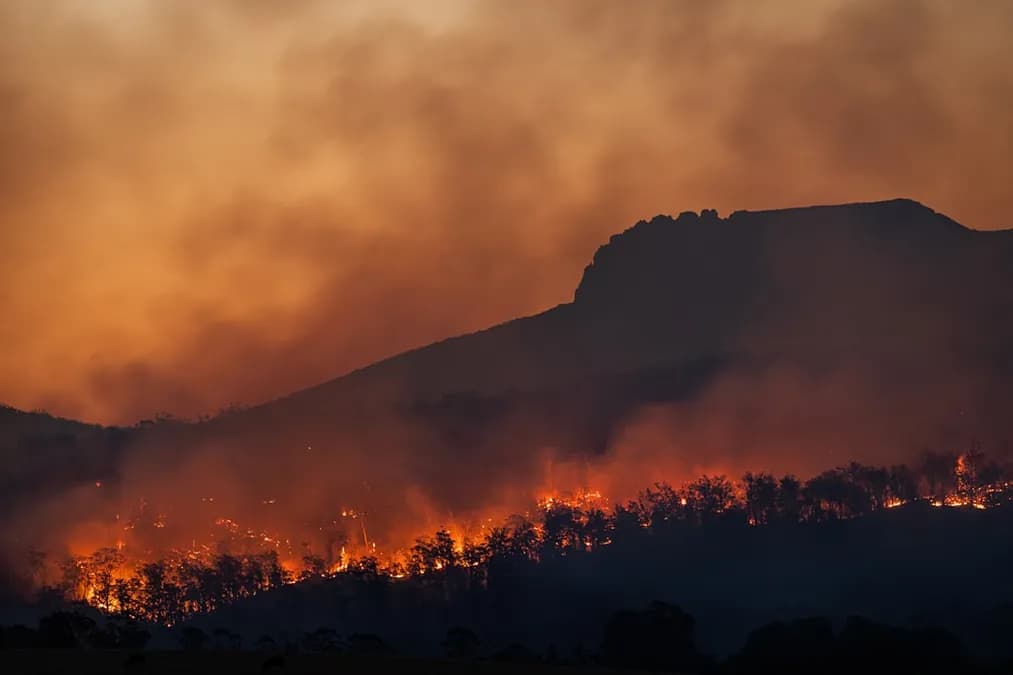
During the 2023 fire season, Canada experienced record-breaking wildfires that burned tens of millions of hectares and sent smoke across North America and the Atlantic. Boreal forests that once seemed remote from daily urban life became part of the air people breathed in New York, Chicago, Toronto, and beyond.
Climate change is already altering forests. Higher temperatures increase evaporation and plant stress. Drought weakens trees and raises fire risk. Warmer winters can allow pests to survive and expand. Heavy rainfall can trigger erosion and landslides. Storms can flatten forests. Saltwater intrusion can kill coastal trees. Species ranges are shifting toward poles and higher elevations where possible.
The IPCC AR6 reports that climate risks to ecosystems increase with every increment of warming. At 1.5°C, many forests face higher fire, drought, and pest pressure. At 2°C and beyond, risks escalate, especially for tropical, boreal, mountain, and Mediterranean-type forests. Some ecosystems may face irreversible losses if warming combines with land-use change and other stressors.
The Amazon is one of the central concerns. Scientists have warned that deforestation, fire, and warming could weaken rainfall recycling and push parts of the basin toward a drier state. The risk is highest in the southern and eastern Amazon, where forest clearing and dry-season intensification are already pronounced. If large areas lose the ability to sustain humid forest conditions, the consequences would include carbon emissions, biodiversity collapse, reduced rainfall, and harm to Indigenous and rural communities.
The Congo Basin may be more resilient in some climate models because of its rainfall patterns, but it is not safe. Logging roads open access. Mining and agricultural expansion increase fragmentation. Rising temperatures could stress trees, while governance challenges make enforcement difficult. Protecting the Congo Basin is one of the largest climate opportunities left because its forest remains more intact than many other tropical regions.
Southeast Asian forests face intense heat and land-use pressure, especially where peatlands have been drained. Fire risk rises sharply when peat dries. Once peat ignites, fires can burn underground and become extremely difficult to extinguish. Climate change can make such events more likely by increasing drought severity during El Niño years.
Boreal forests are changing quickly. In Canada, Alaska, and Siberia, warming is occurring faster than the global average. Fire seasons are lengthening. Permafrost thaw can destabilize soils and release carbon. Insect outbreaks, such as bark beetle expansions, can kill large areas of trees. Boreal forests store enormous carbon stocks, much of it belowground. Their future depends not only on trees but also on frozen soils.
Temperate forests face their own pressures. In the western United States, hotter droughts have contributed to tree mortality and severe wildfire behavior. In Europe, heat waves and bark beetle outbreaks have damaged spruce forests. In Australia, extreme fire weather has affected eucalyptus forests and wildlife at massive scale. Forest management must now plan for conditions outside the historical range.
Climate scenarios point toward a harsher future if emissions remain high. Forests can adapt to some change through migration, species turnover, and natural regeneration. But adaptation has limits. Trees are long-lived. They cannot move quickly. Fragmented landscapes block migration. Repeated fires can prevent recovery. Drought can kill seedlings before they establish.
This is why forest policy and climate policy are inseparable. Lower warming gives forests a better chance. Better forest protection gives climate policy a stronger ally.
How Individuals and Governments Can Protect Forests
In 2021, more than 140 countries endorsed the Glasgow Leaders’ Declaration on Forests and Land Use, pledging to halt and reverse forest loss by 2030. The pledge covered the vast majority of global forest area, but pledges do not protect trees unless laws, budgets, markets, and land rights change on the ground.
Governments have the largest tools. They can recognize Indigenous and community land rights, enforce anti-deforestation laws, fund protected areas, regulate commodity supply chains, restore degraded land, reform harmful subsidies, and prosecute illegal logging and land grabbing. They can also align agricultural policy with forest protection so that higher food production comes from better yields and reduced waste rather than endless expansion into forests.
Land tenure is foundational. When communities have secure rights, they have stronger incentives and legal authority to defend forests. Indigenous territories in the Amazon have often shown lower deforestation rates than surrounding lands. This does not happen automatically; communities need legal recognition, security, finance, and protection from violence. Environmental defenders in many forest regions face intimidation and murder. Forest protection is also a rule-of-law issue.
Finance must change. Public and private money still flows into activities that destroy forests. Roads, mines, dams, cattle expansion, and speculative land clearing can all make deforestation profitable. Governments can redirect subsidies toward restoration, agroforestry, sustainable intensification, and community forestry. Development banks can screen projects for forest risk. Investors can demand traceable supply chains.
Monitoring has improved dramatically. Satellite systems such as Brazil’s PRODES and DETER, Global Forest Watch, and national forest inventories allow near-real-time detection of clearing and fire. Data alone does not stop deforestation, but it can guide enforcement, expose illegal activity, and hold companies accountable.
International cooperation matters because forest-risk commodities move through global markets. A hamburger, chocolate bar, wooden chair, paper package, tire, or cosmetic ingredient may be connected to distant land-use change. Importing countries can require due diligence. Producing countries can strengthen enforcement and support farmers during transitions. Companies can publish supplier lists, trace products to farm or concession level, and remove illegal deforestation from procurement.
Individuals have a smaller but real role. Consumers can reduce waste, choose certified or verified products where credible, eat diets with lower land footprints, support Indigenous-led and community-led forest organizations, and vote for leaders who treat forest protection as climate infrastructure. For people in high-consuming countries, reducing demand for land-intensive products can matter, especially beef linked to deforestation risk.
But individual action should not be used to shrink the responsibility of governments and corporations. Most deforestation is shaped by policy, finance, enforcement, and markets. Personal choices can support change; they cannot replace systemic action.
The most effective forest agenda is practical and layered: protect intact forests, secure land rights, stop illegal clearing, make commodity supply chains transparent, restore degraded land, reduce fire risk, support sustainable rural livelihoods, and cut fossil fuel emissions fast enough to keep forests within survivable climate limits.
Forests are not passive scenery. They are working climate systems. They cool the air, store carbon, move water, shelter species, and sustain people. The world has already lost hundreds of millions of hectares. What remains is still vast, valuable, and vulnerable. Protecting it is one of the clearest tests of whether climate policy is serious.
Related coverage