What Are Forests and Why Do They Matter for Climate
A forest, under the Food and Agriculture Organization of the United Nations definition, is land of at least 0.5 hectares with trees higher than 5 meters and canopy cover above 10 percent, or trees capable of reaching those thresholds. That technical definition matters because the climate system responds not to slogans about trees, but to measurable land cover, biomass, soil carbon, water cycling, and disturbance.
Forests are living climate infrastructure. They store carbon in trunks, roots, leaves, deadwood, and soils. They draw carbon dioxide from the atmosphere through photosynthesis, then hold it for years, decades, or centuries. The Intergovernmental Panel on Climate Change’s Sixth Assessment Report found that forests remain one of the planet’s major natural carbon sinks, absorbing roughly 2.6 billion tonnes of carbon dioxide annually. That service is not optional. Without it, the atmospheric concentration of greenhouse gases would be higher, and the pace of warming faster.
Forests also cool the land surface. A mature tropical forest releases large volumes of water vapor through evapotranspiration, forming clouds, recycling rainfall, and lowering local temperatures. In the Amazon, scientists have long described the forest as a “flying river” because moisture released by trees helps move rainfall across South America. Remove enough trees, and the system begins to dry itself.
The climate value of forests differs by region. Tropical forests such as the Amazon, Congo Basin, and Indonesian rainforests are dense carbon reservoirs and biodiversity strongholds. Boreal forests across Canada, Russia, Alaska, and Scandinavia store immense carbon stocks in cold soils and peat. Temperate forests, including those in Europe, China, and the eastern United States, often show how recovery and management can turn heavily used landscapes back into carbon sinks.
Forests are not just carbon machines. They are watersheds, food systems, cultural landscapes, wildlife habitat, and sources of livelihood. More than 1.6 billion people depend on forests to some degree, according to United Nations agencies, while hundreds of millions rely directly on forest products, fuelwood, wild foods, and income from forest-based work. Climate policy that treats forests only as carbon offsets misses the deeper point: forests are complex ecosystems that keep human societies functioning.
The State of Global Forest Cover Today
The world still has about 4.06 billion hectares of forest, according to FAO’s Global Forest Resources Assessment 2020, covering roughly 31 percent of the planet’s land area. That sounds vast. Yet the direction of travel remains troubling.
Read next How Climate Change Works: A Clear ExplainerFAO data show that an estimated 420 million hectares of forest have been lost to deforestation since 1990, mostly through conversion to agriculture and other land uses. Net forest area declined by about 178 million hectares between 1990 and 2020, a difference that reflects both forest loss and gains from natural expansion, plantations, and restoration. The headline is clear: the planet is still losing forests faster than it is restoring ecologically comparable ones.
The annual rate of deforestation has slowed, but it remains high. FAO estimated deforestation at about 16 million hectares per year in the 1990s, falling to around 10 million hectares per year from 2015 to 2020. That improvement shows policy can work. It also shows the scale of the remaining failure: 10 million hectares a year is an area roughly the size of Iceland.
The geography of forest loss has shifted. Europe and parts of Asia have seen net forest gains, often through reforestation, land abandonment, and plantation expansion. Africa had the largest annual net forest loss from 2010 to 2020, about 3.9 million hectares per year, according to FAO. South America followed with about 2.6 million hectares per year. Those numbers carry climate consequences because tropical forests store large aboveground carbon stocks and influence rainfall far beyond their borders.
The Amazon remains the most closely watched case. Brazil reduced Amazon deforestation sharply after 2004 through satellite monitoring, protected areas, law enforcement, and supply-chain pressure. Later political changes weakened enforcement, and forest clearing rose again. Recent efforts have pushed deforestation downward, but the long-term risk remains: scientists warn that continued tree loss, fire, and warming could push parts of the Amazon toward a drier, degraded state.
The Congo Basin tells a different story. It contains the world’s second-largest tropical rainforest and some of the largest tropical peatlands known. UNEP and research partners have warned that Congo Basin deforestation rates have historically been lower than in the Amazon or Southeast Asia, but pressure is increasing from smallholder agriculture, roads, mining, charcoal production, and commercial logging. The basin’s peatlands alone store tens of billions of tonnes of carbon. Disturbing them would release emissions that cannot be quickly reversed.
How Forests Regulate the Global Climate System
A single mature tree can absorb dozens of kilograms of carbon dioxide in a year, but the climate power of forests comes from scale. Billions of trees, microbes, fungi, soils, and wetlands combine into one of Earth’s largest biological carbon systems.
Forests regulate climate in three main ways: carbon storage, carbon uptake, and energy-water exchange. Carbon storage is the stock already held in biomass and soils. Carbon uptake is the annual flow of carbon from the air into ecosystems. Energy-water exchange includes shade, surface reflectivity, evapotranspiration, cloud formation, and rainfall recycling.
Carbon storage is the most obvious. Tropical forests store enormous amounts of carbon in living vegetation. Boreal forests often store more below ground, locked in cold soils, peat, and permafrost. Mangrove forests can store several times more carbon per hectare than many upland forests because their waterlogged soils slow decomposition. When these systems are cleared, burned, drained, or degraded, the stored carbon moves into the atmosphere as carbon dioxide and methane.
Carbon uptake is equally critical. The IPCC AR6 assessment found that forests absorb roughly 2.6 billion tonnes of CO2 each year, helping offset part of human emissions from fossil fuels, industry, and land use. This sink is powerful, but not guaranteed. Heat stress, drought, wildfire, insect outbreaks, and logging can weaken it. Some forests can shift from sinks to sources during extreme years.
Water cycling is less discussed but just as consequential. In the Amazon, trees pump moisture into the atmosphere, helping sustain rainfall over agricultural regions in Brazil, Bolivia, Paraguay, and Argentina. In Central Africa, the Congo rainforest contributes to regional rainfall stability. In mountain regions, forests regulate snowpack, runoff, and erosion. When forest cover declines, dry seasons can lengthen, streams can become flashier, and heat extremes can worsen.
Forests also shape surface temperature. Tropical deforestation tends to warm local and regional climates because the loss of shade and evapotranspiration outweighs changes in surface reflectivity. In high-latitude snowy regions, the relationship is more complex: dark conifer forests can absorb more sunlight than snow-covered open land, but boreal forest carbon storage remains climate-relevant over long periods. Good climate policy has to account for these differences rather than treating every hectare as interchangeable.
The climate system responds to thresholds. A forest degraded by selective logging may still look green from above, yet it can be drier, hotter, more fire-prone, and less biodiverse. Repeated disturbance compounds risk. One drought weakens trees. A second drought kills more of them. Fire enters. Edges dry out. Roads invite more clearing. The transition from intact forest to degraded landscape can happen faster than public policy usually admits.
Major Threats to Forest Ecosystems
Nearly 90 percent of global deforestation is linked to agricultural expansion, according to FAO analysis. That figure is the center of the forest crisis.
The largest drivers vary by region. In the Amazon, cattle ranching and soy expansion have been major forces, often enabled by roads, land speculation, weak enforcement, and illegal clearing. Cattle pasture occupies much of the deforested land in the Brazilian Amazon. Soy is not always planted directly after forest clearing, but it can displace ranching deeper into forest frontiers and raise land values.
In Southeast Asia, oil palm, pulpwood plantations, mining, and infrastructure have transformed landscapes in Indonesia and Malaysia. Indonesia has reduced primary forest loss in recent years through moratoria, peatland protections, corporate commitments, and fire prevention, but peat drainage and plantation pressure remain significant. When peat forests burn, emissions are severe because the fire consumes carbon-rich soil as well as vegetation.
In the Congo Basin, deforestation is often driven less by industrial plantation expansion than by small-scale agriculture, fuelwood collection, charcoal markets, logging roads, and poverty. That does not make it less serious. A growing population, rising food demand, and infrastructure expansion could accelerate forest loss unless rural development, land rights, and conservation finance move together.
Illegal logging is another major threat. UNEP has reported that illegal logging and related timber crime have affected key tropical regions, including the Amazon Basin, Central Africa, and Southeast Asia. Illegal timber extraction degrades forests, weakens governance, funds corruption, and opens access routes for further clearing. A road cut for timber can become the first line of a wider deforestation frontier.
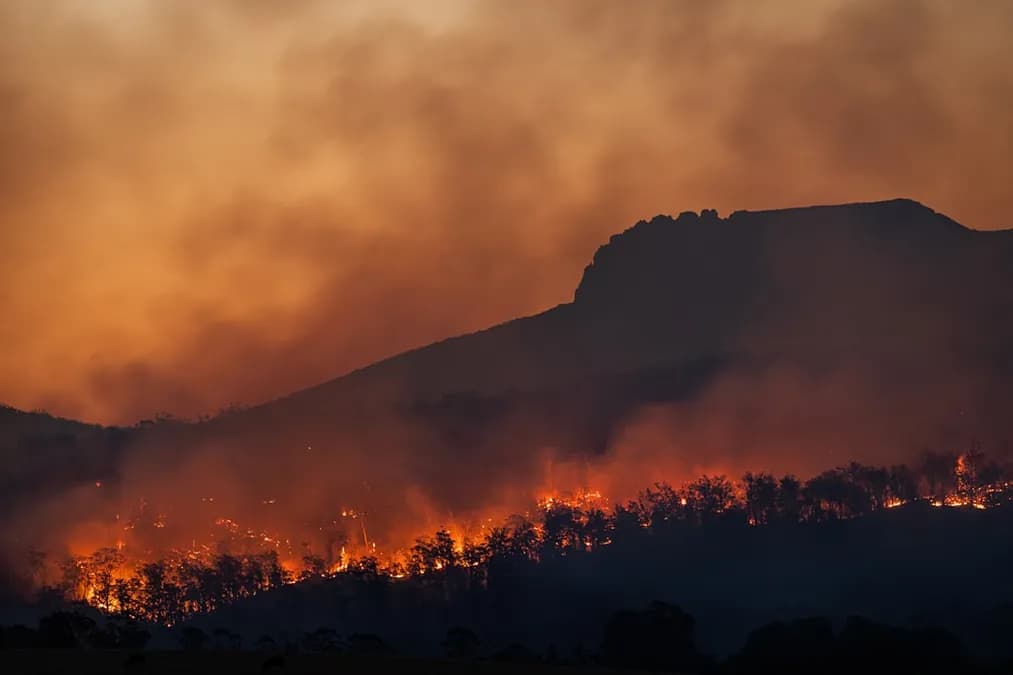
Fire is now a structural risk. Tropical rainforests did not evolve to burn frequently. Once opened by logging or drought, they dry out and become more flammable. In 2019, fires across the Amazon drew global attention, but the deeper issue was land clearing: many fires were set intentionally to prepare land after trees had been felled. In boreal regions, climate-driven heat and drought are increasing the scale and intensity of wildfires, releasing carbon and damaging air quality across continents.
Climate change itself is a forest threat. Heat waves reduce photosynthesis. Drought raises mortality. Warmer winters help some pests survive. Bark beetle outbreaks in North America have killed millions of hectares of trees. In the western United States and Canada, hotter fire seasons are reshaping forest management. Forests can help stabilize the climate, but they are also vulnerable to the instability already locked into the system.
Forest Biodiversity and Ecosystem Services
Tropical forests cover a relatively small share of Earth’s surface yet contain more than half of terrestrial species. That concentration makes forest loss one of the fastest routes to biodiversity collapse.
The Amazon holds around 10 percent of known species, including jaguars, harpy eagles, river dolphins, and tens of thousands of plant species. The Congo Basin shelters forest elephants, bonobos, okapi, and western lowland gorillas. Southeast Asian rainforests support orangutans, hornbills, tigers, and extraordinary tree diversity. These species are not ornaments. They shape ecosystems.
Forest elephants disperse large seeds across Central African forests, helping maintain tree communities with high carbon density. Birds and bats pollinate plants and spread seeds. Fungi connect roots and cycle nutrients. Predators regulate herbivore populations. Remove enough species, and the forest may still stand, but its ecological machinery begins to fail.
Ecosystem services are the benefits people receive from functioning ecosystems. Forests filter water, stabilize slopes, reduce flood risk, protect coastlines, cool cities, sustain pollinators, and provide food, medicine, fiber, and fuel. The World Bank and UN agencies have repeatedly linked forest health to rural livelihoods, Indigenous rights, disaster risk reduction, and public health.
Watersheds show the value clearly. Forested mountain catchments regulate water flows for cities and farms. New York City’s long-running investment in protecting the Catskill and Delaware watersheds is often cited because protecting forests and farms helped avoid far more expensive filtration infrastructure. In the tropics, forest loss can increase sediment in rivers, damage hydropower reservoirs, and raise water treatment costs.
Mangroves offer another case. They protect coastlines from storm surge and erosion while storing large amounts of “blue carbon” in soils. Countries such as Bangladesh, Vietnam, Indonesia, and the Philippines rely on mangroves as natural buffers against cyclones and coastal flooding. Yet mangroves have been cleared for shrimp ponds, ports, and urban expansion. Restoration can work, but only when hydrology and local rights are treated seriously.
Indigenous peoples and local communities are central to forest protection. Studies published in major scientific journals and assessments by organizations such as the World Resources Institute have found that forests managed by Indigenous peoples often have lower deforestation rates than comparable lands. This is not accidental. Secure land tenure, local monitoring, cultural stewardship, and legal recognition can be stronger than distant paper protections.
Reforestation and Forest Restoration Efforts
The Bonn Challenge set a global goal to bring 350 million hectares of degraded and deforested land into restoration by 2030. That number reflects ambition, but restoration is not the same as replacing an old-growth forest.
Reforestation means re-establishing trees on land that was recently forested. Afforestation means planting trees where forests were not historically present. Forest restoration is broader: it can include natural regeneration, assisted regeneration, agroforestry, enrichment planting, invasive species control, fire management, and the recovery of soils and water systems. The distinction matters because planting rows of fast-growing trees is not the same as restoring a diverse forest.
Natural regeneration can be remarkably effective. In parts of Costa Rica, forest cover recovered after policy reforms, payments for ecosystem services, ecotourism income, and agricultural shifts reduced pressure on steep lands. Costa Rica’s forest cover rose from roughly one-quarter of the country in the 1980s to more than half in recent decades. The lesson is not that every country can copy the model exactly. The lesson is that finance, law, livelihoods, and land-use planning must reinforce one another.
China has carried out some of the largest tree-planting and restoration programs in history, including the Grain for Green program and major shelterbelt efforts. These programs have reduced erosion and increased tree cover in many areas, but scientists have warned that species choice, water availability, and plantation design matter. Planting thirsty trees in dry regions can worsen water stress. Monocultures can store carbon while doing little for biodiversity.
In Africa, the Great Green Wall initiative began as a vision to restore degraded land across the Sahel. Its success has varied by country, but the most promising projects focus less on a literal wall of trees and more on farmer-managed natural regeneration, soil restoration, water harvesting, and drought-resilient livelihoods. In Niger, farmers have regenerated millions of hectares by protecting tree shoots on agricultural land, improving soil fertility and crop resilience.
The Amazon offers a restoration challenge at continental scale. Brazil has pledged to restore millions of hectares under climate and biodiversity commitments. Restoration there can include riparian forest recovery, enforcement against illegal clearing, support for Indigenous territories, and sustainable supply chains for products such as açaí, Brazil nuts, and cacao. The cheapest restoration is often preventing new clearing in the first place.
Carbon markets have brought new money into forest restoration, but quality varies. A credible forest carbon project must show additionality, permanence, transparent baselines, protection for local communities, biodiversity safeguards, and monitoring over decades. Poorly designed offsets can overstate climate benefits or shift land pressure elsewhere. Forests should reduce emissions, not excuse continued fossil fuel expansion.
Sustainable Forestry and Conservation Policies
Brazil’s Amazon deforestation decline after 2004 showed that policy can bend the curve: satellite monitoring, protected areas, credit restrictions, enforcement, and supply-chain pressure helped drive a major reduction within less than a decade.
That example remains one of the strongest arguments against fatalism. Forest loss is not inevitable. It responds to governance. When illegal clearing carries real penalties, when land rights are clear, when buyers reject deforestation-linked commodities, and when rural people have viable income options, forest protection improves.
Protected areas are a foundation. FAO reported that forest area within protected areas increased by more than 190 million hectares between 1990 and 2020. But protection on a map is not enough. Parks without staff, budgets, community support, or legal enforcement can become paper parks. Effective conservation requires funding, monitoring, and legitimacy.
Indigenous and community land rights are among the most practical forest policies available. Legal recognition can reduce conflict, strengthen stewardship, and protect carbon-rich landscapes. In the Amazon, Indigenous territories have often acted as barriers to deforestation. In the Congo Basin, community forestry has potential, but it needs safeguards, technical support, and protection from elite capture.
Commodity policy is another front line. Beef, soy, palm oil, cocoa, coffee, rubber, and timber can all be linked to deforestation depending on where and how they are produced. The European Union’s deforestation regulation aims to require companies selling certain commodities in the EU market to prove they are not linked to recent deforestation. Such rules can shift incentives, though they must be implemented without unfairly excluding smallholders who lack mapping tools or paperwork.
Sustainable forestry also has a role. The world uses timber, paper, fiber, and wood products. The question is whether production maintains forest structure, biodiversity, soil, water, and carbon over time. Certification systems such as the Forest Stewardship Council were created to improve forestry practices, though certification quality depends on auditing, transparency, and local enforcement. Reduced-impact logging can lower damage compared with conventional logging, but intact primary forests still need strong protection.
Public finance matters. Governments still subsidize activities that drive forest conversion, including road building, frontier settlement, and agricultural expansion into sensitive areas. Redirecting subsidies toward restoration, climate-smart agriculture, agroforestry, and forest monitoring would produce larger public benefits. International climate finance, including REDD+ programs, has tried to pay countries for reducing emissions from deforestation and degradation. Results have been mixed, but the principle remains sound: countries and communities protecting globally valuable forests should not be expected to carry the cost alone.
What You Can Do to Help Protect Forests
A household cannot police an illegal logging frontier in the Congo Basin, but consumer demand, voting behavior, investment choices, and civic pressure all influence the systems that decide whether forests stand or fall.
Start with food. Agriculture is the leading driver of deforestation, so diet and sourcing matter. Beef linked to forest conversion has an outsized land footprint. Palm oil, soy, cocoa, and coffee can also carry deforestation risk. Choosing products with credible sourcing standards, asking retailers about deforestation-free supply chains, and reducing waste all reduce pressure. The average household throws away a significant share of purchased food; cutting waste lowers demand for land, water, fertilizer, and transport.
Look for substance, not green labels alone. A product marked “natural” tells you almost nothing. Stronger signals include traceable sourcing, independent certification, public supplier lists, and company policies with deadlines and monitoring. For wood and paper, recycled content and credible forest certification can help. For financial products, deforestation exposure in banks, pension funds, and commodity traders deserves scrutiny.
Support Indigenous and local land rights. Many of the world’s best-protected forests are managed by communities with deep cultural and economic ties to the land. Donations, advocacy, and policy support should flow toward organizations that defend land tenure, legal representation, local monitoring, and community-led conservation. Forest protection imposed against local people rarely lasts. Forest protection built with them can endure.
Vote with forests in mind. National and local governments decide land-use law, enforcement budgets, protected areas, agricultural subsidies, road routes, mining permits, and climate commitments. Those choices outweigh individual shopping decisions. Ask candidates and agencies direct questions: How will they reduce deforestation? Will they fund monitoring? Will they enforce illegal clearing laws? Will they recognize community land rights? Will they align agriculture policy with climate goals?
Back restoration that fits the landscape. Tree-planting campaigns can be useful, but only when they plant native or climate-suitable species, protect seedlings, involve local communities, and avoid grasslands or wetlands that should not become forests. A million seedlings planted is not the same as a million trees alive after ten years. Support groups that report survival rates, biodiversity outcomes, and community benefits.
Use less, use longer, and waste less wood and paper. Buildings can store carbon in long-lived wood products when timber is responsibly sourced. Disposable consumption does the opposite. Repairing furniture, choosing durable materials, reducing unnecessary packaging, and recycling paper are modest actions, but multiplied across millions of households they reduce demand for extraction.
Finally, keep the scale of the issue clear. FAO’s finding that 420 million hectares of forest have been lost since 1990 is not an abstract statistic. It is a measure of climate risk, species loss, disrupted rainfall, and weakened resilience. The IPCC’s finding that forests absorb roughly 2.6 billion tonnes of CO2 annually is not a license to delay fossil fuel cuts. It is evidence that protecting forests is one of the fastest, most practical ways to defend the climate system while energy, transport, industry, and agriculture decarbonize.
Forests cannot solve climate change alone. They can buy time, store carbon, cool landscapes, protect water, and sustain life while societies do the harder work of ending greenhouse gas pollution. The future will be shaped by whether the Amazon remains a rainforest, whether the Congo Basin stays wet and intact, whether boreal forests survive rising fire, and whether restoration becomes ecological recovery rather than public relations. Trees are not a symbol of climate action. They are part of the machinery that makes a livable planet possible.
Related coverage