How Climate Change Is Reshaping Pine Forests Worldwide
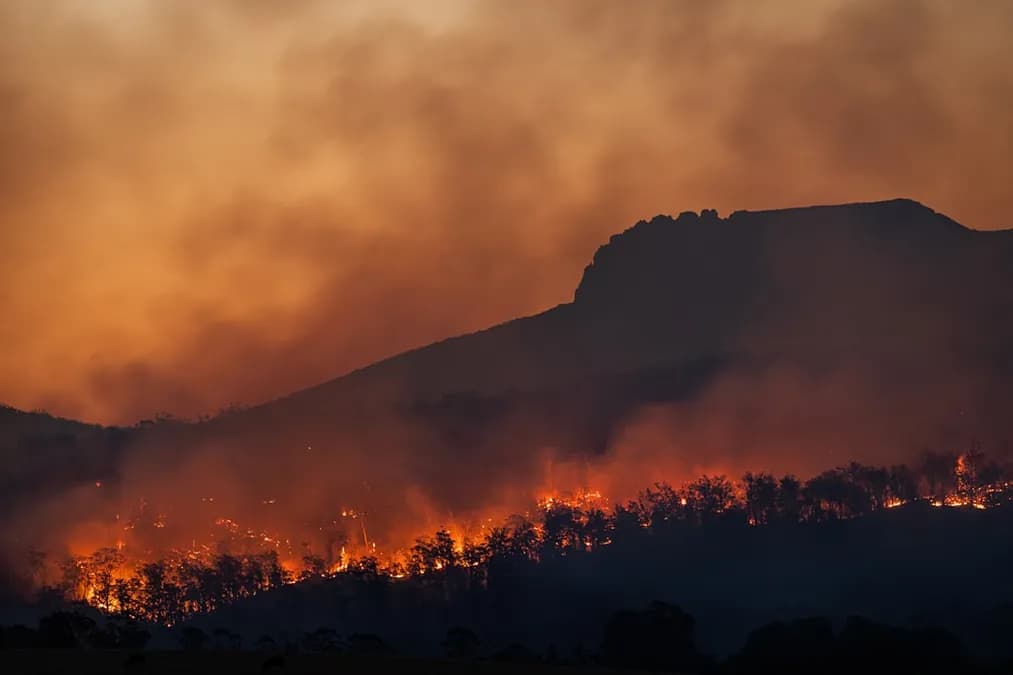
In western Canada, mountain pine beetles have pushed beyond historic cold limits; in the Mediterranean, Aleppo and maritime pines face hotter droughts; in Siberia and Alaska, boreal fire seasons are lengthening. These are not isolated events. They are signals of how pine trees climate change risks are moving from theory into forest landscapes people can see.
Pines occupy an enormous climatic range, from Scots pine across Eurasia to lodgepole pine in the Rocky Mountains, longleaf pine in the southeastern United States, and stone pine around the Mediterranean Basin. Their success comes from traits that once made them resilient: thick bark in some species, drought-tolerant needles, resin defenses, and cones adapted to fire. But climate change is testing those traits against faster warming, more severe vapor pressure deficits, shifting snowpack, and disturbance regimes that arrive before forests have recovered from the last shock.
The Intergovernmental Panel on Climate Change’s Sixth Assessment Report, especially Working Group II, describes a broad pattern now visible in pine systems: warming is changing tree growth, mortality, wildfire behavior, insect outbreaks, and species ranges. In some cooler regions, longer growing seasons can increase growth for a time. In hotter or drier regions, the same warming pushes trees past physiological thresholds.
That split matters. Climate change does not affect all pine forests in one direction. A lodgepole pine stand near treeline may gain new growing days, while a ponderosa pine stand in Arizona may lose hydraulic safety during drought. A Scots pine forest in northern Finland may expand northward, while Scots pine at its southern edge in Spain may retreat after repeated heat waves.
The phrase pine trees climate change often suggests a simple question: are pines helped or harmed by warming? The better answer is geographic and ecological. Pines at cold limits may advance. Pines at dry limits are often stressed. Pines in dense, fire-suppressed stands may burn more severely. Pines already weakened by drought become easier targets for beetles and pathogens.
Real-world examples show the pace. California’s Sierra Nevada lost tens of millions of trees during the 2012-2016 drought, with ponderosa pine among the heavily affected species. In British Columbia, mountain pine beetle outbreaks transformed lodgepole pine forests across millions of hectares. In the Mediterranean, researchers have documented growth declines and dieback in pine forests exposed to repeated drought and heat.
Pine forests are changing because their disturbance calendar is changing. Beetles reproduce faster. Fires burn under hotter and drier air. Snow melts earlier. Seedlings emerge into harsher summers. The old assumption that forest composition shifts slowly, over centuries, no longer fits many regions.
The Role of Pine Forests in Carbon Sequestration
Boreal forests store roughly 30% of the world’s terrestrial carbon, according to widely cited assessments summarized in IPCC AR6 and related boreal carbon literature, even though they cover far less than one-third of Earth’s land surface. Much of that carbon sits not in tree trunks, but in cold soils, peat, roots, and slowly decomposing organic matter.
Read next How Climate Change Works: A Clear ExplainerPine forests contribute to the climate system in three main ways. They store carbon in living biomass. They transfer carbon into soils. They influence whether forests remain carbon sinks or become carbon sources after fire, drought, logging, or insect mortality. This is why pine trees climate change discussions cannot focus only on tree planting. The carbon value of a pine forest depends on survival, soil stability, and disturbance frequency.
Young pine stands can absorb carbon quickly as they grow. Mature forests often store more total carbon, especially where soils remain intact. In boreal regions, black spruce, jack pine, Scots pine, and other conifers interact with mosses, permafrost, and organic soils that have accumulated carbon over centuries. When fire burns deeper into those soils, or when permafrost thaws, carbon that was effectively locked away can re-enter the atmosphere as carbon dioxide or methane.
The carbon balance is changing fastest in high northern latitudes. IPCC AR6 identifies boreal and Arctic systems as highly vulnerable to warming, with observed increases in fire weather and ecosystem disruption. The boreal zone has warmed more rapidly than the global average, and that extra heat affects both tree growth and carbon loss. In a cool, moist year, pines may draw down substantial carbon. In a severe fire year, the same region can release decades of stored carbon.
A Canadian or Siberian boreal pine forest after a high-severity fire illustrates the problem. Flames consume needles, branches, understory vegetation, litter, and sometimes deep organic soils. If regeneration is strong, the forest may recover its carbon stock over decades. If repeated fires arrive too quickly, or if the site converts to shrubland or grassland, the carbon debt lasts much longer.
Carbon accounting also has to include albedo, the reflectivity of land surfaces. Dark evergreen canopies absorb more sunlight than snow-covered open ground. In snowy boreal regions, expanding conifer cover can sometimes warm the surface locally even as trees store carbon. That does not make pine forests irrelevant as climate solutions. It means climate policy must be region-specific.
Forest ecologists increasingly warn against treating pines as interchangeable carbon machines. A plantation of fast-growing pine has a different carbon profile than an old, mixed-conifer forest. A thinned ponderosa pine stand managed for lower fire severity may store less carbon per acre in the short term but be more likely to persist through future fires. The question is not simply how much carbon a forest stores today. It is how much carbon it can keep over the next 50 to 100 years.
Pine Beetle Outbreaks and Rising Temperatures
Since 2000, bark beetles have affected or killed trees across more than 85 million acres in the western United States, according to USDA Forest Service forest health reporting and western bark beetle assessments. Many of those acres include pine forests attacked by mountain pine beetle, western pine beetle, southern pine beetle, Ips engraver beetles, and related species.
Bark beetles are native insects. They are not villains from outside the system. In normal cycles, they kill weakened or older trees, create wildlife habitat, and recycle nutrients. Climate change alters the balance by making trees weaker and beetles stronger at the same time.
Warmer winters allow more beetles to survive. Hotter summers can speed development, letting some species complete life cycles faster. Drought reduces resin production, one of a pine tree’s primary defenses. When a healthy pine is attacked, resin can pitch beetles out of entry holes. When water stress is severe, that defense fails.
This is one of the clearest pine trees climate change feedbacks: heat and drought stress the host, while warmth increases insect pressure. The result can be landscape-scale mortality.
British Columbia’s mountain pine beetle outbreak is the best-known example. The beetle expanded through lodgepole pine forests after a sequence of mild winters and abundant mature host trees. By the 2010s, the outbreak had affected an area larger than many countries, with major consequences for timber supply, wildfire fuels, carbon storage, and community economies.
In the western United States, Colorado’s lodgepole pine forests experienced heavy beetle mortality in the 2000s and 2010s. California’s ponderosa pine and sugar pine have been hit hard by drought-linked beetle activity. The USDA Forest Service has repeatedly connected severe tree mortality in the Sierra Nevada to drought, high stand density, and bark beetle attack.
The southern pine beetle is also expanding its relevance. Historically associated with the southeastern United States, it has appeared farther north in places such as New Jersey and Long Island, where pitch pine forests now face warmer conditions. Scientists with the U.S. Forest Service and university partners have warned that climate suitability for southern pine beetle may expand northward as minimum winter temperatures rise.
Beetle-killed forests do not all burn immediately or uniformly. The relationship between beetles and wildfire is complex. Red needles can increase flammability for a few years. Later, dead needles fall, and standing snags change fuel structure. Over time, fallen trees add heavy fuels to the forest floor. The more important point is that beetle outbreaks, drought, and fire increasingly overlap, creating compound disturbances that forest managers were not designed to handle at this scale.
Drought Stress and Wildfire Risk in Pine Ecosystems
During California’s 2012-2016 drought, the U.S. Forest Service estimated that more than 100 million trees died statewide, with pine-dominated forests in the Sierra Nevada among the hardest hit. Many trees did not die from heat alone. They died from a chain reaction: low snowpack, dry soils, hydraulic stress, beetle attack, and fire-prone fuel accumulation.
Pines move water from soil to needles through narrow hydraulic pathways. Under drought, tension in that water column increases. If the tension becomes too high, air bubbles form and block transport, a process called embolism. The tree closes stomata to conserve water, but that also limits photosynthesis. Carbon intake falls. Defensive resin production declines. Growth slows. Mortality risk rises.
This physiology makes pine trees climate change vulnerability especially acute in regions where warming increases atmospheric thirst. Scientists measure this as vapor pressure deficit, or VPD. A hot atmosphere pulls more moisture from plants and soils, even when rainfall totals do not change dramatically. In the American Southwest, rising VPD is now a major driver of forest stress.
Wildfire adds another layer. Many pine ecosystems evolved with fire, but not always with today’s fire behavior. Longleaf pine savannas historically burned frequently at low intensity, maintaining open structure. Ponderosa pine forests across much of the western United States also experienced frequent surface fires. After more than a century of fire suppression, grazing changes, logging, and development, many stands are denser than their historic range. Dense stands compete intensely for water and provide ladder fuels that carry flames into crowns.
Climate change then loads the dice. The western U.S. fire season has lengthened. Snowpack melts earlier. Heat waves dry live and dead fuels. Lightning patterns may shift. Human ignitions remain common. Under extreme wind and heat, even well-managed forests can burn severely.
The 2020 fire season in the western United States showed how these pressures converge. Fires burned across California, Oregon, Washington, Colorado, and other states under hot, dry conditions. In some mixed-conifer and pine forests, high-severity patches were large enough to make natural regeneration uncertain. If seed trees are gone and post-fire summers are too hot and dry, pine seedlings may fail repeatedly.
The Mediterranean Basin faces similar pressure. Aleppo pine can regenerate after fire, but short fire intervals can exhaust seed sources before stands mature. Maritime pine in Portugal, Spain, and France faces both drought and severe fire weather. In Australia, some pine plantations have been exposed to hotter fire seasons that threaten timber production and carbon storage.
Forest management cannot remove fire from pine landscapes. Nor should it. The goal is to restore fire as an ecological process where possible, reduce catastrophic fuel conditions near communities, and protect old trees and seed sources that help forests recover. Prescribed burning, mechanical thinning, cultural burning led by Indigenous practitioners, and defensible space around homes are all part of the adaptation toolkit.
Pine Treeline Migration and Alpine Ecosystem Shifts
In many alpine regions, researchers have measured pine and conifer treeline advance at rates of roughly 5 to 20 meters per decade, with published studies in journals including Nature Climate Change and related Nature research showing rapid but uneven upslope movement. The pattern is visible in repeat photography, tree-ring studies, seedling surveys, and satellite records.
Treeline migration is one of the most visible biological responses to warming. At high elevations, cold temperatures limit tree establishment. As growing seasons lengthen, pine seedlings can survive above historic treeline. Whitebark pine, limber pine, Scots pine, Swiss stone pine, and other high-elevation species are part of this story, depending on the continent and mountain range.
Yet treeline advance is not automatic. Seed availability matters. Snowpack matters. Wind exposure matters. Grazing, fire, avalanches, and soil development matter. A warmer slope without viable seeds may not gain trees quickly. A protected slope with nearby seed trees may change within decades.
This nuance is central to pine trees climate change research. Climate sets the broad envelope, but local ecology determines the pace.
In the Canadian Rockies, repeat surveys have shown treeline advance and increased tree density at many sites over the past century. In parts of Scandinavia, researchers have documented upward movement of pine and birch treelines, though land use and grazing can complicate attribution. In the U.S. Rocky Mountains, whitebark pine faces a more difficult future because warming interacts with white pine blister rust, mountain pine beetle, and altered fire regimes.
Alpine ecosystem shifts carry consequences beyond the trees. Treeline advance can reduce alpine tundra habitat, changing conditions for wildflowers, lichens, insects, birds, and small mammals. Snow distribution may change as trees trap drifting snow. Soil temperatures and microbial activity can shift. Water timing downstream may be affected where snowmelt patterns change.
There is also a carbon tradeoff. More trees at high elevation can store more biomass carbon, but dark canopies over snow absorb more solar radiation. In some snowy landscapes, that surface-energy effect matters. Forest expansion is not automatically a climate benefit in every location.
The most vulnerable alpine species may be those with nowhere higher to go. As pines move upslope, alpine plants adapted to open, cold environments can be squeezed into smaller areas. Mountain systems are steep, fragmented, and highly local. A shift of 100 meters can transform an ecosystem.
Climate-Resilient Pine Species and Adaptive Management
Longleaf pine once covered an estimated 90 million acres across the southeastern United States; today, only a fraction of that ecosystem remains, yet restored longleaf stands are among the clearest examples of climate-adaptive pine management. They tolerate frequent fire, support high biodiversity, and can withstand some drought and storm stress better than many dense, unmanaged stands.
Climate resilience is not a single trait. For pines, it includes drought tolerance, fire adaptation, genetic diversity, pest resistance, regeneration capacity, and compatibility with future climates. No species is climate-proof.
Ponderosa pine, for example, can be highly fire-adapted when stands are open and surface fires remain low to moderate in intensity. But dense ponderosa stands under severe drought are vulnerable to crown fire and beetles. Lodgepole pine can regenerate after stand-replacing fire, especially where serotinous cones release seeds after heat. But if fires recur too soon, regeneration can collapse. Whitebark pine is cold-hardy and ecologically valuable, yet it is threatened by blister rust, beetles, and warming.
Adaptive management starts with matching species and stand structure to future conditions, not past averages. Managers increasingly use climate-informed seed transfer, assisted gene flow, and in limited cases assisted migration. That can mean planting seedlings from slightly warmer or drier provenances where models indicate future suitability. It can also mean preserving genetic diversity rather than relying on a narrow seed source.
For pine trees climate change adaptation, density management is often practical. Thinning can reduce competition for water, increase individual tree vigor, and lower some fire risks when paired with prescribed burning. Thinning alone can leave slash that increases surface fuels, so treatment design matters. Fire reintroduction matters too.
Indigenous fire stewardship offers deep experience in maintaining resilient landscapes. In parts of North America, cultural burning historically shaped open pine systems, supported food plants, improved travel corridors, and reduced fuel loads. Contemporary partnerships with Tribal nations are increasingly recognized as central to climate adaptation, not as symbolic consultation but as technical and cultural land management.
Urban and community forestry also has a role. Pines planted in cities and towns face heat islands, compacted soils, limited rooting volume, and new pests. Selecting drought-tolerant species, diversifying plantings, and avoiding overreliance on one pine species can reduce future losses.
The strongest adaptation strategies share one principle: reduce avoidable stress before extreme events arrive. A pine forest with diverse age classes, lower competition, intact soils, and frequent low-intensity fire is more likely to survive a hot drought than a crowded stand carrying decades of accumulated fuels.
Pine Forest Biodiversity Under Climate Pressure
A single mature longleaf pine ecosystem can support dozens of plant species in a few square meters of ground layer, while old ponderosa pine forests provide cavities, open hunting habitat, and seasonal food for birds, mammals, reptiles, and insects. Pine forests are not biological deserts. Many are biodiversity engines.
Climate change threatens that biodiversity by changing structure. When drought kills large pines, species that depend on old trees lose habitat. When high-severity fire converts forest to shrubland, some species benefit, but forest specialists decline. When beetles create snags, cavity nesters may gain short-term habitat, but extensive mortality can reduce canopy continuity and seed production.
Whitebark pine is a striking case. It is considered a keystone and foundation species in high-elevation western North America. Its seeds feed Clark’s nutcrackers, bears, squirrels, and other wildlife. Clark’s nutcrackers also disperse the seeds, creating a mutualism that helps whitebark pine regenerate. Climate warming, blister rust, beetles, and severe fire have pushed the species into steep decline across much of its range; the U.S. Fish and Wildlife Service listed whitebark pine as threatened under the Endangered Species Act.
In the southeastern United States, longleaf pine restoration benefits red-cockaded woodpeckers, gopher tortoises, bobwhite quail, and a rich groundcover community. Frequent fire maintains the open structure. Without fire, hardwood encroachment and dense midstory growth reduce habitat quality. Climate change complicates restoration because fire windows can narrow during drought or extreme heat, while storms and pests add stress.
This is another way pine trees climate change effects ripple outward. The tree is only the beginning. Fungi, pollinators, lichens, birds, mammals, understory plants, and soil microbes all respond to changes in canopy, moisture, fire, and temperature.
Biodiversity can also strengthen resilience. Mixed-species forests often spread risk better than single-species stands. Genetic diversity within pine populations can improve the odds that some individuals tolerate hotter, drier conditions. Structural diversity, including large old trees, seedlings, dead wood, and openings, creates habitat while buffering disturbance impacts.
The challenge is avoiding a narrow carbon-only view. A pine plantation may store carbon, but it may not provide the same habitat, water regulation, or cultural value as a native pine woodland. Climate policy that counts trees without measuring ecosystem quality can create perverse outcomes. Better accounting includes carbon, biodiversity, fire risk, water, and local communities.
Future Outlook for Pine Forests in a Warming World
By mid-century, many regions that now support pine forests are projected to experience hotter droughts, longer fire seasons, and more frequent climate extremes, even under moderate emissions pathways assessed by the IPCC. The future of pines will depend on how much warming occurs and how quickly societies reduce the pressures that make forests brittle.
Some pine forests will expand. High-latitude and high-elevation areas may gain tree cover where cold has been the main limiting factor. Some managed pine systems may remain productive with improved genetics, careful thinning, and fire-smart planning. Restoration of longleaf pine, ponderosa pine, and other fire-adapted systems can improve resilience while supporting biodiversity.
Other pine forests will contract. Dry-edge populations in the Southwest, Mediterranean, and parts of Mexico, Central America, and southern Europe may face repeated regeneration failure. If adult trees die and seedlings cannot survive hotter post-disturbance conditions, forests can shift toward shrublands, grasslands, or different tree species. Those transitions can be ecologically valid in some places, but they also carry losses for carbon storage, wildlife, timber, recreation, and water regulation.
The most realistic pine trees climate change outlook is uneven transformation. Pines will not disappear. They are ancient, diverse, and adaptable. But many familiar pine landscapes will become less stable, less predictable, and more dependent on active stewardship.
Policy choices matter. Rapid emissions reductions lower long-term warming and reduce the chance that forests cross irreversible thresholds. Forest management choices matter too. Protecting old growth and mature forests, restoring frequent-fire ecosystems, reducing stand densities where appropriate, controlling invasive pests, supporting Indigenous-led fire practices, and planning development away from the most fire-prone areas can all reduce risk.
Science will keep refining the details. Remote sensing can detect mortality faster. Tree-ring studies can reveal drought thresholds. Genetic research can identify adaptive traits. Long-term ecological plots can show which forests recover and which convert. But the broad message is already clear enough for action.
Pine forests are climate actors, climate witnesses, and climate casualties at once. They store carbon, shape water and fire, support biodiversity, and record warming in their rings, ranges, and mortality patterns. Treating them as simple carbon offsets misses the living system. Treating them as doomed misses their resilience.
The future of pine trees climate change will be written in management decisions, emissions pathways, beetle winters, summer droughts, seedling survival, and fire behavior. The stakes are measured in acres, tons of carbon, species, communities, and the forests people expect to find when they return to the mountains, the boreal north, or the pine woods close to home.
Related coverage