For most of modern energy history, policymakers faced an uncomfortable trinity: security, affordability, and cleanliness. Pick two. That was the implicit deal embedded in every energy ministry's long-range forecast, every utility's investment plan, every climate negotiator's compromise. Then last week, the International Energy Agency released a report arguing that deal is changing — and IEA Executive Director Fatih Birol took that message directly to the United Nations General Assembly.
"Many, many years in the energy world, we had three choices in front of us," Birol said at the UN. "Shall I choose the most secure energy option? Shall I choose the most economic energy option? Or shall I choose the cleanest energy option? We have to make choices, we have to make trade-offs — but when we look at the world today, for the first time in years, all of these three objectives are getting aligned."
That alignment, the IEA argues, is being driven by electricity. But what happens between that high-level convergence and actual electrons flowing through grids in Indonesia, Nigeria, and Brazil is where the story gets complicated.
Why the IEA Says Electrification Is Now a Triple Win
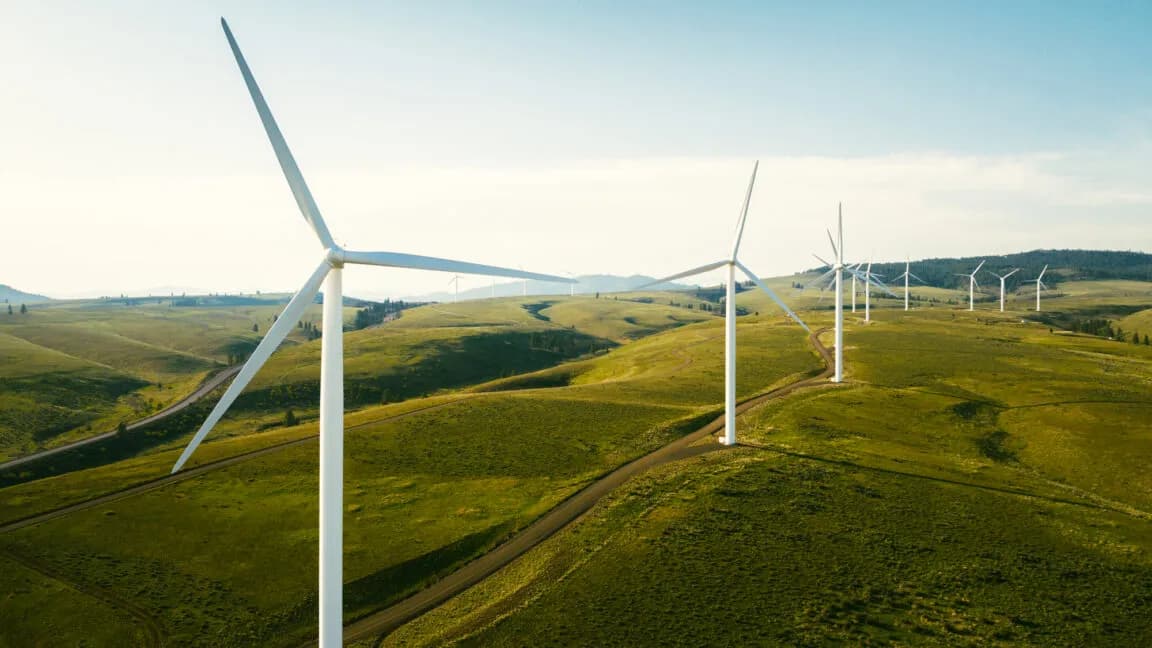
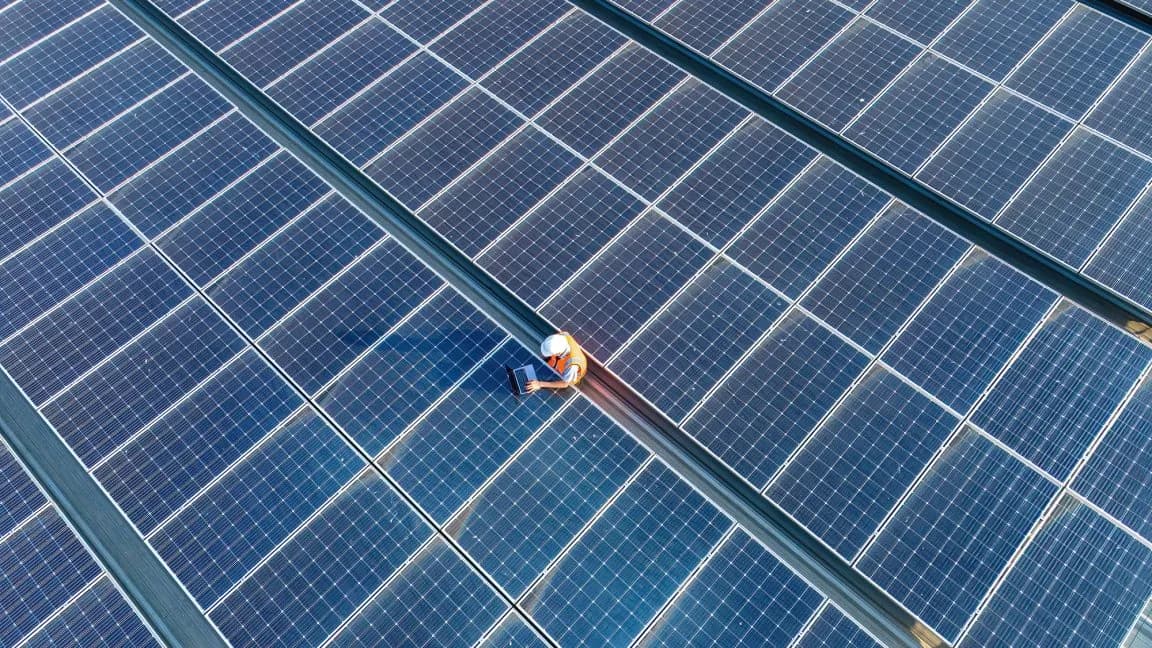
Renewables now account for more than 90 percent of new power capacity added globally in recent years, according to IRENA data. Wind and solar have crossed a cost threshold that would have seemed implausible a decade ago: in most of the world, building a new solar farm is cheaper than running an existing coal plant. That structural cost advantage is what gives the IEA's triple-win thesis its foundation.
The IEA's 2026 electrification report frames electricity not as one energy carrier among many, but as the central organizing principle of a decarbonized economy. When the cheapest, most secure, and cleanest option converge into a single answer — electrify — the incentive structure for governments, investors, and consumers shifts in a self-reinforcing direction. Birol's UN address underscored that this moment of alignment is historically rare. The IEA believes it creates a window that didn't exist in 2010 or even 2015.
Global electricity demand is growing faster than overall energy consumption, a sign the shift is already underway. The question is whether infrastructure can be built quickly enough to support it.
The Hard Infrastructure Reality Behind the Promise

This is where global electrification challenges begin in earnest. The grid is not just wires. It is transformers, substations, protection systems, load-balancing software, and thousands of kilometers of transmission lines — much of it aging infrastructure designed for a centralized, fossil-fuel-based power system.
Read next Laika's Wildwood: Stop-Motion Fantasy at TIFF 2026BloombergNEF estimates the world needs to invest roughly $800 billion per year in grids through 2030 to support clean energy integration at the required pace. Current investment runs well short of that. In the United States, the average transmission line takes seven to ten years to permit and build. Europe's offshore wind capacity is outpacing the grid infrastructure needed to move that power to demand centers. In developing economies, the gap is wider still.
Industrial heat is the sector that rarely makes headlines but represents nearly a quarter of global energy consumption. Steel mills, cement kilns, and chemical plants operate at temperatures that today's electric heating technologies reach only inefficiently or not at all. This isn't purely a policy problem. It's a physics and materials challenge requiring investment in green hydrogen, high-temperature heat pumps, and process redesign — none of which are cost-competitive at scale yet.
Economic Trade-Offs Countries Still Face

The triple win looks different depending on where you sit. A German automaker facing electrification mandates can plan around a functioning grid and an established charging network. A logistics operator in sub-Saharan Africa faces fuel costs that, while high, are at least predictable — electricity supply across much of the region is not.
The IEA's framing acknowledges trade-offs but suggests they are narrowing. That's accurate at the macro level. It can mislead at the country level. Nations that rely on fossil fuel exports — from the Gulf states to Angola to Colombia — face fundamental economic restructuring that goes far beyond energy policy. Electrification doesn't make that easier; it accelerates the clock.
Stranded asset risk is real and quantifiable. The IMF has estimated that fossil fuel capital stock potentially stranded under aggressive decarbonization scenarios runs into the trillions. No amount of declining solar costs erases that exposure for economies where oil revenue funds healthcare and education. The cost of inaction is also quantifiable — and increasingly the larger number. That tension between transition costs and damage costs is the honest accounting most political systems are still struggling to produce.
Geopolitical and Supply Chain Risks in the Transition
Electrification doesn't eliminate resource dependence. It redirects it. The global electrification challenges posed by critical mineral supply chains are, in some respects, more concentrated than the diversified oil and gas markets they replace.
Lithium, cobalt, nickel, and rare earth elements essential to batteries, motors, and grid-scale storage are geographically concentrated in ways that create new chokepoints. The Democratic Republic of Congo supplies more than 70 percent of global cobalt. China processes roughly 80 percent of the world's rare earth elements. These aren't abstract vulnerabilities — they're the kinds of dependencies that trade policy, sanctions regimes, and military posture now must account for.
This doesn't mean electrification is strategically foolish. It means the IEA's security objective requires supply chain diversification as a prerequisite, not an afterthought. Australia, Canada, and several African nations are investing in processing capacity to reduce concentration risk — but building that infrastructure takes a decade, not a budget cycle.
What a Realistic Electrification Timeline Looks Like
The IEA's report is not a forecast of a smooth transition. It's closer to a map of what's possible if the right investments arrive at the right time — and those conditions are demanding.
Power sector transformation could reach critical mass by the mid-2030s in advanced economies and by the early 2040s in emerging markets with strong policy support. Transport electrification is tracking ahead of most 2020-era projections, driven by falling battery costs and Chinese manufacturing scale. Industrial decarbonization is the long pole in the tent. Most credible scenarios see heavy industry fully decarbonized only in the 2050s, and even that assumes technology breakthroughs currently at the pilot-project stage.
The IEA's timeline is calibrated to this reality. But it requires acknowledging that electrification as a complete solution is a decades-long project, not a decade-long one.
The Path Forward: Policy, Investment, and Public Will
Three things must move together: regulatory environments that allow infrastructure to be built at pace, capital flows that price in the full cost of climate risk, and public tolerance for the visible disruption of transition — higher upfront costs, altered landscapes, changed supply chains.
The IEA's 2026 electrification report is most valuable as a directional argument. When the three objectives Birol named at the UN genuinely align, the political case for electrification becomes structurally stronger than at any prior moment. That's a significant shift. But alignment at the level of macroeconomic logic doesn't automatically produce alignment in local planning commissions, international mineral agreements, or industrial investment committees.
The hard part isn't recognizing the opportunity. It's closing the gap between the trajectory the IEA's data describes and the daily decisions made by the millions of actors whose choices, aggregated, constitute the actual energy transition. That gap — not the technology, not the economics — is what will determine whether this moment of alignment becomes a permanent restructuring or another missed window.
Source: Ars Technica - All content