How the 2008 Financial Crisis Reshaped US Energy Policy
In the autumn of 2008, as Lehman Brothers collapsed and credit markets seized, the United States was already in the middle of an unrelated transformation — one that would quietly accelerate under the weight of the recession. The financial crisis did not create America's energy transition, but it compressed timelines, redirected capital, and forced policymakers to reckon with what kind of economy they actually wanted to rebuild.
The American Recovery and Reinvestment Act of 2009, passed in the immediate aftermath of the crash, channeled tens of billions of dollars into clean energy investments. It was a stimulus measure, but it was also a policy wager: that the industries of the future were not the extractive ones of the past. According to the US Energy Information Administration, the years following 2008 saw a marked acceleration in renewable capacity additions — wind and solar installations that had been growing gradually began scaling dramatically through the 2010s. The crisis created a political opening that quieter times might never have offered.
The 2008 economic crisis energy shift was, in many ways, a forced reckoning. For decades, the dominant logic held that fossil fuels and prosperity were inseparable. That logic was never entirely wrong. But it was always incomplete.
The True Cost of Fossil-Fueled Growth

The argument in favor of fossil fuels has a surface-level coherence that has made it durable in policy debates. Cheap, dense energy powered industrialization. It powered modern agriculture, global supply chains, suburban development, and the consumer economy. On aggregate metrics — life expectancy, infant mortality, access to clean water, per capita income — human beings in 2026 are, by most measures, better off than their ancestors in 1850. Carbon combustion deserves partial credit for that.
Read next Laika's Wildwood: Stop-Motion Fantasy at TIFF 2026But the accounting has always been incomplete. Economists call it an externality problem: the costs of burning fossil fuels were never fully reflected in market prices. Producers paid to extract and sell; consumers paid at the pump or the utility bill. Nobody paid for the carbon dioxide accumulating in the atmosphere.
Researchers at institutions like Resources for the Future have spent decades trying to quantify what they call the "social cost of carbon" — the long-run damage, in dollars, of emitting one additional ton of CO2. The estimates vary, and they are contested, but even conservative figures run into the tens of dollars per ton. Multiply that across decades of global emissions and the debt is staggering. The benefits of fossil-fueled growth were real. So was the ledger entry on the other side, which society is only now beginning to pay down.
Extreme Weather and the Rising Price of Carbon Dependency

The abstract concept of accumulated carbon debt has been acquiring a very concrete face. Extreme weather events — flooding, wildfire, prolonged drought, intensified hurricanes — have become both more frequent and more costly. The connection to climate change, once primarily a projection, is now increasingly an attribution finding: climate scientists can, with growing statistical confidence, quantify how much more likely a given extreme event became because of the warming driven by greenhouse gas emissions.
The economic toll is not hypothetical. Federal disaster declarations have multiplied. Insurers have retreated from markets they can no longer price. Cities have begun building seawalls that would have seemed extravagant luxuries a generation ago. None of this appears on the original balance sheet of the growth those emissions enabled. It appears instead on state budgets, federal emergency accounts, and the actuarial tables of property insurers.
This is the fuller ledger that the fossil fuel economy always obscured. Growth happened. The costs were deferred. The deferral period is ending.
Sea Level Rise and the Long Shadow of Carbon Emissions
Of all the consequences tied to carbon emissions, sea level rise is the most sobering precisely because of its timescale. The IPCC has made clear across successive assessment reports that sea level rise will continue for centuries even under scenarios where humanity reaches net-zero emissions. The physics of ice sheet dynamics and ocean thermal expansion do not respond on human political timescales. We are, in a meaningful sense, already committed to a future of higher oceans regardless of what happens at the next climate summit.
NOAA projections for US coastlines illustrate the stakes concretely: tidal flooding that once occurred a handful of times per year now occurs dozens of times in many coastal cities, and that baseline will keep rising. The infrastructure decisions made now — where to build, what to protect, what to eventually abandon — will be shaped by a climate altered primarily by emissions from the 20th and early 21st centuries.
This is what makes the phrase "carbon debt" apt rather than rhetorical. Debt accrues interest. The emissions that powered growth in 1965, or 1985, or 2005 will continue to shape the physical world for generations. Our descendants will inherit the consequences of choices made before they were born, with limited ability to renegotiate the terms.
The 2008 economic crisis energy shift matters in this context because it represents the moment when at least some policymakers began to take that inheritance seriously.
Better Ways to Power Growth: The Case for Clean Energy
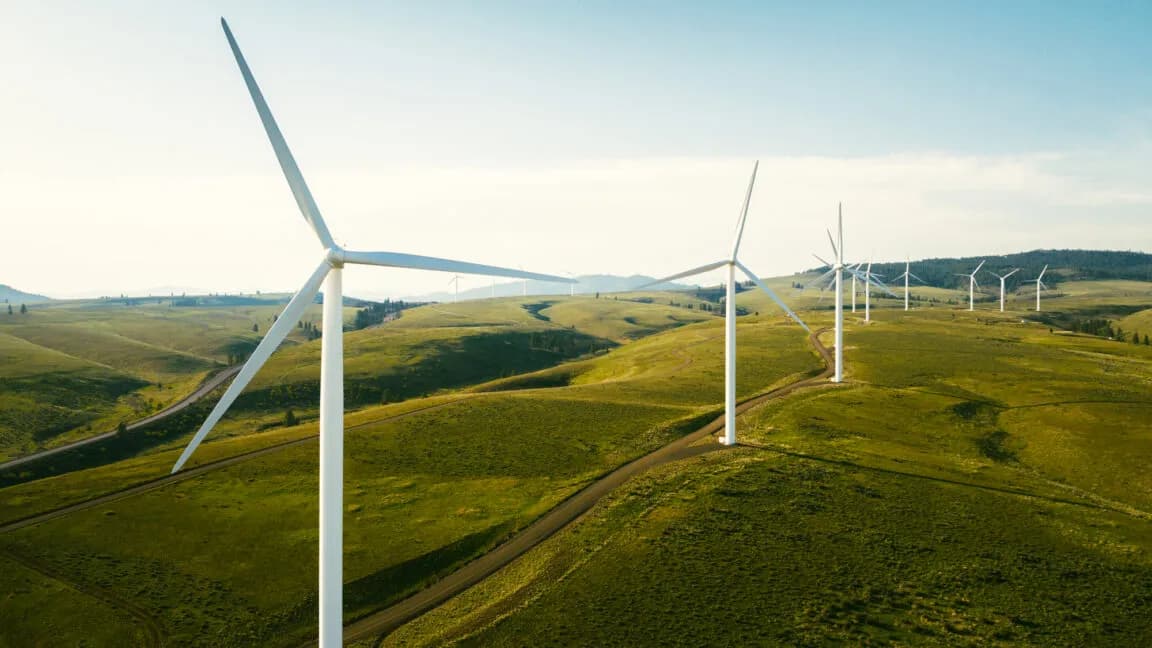
The strongest rebuttal to the fossil-fuel-growth argument is not that growth was bad. It is that growth no longer requires fossil fuels. This is genuinely new. For most of industrial history, the correlation between energy consumption and carbon emissions was so tight as to be nearly definitional. Wind and solar have severed that link.
Solar photovoltaic costs have declined by more than 90 percent since 2010, according to analyses tracked by the International Renewable Energy Agency. Wind power is now among the cheapest forms of new electricity generation in most of the world. Battery storage, which determines whether variable renewables can reliably power a grid, has followed a similar cost curve. The Brookings Institution and allied think tanks have documented how clean energy deployment has begun creating jobs in manufacturing, installation, and maintenance — including in communities that previously depended heavily on fossil fuel extraction.
The argument is no longer idealistic. It is economic. Clean energy is not a sacrifice. It is an alternative pathway to the same destination — growth, employment, energy security — without accumulating the environmental liabilities that fossil fuels always carried.
The US electricity sector has been the leading edge of this transition. Natural gas displaced coal at scale through the 2010s, reducing power sector emissions even before renewables became dominant. Now solar and wind are displacing both.
Leaving a Sustainable Legacy Instead of a Carbon Debt
The generational question is ultimately a moral one dressed in economic clothing. Every era makes choices that constrain or enable those that follow. The industrial revolution bequeathed the modern world extraordinary productive capacity. It also bequeathed a changed atmosphere. We cannot undo the second part. We can decide not to extend it.
There is a particular clarity available to this moment that was not available to 1950 or even 2000. We know what the accumulated carbon in the atmosphere is doing. We have reasonable estimates of what continued accumulation will cost, measured in flood damage, agricultural disruption, displaced populations, and infrastructure replacement. And we have, at scale and at competitive cost, alternatives that can power continued human flourishing without adding to the debt.
The 2008 economic crisis energy shift was not a clean break or a completed transformation. Fossil fuels remain deeply embedded in global energy systems, and the transition is uneven across regions and income levels. But 2008 marked the point when the US began, haltingly, to take seriously the possibility that growth and carbon emissions could be decoupled — and that doing so was not an obstacle to prosperity but a precondition for it.
The debt metaphor carries one final implication worth sitting with. Debts do not disappear when the debtor stops acknowledging them. They compound. The carbon already in the atmosphere will continue to shape sea levels, storm intensities, and heat extremes for centuries. That commitment cannot be renegotiated. What remains negotiable is how much more we add — and whether the next generation inherits a manageable situation or an increasingly uncontrollable one. That choice, more than any other, is what the pivot after 2008 was really about.
Source: Ars Technica - All content