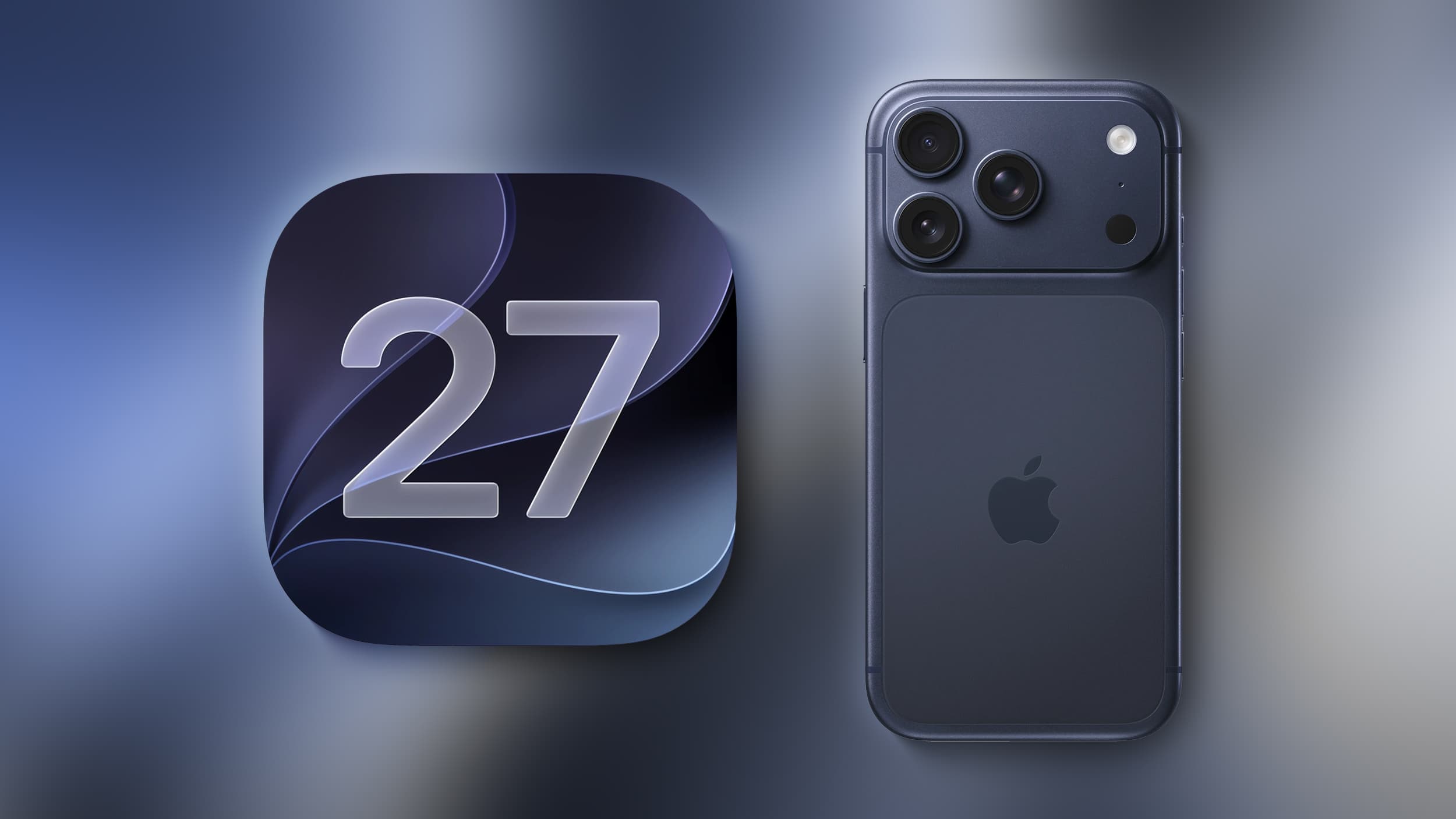
Every morning, before coffee, before conversation, before full consciousness kicks in, hundreds of millions of iPhone users swipe down from the top of their screen to check their overnight notifications. They do not think about it. That is the point. With iOS 27 — releasing today, September 14, 2026 — Apple is changing the fundamental way users access Notification Center on iPhone and iPad, and the gesture many of us have performed thousands of times a year since 2011 will no longer work the way it always has.
This is the iOS 27 notification center change that flew under the radar all summer.
What Apple Changed in iOS 27's Notification Center
Notification Center has been a fixture of iOS since version 5, which Apple released in October 2011. That makes it one of the longest-standing interaction patterns in iPhone history — older than Siri, older than the App Store's modern layout, older than the iPhone 6's larger screen. For roughly fifteen years, the pull-down gesture to reveal your alerts has been as fundamental to iPhone use as tapping the home button once was.
iOS 27 breaks that continuity. Apple has redesigned how users invoke Notification Center on both iPhone and iPad, altering the gesture or access pathway that millions of users execute on autopilot. The change is not cosmetic. It touches the core physical behavior users have reinforced every single day across a decade and a half of daily use.
The Notification Center itself — that chronologically ordered list of alerts from your apps — is not disappearing. The destination remains. The road to get there is what Apple has rerouted.
Why This Change Is More Disruptive Than It Sounds

Procedural memory, sometimes called motor memory, is the neurological system that handles practiced physical sequences — riding a bicycle, touch-typing, or swiping open your phone's notification shade without looking. Research from cognitive science, including foundational work by psychologist Endel Tulving distinguishing procedural from declarative memory, shows these habits are encoded differently from conscious knowledge. You cannot simply announce a new rule to your motor cortex and expect instant compliance.
Read next iPhone Duo's Hidden Fake Bezel Setting ExplainedUX researchers have a term for what happens when a familiar interaction pattern is removed: negative transfer. Skills learned in one context actively interfere with learning the correct behavior in a new context. A study published in the journal Human Factors found that users required an average of 14 to 21 days of consistent exposure before a new interaction pattern began to override a well-established one — and during that transition window, error rates climbed significantly.
Applied to the iOS 27 notification center change: users will not simply adapt by reading a release note. They will reach for the old gesture reflexively, fail to get the expected result, feel a moment of confusion, course-correct consciously, and repeat that cycle dozens of times a day until the new habit finally overwrites the old one. For heavy phone users — who, according to data.ai figures from 2025, spend an average of over four hours daily on their smartphones — this friction compounds fast.
The disruption also scales differently across users. Casual users check notifications perhaps ten times a day. Power users and professionals might invoke Notification Center fifty or sixty times. At fifty invocations a day and even a three-second cognitive fumble each time, that is two and a half minutes of daily friction during the adjustment period. Multiply that across weeks and you begin to appreciate why even small interaction changes generate outsized user frustration.
How the Change Evolved Through Beta Releases

Apple released multiple developer beta builds of iOS 27 across the summer of 2026, and close observers noted the notification center behavior was not static. Between the first and second developer beta releases, the specific implementation shifted — suggesting Apple itself was still calibrating the change internally.
That kind of mid-beta adjustment is significant. It means the behavior was not simply locked in from the first seed. Engineers and designers were iterating on it in real time, responding to feedback from the developer community who had hands-on access. The fact that subsequent betas — several releases deep into the cycle — showed the new behavior holding firm is what elevated this from "possible beta quirk" to "this is shipping." By the time late-stage betas landed, the pattern was clear: Apple had committed.
Beta testers who documented the change noted that the behavior remained consistent across both iPhone and iPad, indicating a coordinated redesign across form factors rather than a platform-specific experiment. iPadOS 27 carries the same shift, which expands the affected user base considerably beyond iPhone alone.
The author of the original 9to5Mac report that surfaced this issue was unambiguous about their own position: they would change it. That editorial candor from a publication embedded in the Apple ecosystem — one whose writers routinely run pre-release software for months — carries weight. This is not a fringe complaint from a user resistant to any change. It is a considered critique from someone who lived with the new behavior through an entire beta cycle and still found it wanting.
User Reactions and Developer Feedback
Developer beta access represents a small but vocal slice of the broader iPhone user base. The community skews technical, skews toward power users, and tends to engage publicly on platforms like Mastodon, Bluesky, and Reddit's r/apple forum. Across those channels this summer, the notification center change generated consistent friction.
The complaints were not about the destination — Notification Center itself remains functional. They centered on the interruption of automaticity. When a behavior becomes automatic, users experience flow; when it breaks, they experience intrusion. Developers filing feedback through Apple's Feedback Assistant flagged the change in volume sufficient to prompt the mid-beta behavioral adjustment, though Apple's ultimate decision to ship the revised version rather than revert to the original pattern suggests internal confidence in the new approach outweighed external pushback.
That gap between developer sentiment and Apple's shipping decision is itself telling. Apple has historically been willing to sit with user friction in the short term when leadership believes a change serves longer-term design coherence. Whether this notification center shift fits that category remains to be demonstrated post-launch.
Apple's History of Controversial UX Overhauls
Apple has been here before. The removal of the headphone jack from the iPhone 7 in 2016 was called catastrophic by critics and is now largely unremarked upon. The transition from the original Home button to Face ID and swipe-up navigation in 2017 required users to rewire interaction patterns nearly as deeply ingrained as the notification pull-down. At launch, confusion was widespread. Within two product cycles, the swipe-up gesture felt native to a generation of users.
The shift to a butterfly keyboard mechanism across the MacBook line — widely condemned between 2016 and 2019 — is the counter-example Apple would prefer to forget: a change that never earned acceptance because the underlying design had a genuine flaw. Apple eventually reversed course with the return of the scissor-switch mechanism and the Magic Keyboard design.
The lesson from that history is that Apple's willingness to absorb short-term controversy does not guarantee long-term vindication. Sometimes the friction is temporary and the change is right. Sometimes the friction is the signal. With the iOS 27 notification center change, the answer will not be clear for several months of real-world use at scale.
What You Should Know Before Updating to iOS 27
iOS 27 is available starting today. If you update — and for most users, the security improvements alone make updating worthwhile — here is what to expect from the notification center experience.
The change is real and it is not a bug. If you swipe and do not get the result you expect, you have encountered the new behavior, not a glitch. Apple's support documentation and the Settings app will be your clearest guide to the revised interaction pattern.
Give yourself time. Cognitive science suggests a minimum of two to three weeks before a new motor habit begins to feel natural. Frustration in the first few days is a physiological reality, not a product failure. Keep that context handy when the old reflex fires and produces nothing.
Accessibility users and those who rely on assistive features should pay particular attention. Changes to core navigation gestures can intersect with accessibility accommodations in unpredictable ways. Check AssistiveTouch and Back Tap configurations after updating, as these may need adjustment to maintain your preferred workflows.
If the change proves genuinely untenable for your use patterns, Apple Feedback remains the appropriate channel. The mid-beta adjustment this summer demonstrated that feedback filed through official channels does reach the teams making decisions. It does not always change those decisions — but the iOS 27 notification center change's evolution across betas suggests the team was listening, even if they ultimately shipped what they shipped.
Fifteen years of muscle memory will not dissolve overnight. That is normal. The more useful question — one that will take the broader user base several months to answer collectively — is whether the new behavior, once learned, earns its place the way swipe-to-unlock and Face ID eventually did, or whether it joins the list of changes Apple quietly walks back when the next major version arrives.
Source: 9to5Mac