Seven distinct smart home devices. One confidential FCC filing. A partnership Bloomberg says Apple has been quietly steering from behind the scenes. The story of how LG Electronics became the hardware arm Apple never officially hired tells you a great deal about where Apple's smart home ambitions are headed — and how far they still have to go.
Bloomberg reported this week that Apple has been working with LG to develop a suite of accessories designed to integrate with Apple's forthcoming home hub and broader home product ecosystem. The lineup, sourced from documents LG submitted to the Federal Communications Commission and UL Solutions, includes a wired video doorbell, a thermostat, a smart deadbolt lock, a temperature sensor, an indoor security camera, an outdoor security camera, and a floodlight camera. Apple's name does not appear in those filings. LG asked the FCC to treat the submission details as confidential. The products will carry LG branding — but Bloomberg says Apple helped engineer them.
LG and Apple Team Up to Build a Full Smart Home Lineup
The breadth of the lineup is striking. A thermostat, a deadbolt, two camera form factors, a floodlight, a doorbell, and a temperature sensor: that is not a peripheral add-on to an existing ecosystem. That is a full stack. Google spent years building Nest into exactly that kind of integrated home security and climate platform before folding it into the broader Google Home umbrella. Amazon's Ring and Eero acquisitions gave it camera-to-router coverage that few rivals matched. Apple, until now, had no equivalent offering.
The FCC filing process itself signals where these products stand in their development cycle. Companies submit hardware to the FCC for radio frequency certification — a mandatory step before any wireless device can be legally sold in the United States. The fact that LG has reached this regulatory stage indicates these are not early prototypes or speculative roadmap items. They are products close enough to commercial readiness that the engineering teams have committed to a hardware revision worth certifying. LG's parallel submission to UL Solutions, a global safety certification organization, reinforces that reading. UL certification covers electrical and fire safety standards, and manufacturers typically pursue it late in the product development cycle, not at the beginning.
The confidentiality request to the FCC is standard practice for products still under embargo. Companies can request that technical documents — schematics, internal photos, test reports — remain sealed for a set period, typically to protect competitive information and allow controlled launch announcements. The request itself is unremarkable. What it reveals, in combination with the Bloomberg report, is that both companies have coordinated closely enough to manage the disclosure timeline jointly.
The Second-Party Supplier Strategy Apple Is Betting On

Apple's history with what the industry calls second-party suppliers — companies that build products to Apple's specifications without carrying Apple branding — is longer and more deliberate than it might appear. The Beats acquisition in 2014 for $3 billion is often cited as a hardware play, but in the years before that deal closed, Beats functioned precisely as a second-party audio accessory brand: it sold premium products that complemented the iPhone experience, Apple influenced the design direction through business partnership, and the brand maintained independent retail presence. The acquisition formalized a relationship the market had already understood.
Read next iPhone Duo's Hidden Fake Bezel Setting ExplainedThe MagSafe accessories program offers a more recent model. Apple certifies third-party manufacturers to build MagSafe-compatible cases, wallets, and chargers that meet Apple's own magnetic alignment and power delivery specifications. Belkin, Mophie, and Anker have built significant product lines inside that framework. Apple shapes the technical standard; partners absorb manufacturing cost and retail complexity; consumers get a curated, interoperable ecosystem.
The LG arrangement scales that model considerably. According to Bloomberg, Apple helped develop the devices, shaped their design, and oversaw engineering. That is a deeper collaboration than an accessory certification program, but it stops well short of Apple owning the manufacturing process or the brand. For Apple, this is a rational calculation. Building and supporting seven new hardware categories in-house — with the supply chain commitments, warranty obligations, and retail channel decisions each one requires — would be a multi-year, multi-billion-dollar undertaking. Partnering with a consumer electronics manufacturer that already operates at scale in exactly these product categories shortens that timeline dramatically while distributing risk.
LG is not a passive contract manufacturer here, either. The company has its own established presence in home appliances and, through its ThinQ platform, in smart home software. This is a partnership between two companies with complementary gaps: Apple has the software platform, the developer ecosystem, and the customer relationship; LG has the hardware manufacturing depth and the category expertise.
Connectivity Standards: Wi-Fi, Bluetooth, Thread, and Matter

Several of the LG devices support Wi-Fi, Bluetooth, Thread, and Matter — a connectivity combination that reflects the current state of the smart home standards landscape more clearly than any press release could. Matter, the application-layer protocol developed by the Connectivity Standards Alliance and backed by Apple, Google, Amazon, and Samsung, crossed 100 million certified devices in 2025 according to alliance reporting. Thread, the mesh networking protocol that runs beneath Matter for low-power devices, has seen adoption accelerate as manufacturers recognize that battery-powered sensors need a different radio architecture than plug-in devices.
The inclusion of all four protocols in a single device is not accidental engineering. It is a deliberate hedge against fragmentation. A smart lock that speaks Thread and Matter will work inside Apple Home, Google Home, and Amazon Alexa without a separate hub or adapter. That interoperability matters commercially — it reduces the barrier to purchase for customers who have not fully committed to any single ecosystem. But it also matters strategically for Apple: a device that works everywhere is a device that new Apple customers can already have in their homes before they buy their first Apple home hub.
Apple's October 13 Lineup vs. the LG Accessories Timeline
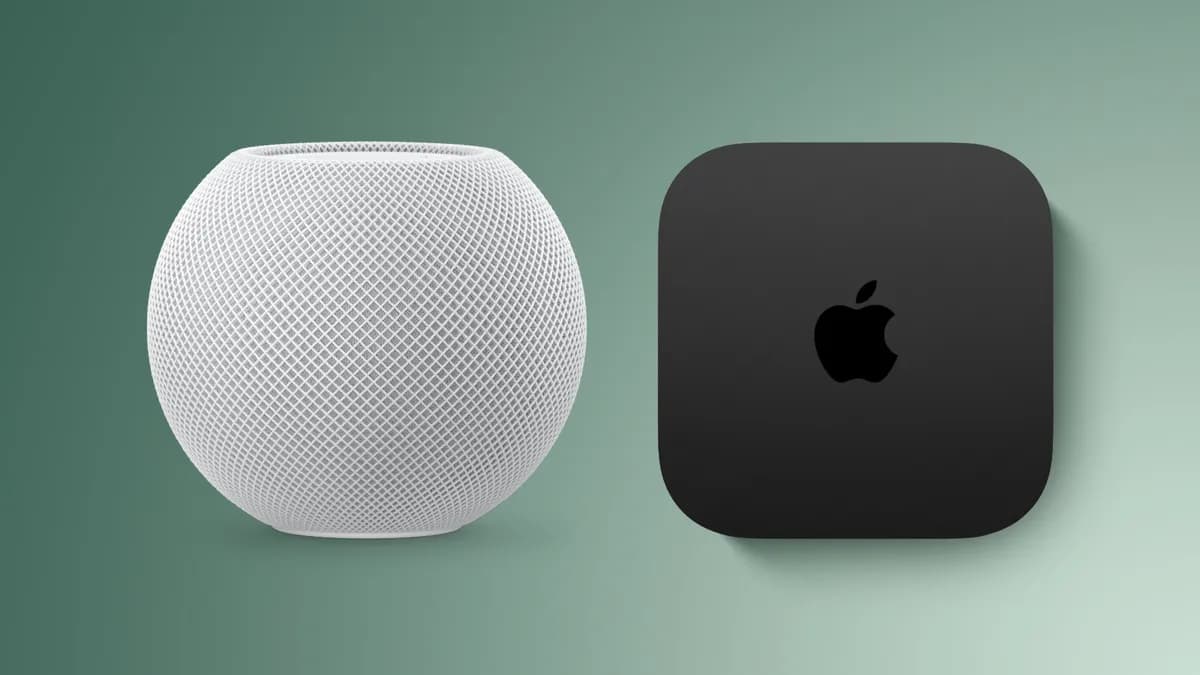
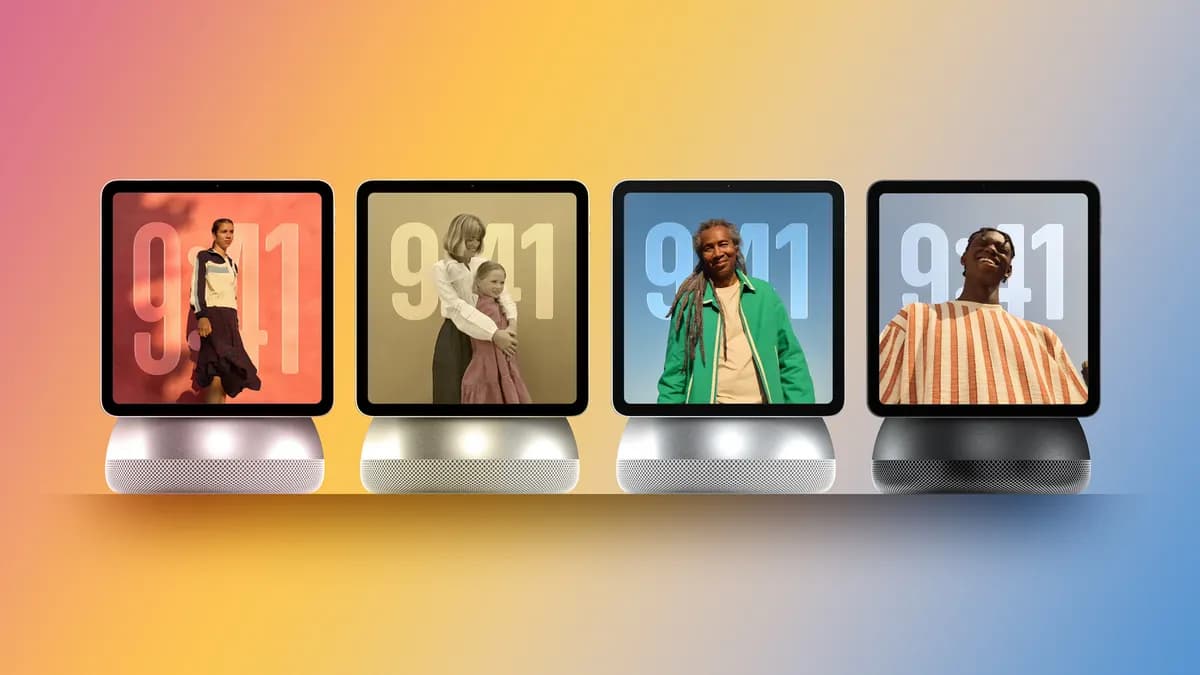
Apple is expected to announce a home hub, a new Apple TV 4K, and a new HomePod mini on October 13. None of the LG accessories are scheduled to be ready at that point. Bloomberg reports they will not launch for several more months after the Apple event.
That gap is worth examining carefully. Apple is introducing the central hardware — the hub that will anchor the home experience — before the accessory ecosystem that gives it value is available to consumers. This is not unusual in Apple's product history; AirPods launched months before the W1 chip's full feature set was supported across the product line, and HomePod shipped well before the broader multi-room audio ecosystem matured. But it does mean October 13 buyers are purchasing infrastructure ahead of the devices that will make it meaningful.
The FCC certification timeline suggests the LG accessories could be ready for retail in early 2027. A holiday 2026 announcement window remains plausible if the regulatory process moves quickly, but Bloomberg's framing of "a few months" after the October event points to a Q1 2027 launch as the more likely scenario.
What This Means for the Smart Home Market
The competitive implications extend beyond Apple's own ecosystem. Ring has dominated the video doorbell category in the United States for nearly a decade, with market research firms consistently placing it above 35 percent penetration among smart home camera owners. Google Nest Thermostat remains the default reference point for connected climate control. Apple, for all its installed base advantages, has had no first-party or second-party answer in either category.
The LG partnership changes that calculation. A video doorbell and thermostat that integrate natively with Apple Home, carry the implicit Apple design endorsement Bloomberg's reporting suggests, and support Matter for cross-platform compatibility represent a credible challenge to the incumbents. The question is not whether LG can build competitive hardware — its track record in consumer electronics is extensive — but whether the Apple Home software experience and the hub's capabilities are compelling enough to pull buyers away from ecosystems they already use.
For consumers who are already inside Apple's ecosystem — iPhone, iPad, Mac, Apple TV — the answer may simply come down to setup friction and price. If these accessories pair seamlessly with an Apple home hub and appear natively in the Home app without additional configuration, they will compete on convenience regardless of feature parity with Ring or Nest.
Frequently Asked Questions
What LG Apple smart home accessories are in development?
Based on FCC and UL Solutions filings reported by Bloomberg, LG is building a wired video doorbell, thermostat, smart deadbolt lock, temperature sensor, indoor security camera, outdoor security camera, and floodlight camera — all developed in collaboration with Apple.
Will the LG accessories carry Apple branding?
No. According to Bloomberg, the devices will be built and branded by LG. Apple's involvement in design and engineering is not reflected in the product branding or the regulatory filings.
When will the LG Apple smart home accessories be available?
Bloomberg reports the accessories will not be ready for launch on October 13, when Apple is expected to announce its home hub. A release several months after that event — likely in early 2027 — is the current expectation.
What connectivity protocols do the LG devices support?
Several of the devices support Wi-Fi, Bluetooth, Thread, and Matter, according to the Bloomberg report. The Matter protocol allows these devices to work across Apple Home, Google Home, and Amazon Alexa ecosystems.
Why did Apple partner with LG instead of building these products itself?
The second-party supplier model allows Apple to shape product design and features while LG absorbs manufacturing complexity, supply chain investment, and retail support obligations. It is a faster, lower-risk path to expanding the Apple Home ecosystem than in-house hardware development.