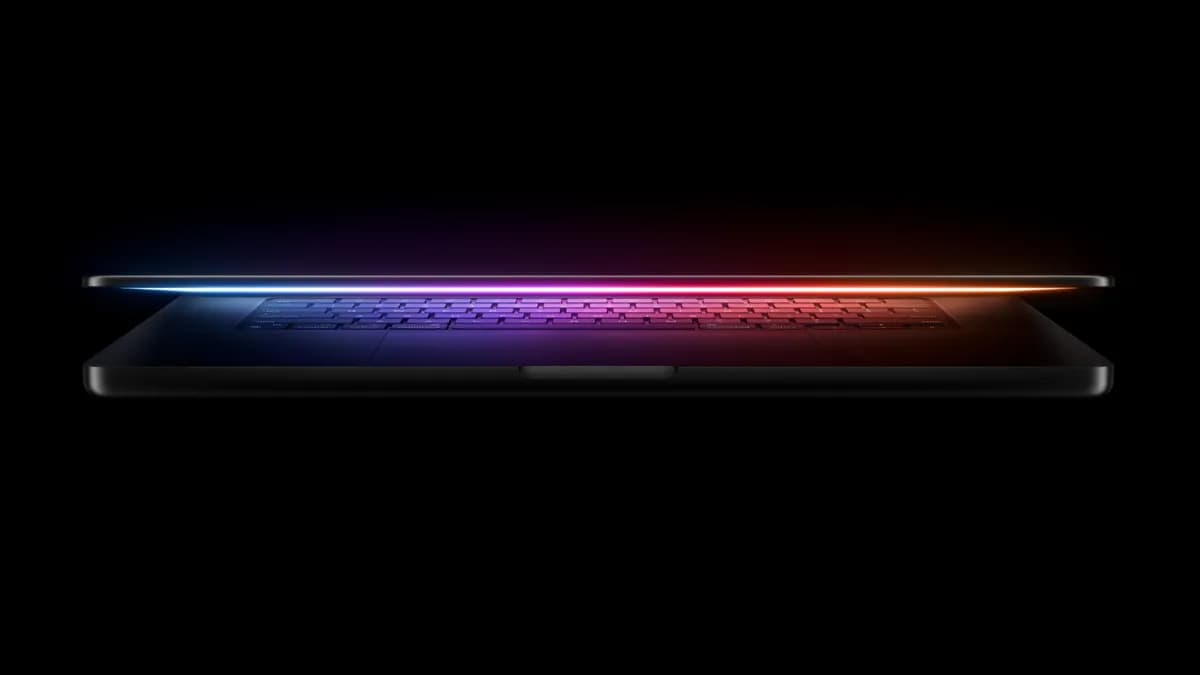
Apple is preparing what may be its most significant MacBook Pro overhaul in years — a redesigned machine that will arrive with a touchscreen display, Tandem OLED technology, and a chassis that is reportedly "significantly" lighter than the models currently on store shelves. The details, first surfaced through Bloomberg's Power On newsletter, suggest an announcement is imminent. Here is everything known so far and what it means for anyone thinking about a new MacBook Pro.
What We Know So Far About the MacBook Pro OLED Redesign
Bloomberg's Power On newsletter — the widely cited Apple-focused publication from journalist Mark Gurman — reported in its latest issue that the forthcoming MacBook Pro redesign will arrive within roughly a month. The newsletter has an established track record on Apple hardware leaks, making this timeline credible.
Three core details emerge from the reporting. First, this will be the first MacBook with a touchscreen. Apple has resisted touch displays on Macs for over a decade, consistently arguing that touch on a laptop creates "gorilla arm" fatigue. The decision to reverse course represents a meaningful philosophical shift. Second, the display technology will be Tandem OLED — a stacked panel architecture that delivers substantially higher brightness and better power efficiency than a conventional OLED stack. Third, and perhaps most striking for users who carry a MacBook Pro daily, the new machines will be "significantly" lighter than their current counterparts.
No specific weight or dimension figures have been confirmed. But "significantly lighter" carries real meaning when paired with a full chassis redesign and a display technology known for thinner panel profiles.
Significantly Lighter and Thinner: What That Means in Practice

The current M4 MacBook Pro 14-inch weighs 3.5 pounds (1.58 kg). The 16-inch version sits at 4.7 pounds (2.14 kg). Those figures have remained largely stable through several generations — the M1, M2, and M3 cycles produced incremental performance gains inside a chassis that stayed roughly the same dimensions and mass.
Read next iPhone Duo's Hidden Fake Bezel Setting ExplainedA "significant" reduction against those baselines could mean dropping several tenths of a pound on the 14-inch or approaching half a pound on the larger model. For a laptop carried through airports, between meetings, or in a backpack every day, that kind of reduction is genuinely felt. The difference between a 3.5-pound laptop and one that weighs, say, 2.9 pounds is not subtle over the course of a long travel day.
Part of what makes this plausible is the nature of Tandem OLED itself. When Apple launched the iPad Pro M4 in 2024, it introduced Tandem OLED to the consumer electronics market. The panel places two OLED stacks in tandem to achieve brightness levels — up to 1,000 nits sustained and 1,600 nits peak — that a single OLED layer cannot sustain efficiently. The result in the iPad Pro M4 was a device that was dramatically thinner than its predecessor while maintaining excellent display performance. That same logic applies to a laptop display. A thinner panel means a thinner lid, which reduces overall chassis depth and weight.
Combined with Apple Silicon's well-documented efficiency — the M4 family already eliminates the heat spreaders and fan configurations needed in Intel-era machines — the conditions for a genuinely thinner, lighter MacBook Pro are more achievable now than at any previous point in the product's history.
Expected Timeline: When Will Apple Announce the New MacBook Pro?

Bloomberg's Power On newsletter placed the debut "within a month or so" of its October 4, 2026 publication date. That points toward an announcement before the end of October or into November. Apple has historically used October press events or press-release launches to update Mac hardware ahead of the holiday quarter, so the timing fits an established pattern.
No specific event date has been confirmed. Apple has increasingly moved toward press releases and pre-recorded video presentations for Mac launches rather than large staged events, so a traditional keynote is not guaranteed. The announcement could come through a simple press release accompanied by hands-on media access.
Supply chain activity consistent with a near-term launch has been building. The convergence of the Power On report with the expected product cycle for MacBook Pro — M4 Pro and M4 Max chips were introduced in late 2024 — makes a late 2026 follow-up with a redesigned chassis a natural progression.
Why This Redesign Is a Major Departure from Previous MacBook Pros
Apple's MacBook Pro has gone through a handful of genuinely transformative design moments. The 2016 redesign brought the Touch Bar and the butterfly keyboard — a cycle that generated years of criticism over keyboard reliability and culminated in Apple's public apology and extended repair program. The 2021 redesign reversed much of that era's damage: it killed the Touch Bar, restored MagSafe charging, brought back HDMI and SD card slots, and introduced the notch above the display alongside mini-LED backlighting.
Both of those pivots were defining. The 2026 redesign appears to be another one.
Adding a touchscreen to a MacBook Pro is not a minor update. It requires rethinking how macOS responds to touch input, how developers build apps, and how Apple positions the product against the iPad Pro — a device that has been creeping toward laptop functionality for years with keyboard accessories and desktop-class chips. Apple will need to articulate clearly why touching a Mac screen is now desirable when the company argued the opposite for so long.
Tandem OLED also marks the end of the mini-LED era for MacBook Pro, barely four years after it was introduced. Mini-LED with local dimming was a significant improvement over older IPS panels, and it handled sustained brightness loads well. OLED brings true blacks, higher contrast ratios, and per-pixel control — but it also introduces the possibility of burn-in on a professional laptop that may display static UI elements for hours at a time. How Apple's panel calibration and pixel-refresh technology addresses that concern will be closely watched.
The weight reduction, if it materializes as described, completes a trifecta of changes that would make this MacBook Pro substantially different from every model that came before it.
Implications for Buyers: Should You Wait for the New MacBook Pro?
If you are currently using a MacBook Pro from the M1 or M2 generation, the case for waiting is strong. The combination of a new display technology, a touchscreen, and meaningfully reduced weight represents a generational shift — not a spec bump.
If you are on an Intel-era Mac, the argument for waiting is even clearer. Three-year-old Intel MacBook Pros are already being left behind by software optimized for Apple Silicon; extending the wait by a few weeks to get a redesigned machine with Tandem OLED is straightforward.
The one group with a harder decision is anyone who purchased an M4 MacBook Pro in late 2024 or early 2025. Those machines are fast, the mini-LED display is excellent, and the performance per watt is remarkable. If the new OLED model arrives within a return window, that decision becomes easier. Outside of it, the existing M4 remains a capable machine for several more years.
For creative professionals — video editors, photographers, 3D artists — the Tandem OLED display will likely be the deciding factor. Accurate color, true blacks, and higher peak brightness matter enormously for work that ends up on OLED televisions and phone screens. Waiting makes sense.
Frequently Asked Questions About the MacBook Pro OLED
What display technology will the new MacBook Pro use?
The new MacBook Pro is expected to use Tandem OLED, a stacked panel architecture Apple first deployed in the iPad Pro M4. It offers higher sustained brightness and improved power efficiency compared to standard OLED or mini-LED displays.
Will the new MacBook Pro have a touchscreen?
Yes. According to Bloomberg's Power On newsletter, this will be the first MacBook with a touchscreen — a significant departure from Apple's long-standing position against touch input on laptops.
How much lighter will the new MacBook Pro be?
Specific weight figures have not been confirmed. The Power On newsletter describes the new models as "significantly" lighter than current MacBook Pros. The 14-inch M4 currently weighs 3.5 pounds; the degree of reduction will become clear at announcement.
When is Apple expected to announce the new MacBook Pro?
Bloomberg's reporting suggests an announcement within roughly a month of October 4, 2026 — placing it in late October or November 2026.
Is this the same chip as the current MacBook Pro?
The reporting does not specify a chip generation for this redesign. Given the design-focused nature of the changes described, it is possible Apple will pair the new chassis with a next-generation Apple Silicon chip, but that has not been confirmed.
Should I buy a MacBook Pro now or wait?
For most users, waiting is advisable given the scope of changes described — new display technology, a touchscreen, and reduced weight together represent the most significant MacBook Pro redesign in years.
Source: 9to5Mac