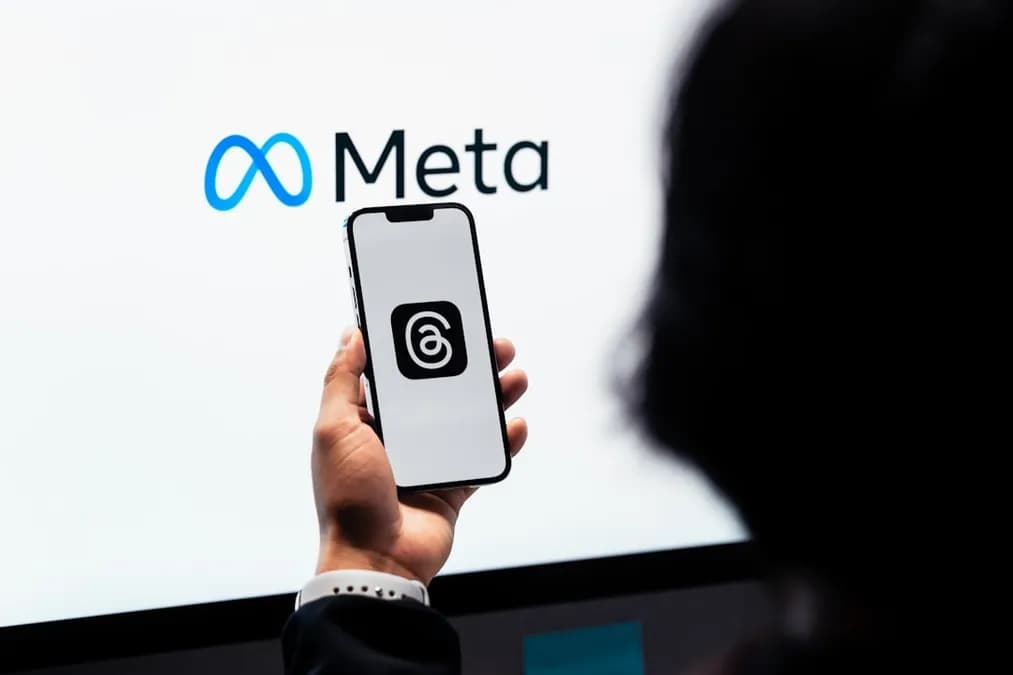
Meta's decision to open source the code powering its Muse AI agent isn't just a developer relations move — it's an invitation for the global maker community to build hardware the company never will. Released in early October 2025, the Muse codebase gives anyone with a microcontroller, an E Ink panel, or a spare HDMI stick the raw material to run Meta's AI agent outside the walled garden of consumer devices.
What Is Meta's Muse AI and Why It Matters
Muse is Meta's AI agent — a system designed to handle tasks, surface reminders, and interact with users in a persistent, context-aware way. Unlike a simple voice assistant that resets between interactions, an AI agent carries intent forward, managing small tasks autonomously across time. That distinction matters enormously for hardware tinkerers, because it means a Muse-powered gadget isn't just a novelty speaker — it's potentially a persistent digital assistant running on hardware you built yourself.
The timing of the open-source release aligns with a broader shift in how AI companies are approaching developer ecosystems. Meta's Llama family of language models accumulated tens of millions of downloads within months of each release, and Llama 2 reportedly surpassed 30 million downloads in its first year on Hugging Face alone. That appetite for self-hostable AI has translated directly into the maker community: forums like Hackaday and r/homeautomation regularly feature threads on running local models on Raspberry Pi hardware, and the Raspberry Pi Foundation's own AI Kit — a hardware module for on-device machine learning — sold out within days of its 2024 launch. Meta, clearly, is paying attention.
What makes Meta Muse AI gadgets distinct from simply running a quantized LLM on a Pi is the agent architecture. Muse is built to act, not just respond. For DIY hardware, that shifts the question from "can this device talk to me?" to "can this device do things for me?"
Meta Open Sources the Muse Codebase
Meta published the Muse source code alongside a set of reference projects intended to lower the barrier for hardware developers. The release gives builders direct access to the underlying agent logic, rather than forcing them to reverse-engineer an API or wrap a cloud service they don't control.
Read next Laika's Wildwood: Stop-Motion Fantasy at TIFF 2026Open-sourcing agent infrastructure is a more significant move than open-sourcing a model weight. Model weights let you run inference locally. Agent code lets you shape how the AI reasons about tasks, when it acts, and how it communicates with peripheral hardware. That architectural access is what hardware builders need to do something genuinely useful with Muse beyond displaying a chat interface on a screen.
Meta's approach mirrors what Home Assistant achieved in the home automation space. Home Assistant's open-source release gave developers the ability to build their own integrations with commercial devices, and the platform has grown to more than 500,000 active instances worldwide — a figure the project's maintainers cite in their annual surveys. The comparison isn't perfect: Home Assistant is a protocol glue layer, while Muse is an AI agent. But the mechanism of growth is identical. You release the code, developers build things you never imagined, and adoption compounds.
For Meta, the open-source release also reduces the cost of ecosystem development. Every developer who builds a Meta Muse AI gadget and shares it publicly is effectively a product evangelist. They also surface bugs and edge cases that Meta's internal teams would never encounter in controlled testing.
DIY Muse Gadget Ideas Meta Suggests

Meta has seeded the community with a handful of concrete starting points. Among the suggestions: loading Muse onto a color E Ink display to surface reminders, and connecting it to an HDMI stick so the agent can output to a television or monitor.
The E Ink suggestion is well-calibrated for the maker audience. Color E Ink panels — particularly those from manufacturers like Waveshare, which produces panels popular in the Raspberry Pi community — have become affordable enough for hobbyist projects, with entry-level seven-color panels available for under $30. The low power draw of E Ink makes it practical for always-on reminder displays that don't require a power brick. A Muse-powered panel that surfaces meeting reminders, grocery lists, or time-sensitive alerts during the day and blanks overnight is genuinely useful, not just technically impressive.
The HDMI stick suggestion targets a different use case — essentially a smart display dongle that transforms any monitor or television into a Muse terminal. For developers who want to build a shared household assistant or a conference room display, an HDMI stick form factor keeps the hardware footprint minimal.
What Meta hasn't specified, but experienced hardware developers will immediately wonder about, is the compute requirement. Running an AI agent locally demands meaningful processing power, and the balance between latency, accuracy, and power consumption differs sharply depending on the hardware chosen. A developer working in this space would rightly point out that the quality of the experience depends heavily on whether Muse can be adequately quantized to run on constrained hardware, or whether the implementation assumes a cloud backend for the heavier inference work. The open-source release should clarify this architecture, but builders should approach it with realistic expectations about what "local" actually means in practice.
How This Fits Meta's Broader AI Hardware Strategy
Meta has been building toward a hardware-software AI ecosystem for several years, most visibly through its Ray-Ban smart glasses partnership with EssilorLuxottica and the Quest mixed reality headset line. Muse appears to be the connective tissue — the agent layer that could sit across those form factors and potentially others.
By open sourcing Muse, Meta creates a development flywheel that benefits its first-party hardware: if Muse becomes established in the maker community, developers will build skills and familiarity with its architecture that translates into demand for Meta's own Muse-enabled devices. It's a strategy Google used effectively with Android, and one that Amazon attempted with Alexa's developer program — though Alexa's third-party ecosystem ultimately stalled when the economics didn't support continued developer investment.
The distinction for Meta is that open-sourcing the code removes the dependency on Meta's continued goodwill. A developer who builds a Muse gadget using open-source code isn't locked into Meta's API terms, rate limits, or service availability. That structural difference could sustain community momentum even if Meta's own hardware efforts shift direction.
Implications for the Open Source AI Ecosystem
The open-source AI hardware movement has been accelerating since 2023, when accessible model weights and affordable inference hardware first converged to make local AI practical for non-specialists. Projects like Ollama — which packages local LLM inference into a simple server — crossed 50,000 GitHub stars within months of launch, signaling that the developer appetite for self-hosted AI infrastructure is substantial and real.
Meta's Muse release adds agent infrastructure to a stack that previously offered primarily model inference tools. That's a meaningful gap filled. Model inference tells you what to think; agent infrastructure tells you what to do. For the open-source community, the combination opens the door to AI gadgets that aren't dependent on OpenAI's API availability, Anthropic's pricing tiers, or any cloud provider's terms of service.
The honest caveat is that open-source agent code doesn't automatically produce polished, production-ready experiences. The projects that will actually ship — and earn positive reviews on Hackster.io and in maker YouTube channels — will require significant integration work on top of Meta's starting point. The code is a foundation, not a finished product.
How to Get Started Building Your Own Muse Device
For developers ready to explore Meta Muse AI gadgets, the starting point is Meta's official open-source repository, which should be the canonical reference for the current codebase and any hardware compatibility notes Meta has published alongside it.
Before ordering hardware, read the documentation carefully for compute requirements. The E Ink display project is likely the most accessible entry point: the low-power profile of E Ink panels, combined with a Raspberry Pi Zero 2 W or similar low-cost single-board computer, keeps the bill of materials under $50 for most configurations. The HDMI stick project may require a more powerful compute module depending on how much inference runs locally versus remotely.
The maker community around projects like these tends to cluster on Discord servers, the Hackaday forums, and GitHub Discussions threads within the official repository. Following those spaces will surface community-built integrations, hardware compatibility reports, and troubleshooting threads faster than independent experimentation alone.
The most important step, though, is the first one: clone the repository, read the architecture documentation, and understand what Muse actually does before committing to a hardware form factor. The best Meta Muse AI gadgets won't be the ones that most closely follow Meta's suggested projects — they'll be the ones that find a genuine problem the agent architecture is uniquely suited to solve.
Source: The Verge