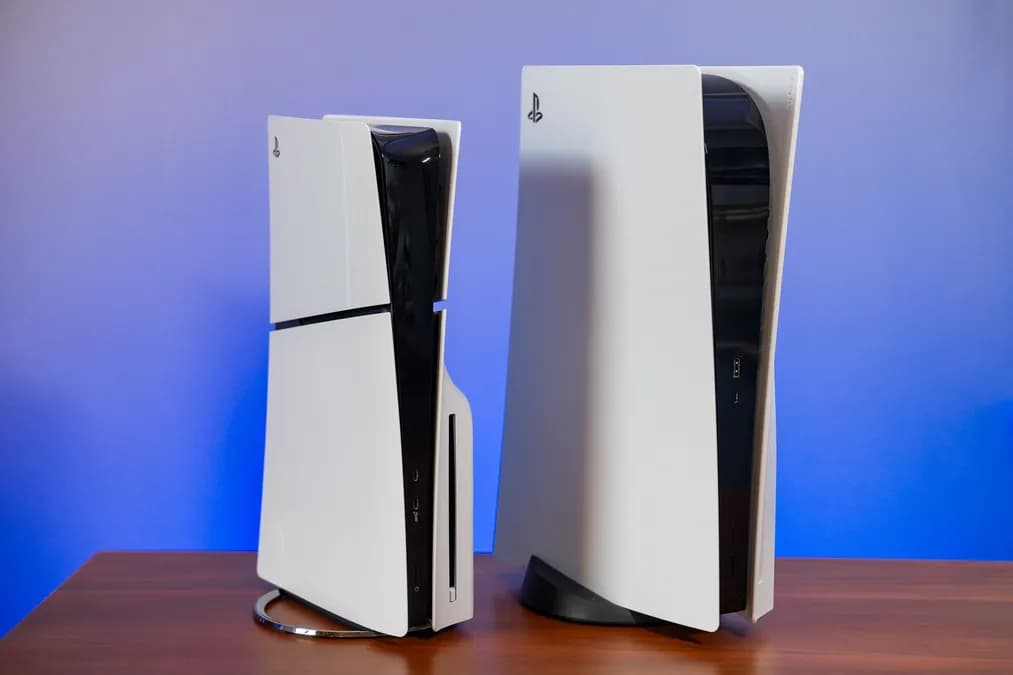
Sony confirmed on October 1, 2026, that it is bringing AI-driven graphics upscaling to the base PlayStation 5 — the console millions of people already own — through a technology called Quick Spectral Super Resolution, or QSSR. The announcement, detailed in a Sony blog post, positions QSSR as a "new performance tier of AI upscaling" born from the company's ongoing Project Amethyst collaboration with AMD. For anyone who has watched PS5 AI upscaling evolve from a premium curiosity into something closer to a platform standard, this is the moment the technology stops being optional.
What Is Quick Spectral Super Resolution (QSSR)?
QSSR is Sony's second generation of machine-learning-based image reconstruction, and its name tells you most of what you need to know. "Quick" signals a lighter computational footprint than the company's existing PlayStation Spectral Super Resolution, or PSSR, which was designed with the more powerful PS5 Pro in mind. In practical terms, PSSR reconstructs a low-resolution frame into a sharp, high-resolution image using a neural network trained on game content. That approach delivers large visual gains but demands dedicated hardware muscle.
QSSR scales that ambition down. Sony describes it as a "new performance tier" — language that implies a tiered structure rather than a replacement. The base PS5 lacks the Pro's beefed-up machine-learning silicon, so a technique that slots into the standard console's fixed hardware budget must make different trade-offs. A lighter neural model, a shorter reconstruction pipeline, or a lower internal render target are the likely levers, though Sony has not published the technical specifics.
The distinction matters because the base PS5 remains the install base that counts. Any upscaling method that only runs on the Pro reaches a minority of players. One that runs on the standard machine reaches everyone. Sony has not said whether QSSR will also work on the PS5 Pro, or how the two upscalers will coexist.
Sony's Project Amethyst and the AMD Partnership
Project Amethyst is Sony's codename for its deepening silicon and software partnership with AMD, the company that supplies the custom APUs inside both PS5 models. QSSR is the first publicly named technology to come out of that work, and the phrasing in Sony's blog post — that QSSR is "a result of" Project Amethyst — makes the collaboration structural rather than incidental.
Read next Laika's Wildwood: Stop-Motion Fantasy at TIFF 2026That relationship carries weight beyond this console generation. AMD has spent years shipping FidelityFX Super Resolution (FSR), its cross-platform upscaler, and each FSR revision has leaned harder on machine learning. Sony's co-development with AMD on reconstruction techniques gives both companies a shared research pipeline: Sony gains access to AMD's broader GPU roadmap and machine-learning expertise, while AMD gets a demanding, high-volume proving ground for upscaling algorithms that can later appear in its PC graphics products.
For players, the takeaway is simple. When a console maker and its chip supplier design an upscaler together at the silicon level, the result tends to be more efficient than a bolt-on software solution. That efficiency is exactly what the standard PS5 needs.
What QSSR Means for Standard PS5 Owners
The headline benefit is that AI upscaling stops being a Pro-exclusive feature. Owners of the launch-model PS5 and the slim revision now have a reason to expect the reconstruction quality that PSSR introduced, without buying new hardware.
Owners of the base console should temper expectations against published benchmark data. In Digital Foundry's testing of comparable AI upscalers, NVIDIA's DLSS consistently produces the cleanest image at a given internal resolution, while AMD's FSR — particularly the pre-machine-learning versions — has shown more artifacts in motion, including shimmering on fine detail and ghosting behind fast-moving objects. Later FSR iterations narrowed that gap substantially. Where QSSR lands on that spectrum is unknown, and Sony has released no image-quality comparisons.
The base PS5's GPU is also roughly half as capable as the PS5 Pro's in raw rendering, before accounting for the Pro's dedicated ML hardware. That constraint shapes what QSSR can realistically deliver. A plausible outcome is 1440p-class internal rendering reconstructed to 4K output at 60 frames per second, a configuration that has become the practical sweet spot for this console generation. Sony has not confirmed target resolutions or frame rates.
Two questions remain open. First, game compatibility: Sony has not published a list of titles that will support QSSR, nor explained whether support requires a patch, an SDK update, or a system-level implementation. Second, actual performance gains: without fps or resolution figures, any claim about how much QSSR improves a given game is speculation. Sony's blog post frames the technology's purpose but stops short of numbers.
AI Upscaling in Gaming: The Broader Context
Upscaling is no longer a nice-to-have. It is the mechanism by which modern consoles and GPUs hit the resolutions and frame rates players expect. NVIDIA's DLSS proved the concept commercially, and independent testing has repeatedly shown that AI reconstruction can produce an image at times indistinguishable from native rendering while cutting the underlying pixel workload by more than half.
AMD's FSR made the same idea hardware-agnostic, which is why it spread across consoles and GPUs alike. Sony's PSSR then brought a first-party, PlayStation-specific flavor to the PS5 Pro. What has been missing is a version tuned for the console most people actually own. QSSR fills that gap.
The competitive picture is instructive. Microsoft has invested in its own machine-learning super resolution work for Xbox, and DirectSR aims to standardize upscaling pipelines across Windows. Sony's move keeps it in step with an industry consensus: the future of real-time graphics is not more native pixels, it is smarter reconstruction of fewer pixels. For PS5 AI upscaling, QSSR marks the point where that consensus reaches the mainstream install base rather than the enthusiast tier.
Implications for Game Developers
Developers feel upscaling decisions most acutely, because it determines how they budget rendering time. If a studio can render at 1080p or 1440p and let QSSR reconstruct to 4K, the saved milliseconds go toward effects, geometry density, or frame rate headroom. On a fixed-performance console, that headroom is the difference between a 30fps mode and a 60fps mode.
A second-tier upscaler aimed at standard hardware gives developers a consistent target across the install base. Rather than maintaining separate paths for Pro and non-Pro machines, a studio can tune once for QSSR and let the Pro's PSSR handle higher-end configurations. That reduces engineering overhead, though it depends entirely on whether Sony exposes QSSR through its standard development tools.
Developer adoption will also be voluntary or mandatory depending on how Sony frames support. If QSSR requires per-title integration work, expect a slow rollout concentrated in first-party releases. If it can be applied at the system level, adoption could be near-universal. Sony has not clarified which path it has chosen.
What's Next for PS5 Graphics Technology?
The immediate next step is disclosure. Sony has announced QSSR's existence and its Project Amethyst lineage, but the details that determine whether it matters — supported titles, target resolutions, frame-rate impact, and a release window — are all unconfirmed. Until those arrive, QSSR is a promising framework rather than a measurable upgrade.
The longer arc points toward tighter integration between console silicon and machine-learning reconstruction. Project Amethyst suggests Sony and AMD are building that capability as a shared foundation, not a one-off feature. If QSSR performs well on the standard PS5, the technique will likely inform the next PlayStation's hardware design from the ground up.
For now, the practical advice is patience with a caveat: the technology is real, the partnership behind it is substantive, and the target audience is every PS5 owner. The numbers are what remain to be seen.
Related coverage
- Trump Signs Super Intelligence Order; CEOs Take AI Pledge
- Trump Bans 'AI' Term — Only 'Super Intelligence' Allowed
Source: The Verge