The Batman II Production Pause: What We Know
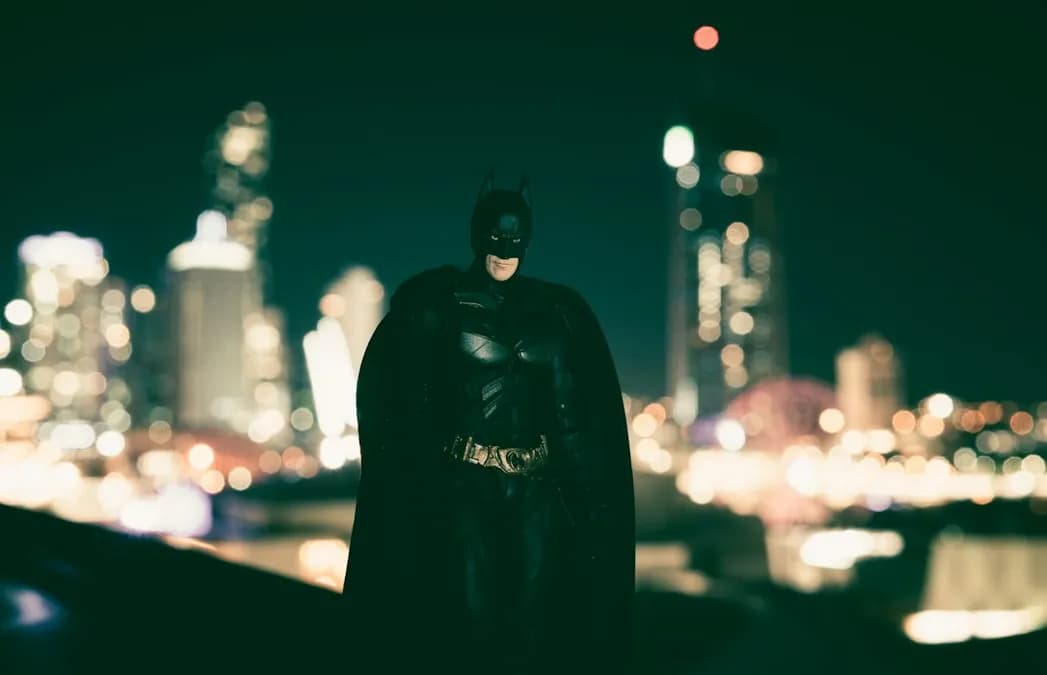
A terse, carefully worded studio statement rarely tells the whole story, but sometimes it tells you exactly what you need to know. DC Studios confirmed this week that production on The Batman II — the highly anticipated sequel to Matt Reeves' 2022 reimagining of the Dark Knight — has been paused. The studio offered a brief but telling message: "Matt has the full support of DC Studios and we look forward to continuing the journey soon."
That's it. No timeline. No explanation. Just a statement that does equal work reassuring fans and deflecting scrutiny.
What we know concretely is limited: the production is stopped, for now. What we can analyze, however, is substantial. The Batman II production pause lands at a particularly loaded moment for DC Studios — a period of transformation, ambition, and cautious rebuilding under co-CEOs James Gunn and Peter Safran. To understand what this pause means, you have to understand the architecture of the franchise it threatens to delay, and the director at its center.
Matt Reeves and the Weight of a Dark Universe

Matt Reeves is not a director who rushes. His career bears this out. Cloverfield (2008) was a breakout, but it was Let Me In (2010) and his Planet of the Apes sequels — Dawn (2014) and War (2017) — that established him as a filmmaker who treats blockbuster canvas as an invitation for psychological depth. He prepares exhaustively. He rewrites obsessively. He does not hand in a rough draft.
Read next 1963 : le tube yéyé qui a enflammé la France — reconnaîtrez-vous cette voix ?The original The Batman, released in March 2022, reflected this temperament. Clocking in at nearly three hours, the film was a neo-noir procedural wrapped in a superhero costume — somber, meticulously crafted, and stubbornly resistant to the crowd-pleasing rhythms of the Marvel playbook. Robert Pattinson's Bruce Wayne was broken in a way that felt new. Critics responded accordingly: the film holds an 85 percent approval rating on Rotten Tomatoes, and audiences rewarded it with an estimated $770 million or more at the worldwide box office, a remarkable performance for a film that made no apologies for its bleakness or its runtime.
That success created enormous pressure for the sequel. Not just fan pressure, but structural pressure. Reeves' Gotham — which has expanded into the Penguin television series on Max, a critically praised spinoff starring Colin Farrell — represents one of DC's clearest proof-of-concepts for prestige-level superhero storytelling. A lot is riding on whatever The Batman II turns out to be. That weight is inseparable from the pause.
What a Production Pause Actually Means in Hollywood
The phrase "production pause" can mean almost anything. It can signal creative disagreement, budgetary recalibration, scheduling conflicts, or simply a director who needs more time to crack the script. It very rarely signals catastrophe — and industry observers have repeatedly noted that the language studios use in these moments offers genuine signal.
When a studio says a director has their "full support," veteran entertainment journalists and production insiders tend to read that as a creative, not logistical, pause. It's language that positions the studio as a partner rather than an authority. Compare that to the silence or measured hedging that precedes a director's removal, and the DC statement registers as meaningfully different.
Historical precedent supports measured optimism. Joker (2019) had a notoriously troubled path to the screen, marked by internal skepticism at Warner Bros. and concerns about the property's tone — it went on to gross over $1 billion worldwide and collect two Academy Awards, including Best Actor for Joaquin Phoenix. The Batman itself faced production disruption when Robert Pattinson tested positive for COVID-19 during filming, pausing the shoot for several weeks. The finished film bore no visible scars from that delay.
Not every pause has a happy ending. Joker: Folie à Deux, released in 2024, was plagued by troubled production signs and ultimately landed as one of the more public disappointments in recent DC history — commercially and critically. The Flash (2023) reached screens after years of behind-the-scenes complications tied to its star and delivered a box office result well below expectations despite a reported production budget north of $200 million. Those cautionary examples exist. But they tend to involve more visible dysfunction than what DC Studios has described here.
Ripple Effects Across DC's Broader Slate
The pause doesn't occur in a vacuum. James Gunn and Peter Safran, who took the reins at DC Studios in late 2022 and early 2023, have been deliberately constructing what they've described as a new, cohesive DC Universe. Gunn's Superman, starring David Corenswet as the Man of Steel, is positioned as the cornerstone of this new continuity — a soft reset designed to unify storytelling across film and television in a way the previous DC Extended Universe never managed.
Here's where the Reeves situation gets structurally interesting. The Batman and its Gotham-based extensions exist in what DC Studios has labeled an "Elseworlds" pocket — narratively separate from the main DCU continuity. Reeves has creative autonomy over his Batman. He doesn't have to worry about Gunn's Superman showing up in his Gotham, and Gunn doesn't have to thread Pattinson's Dark Knight into his continuity plans. That separation was one of the franchise's most sensible organizational decisions.
It also means the pause affects DC's slate in a softer way. The main DCU roadmap — which includes Superman, planned Lanterns television content, and a reimagined Batman within the core continuity — doesn't depend on The Batman II landing on any particular schedule. The Elseworlds designation gives Reeves the runway to work at his pace, and it gives DC Studios the flexibility to absorb delays without reshuffling an entire interconnected release calendar.
Fan and Industry Reaction: Concern or Confidence?
Reactions have split along predictable fault lines. Online discourse — which rarely rewards nuance — moved quickly toward alarm, particularly among fans who have watched DC navigate genuine catastrophes in recent years. The memory of Batgirl, the completed film that Warner Bros. Discovery infamously shelved in 2022 for a reported tax write-down, has made DC audiences understandably jumpy about any disruption signal.
But the industry reaction has been more tempered. Trade press coverage emphasized the supportive tone of the studio's statement. Production pauses at this stage of development — where a sequel to a complex, heavily stylized film requires substantial pre-production — are not unusual for ambitious projects. Dune: Part Two underwent scheduling adjustments before delivering one of 2024's most acclaimed blockbusters. Avatar: The Way of Water endured years of delays before grossing over $2.3 billion globally.
The calculus for The Batman II is clear to most observers. DC Studios is not going to antagonize the director of one of its most profitable and critically respected recent properties over a pause. The relationship between Reeves and the studio is an asset. Breaking it would cost significantly more than a delay.
Looking Ahead: When Will The Batman II Resume?
The honest answer is that no confirmed timeline exists. The statement's phrase — "continuing the journey soon" — is the kind of elastic language that could mean weeks or could mean the better part of a year. Given Reeves' established working style and the scope of what a Batman sequel requires, the latter is more plausible than the former.
What matters more than the timeline is the posture. DC Studios is building something deliberate. Gunn and Safran have repeatedly stated their intention to avoid the overcrowded release schedules that exhausted audiences toward the tail end of the DCEU era. A pause on The Batman II fits that orientation — better to get it right than to rush a sequel to a film that worked precisely because it wasn't rushed.
The first film grossed $770 million by being uncompromising. The sequel, whenever it arrives, will be judged by the same standard. Matt Reeves knows that. DC Studios knows that. The pause, read that way, isn't a warning sign. It's evidence that both parties understand exactly what they have — and what they stand to lose by treating it carelessly.
Source: Rolling Stone