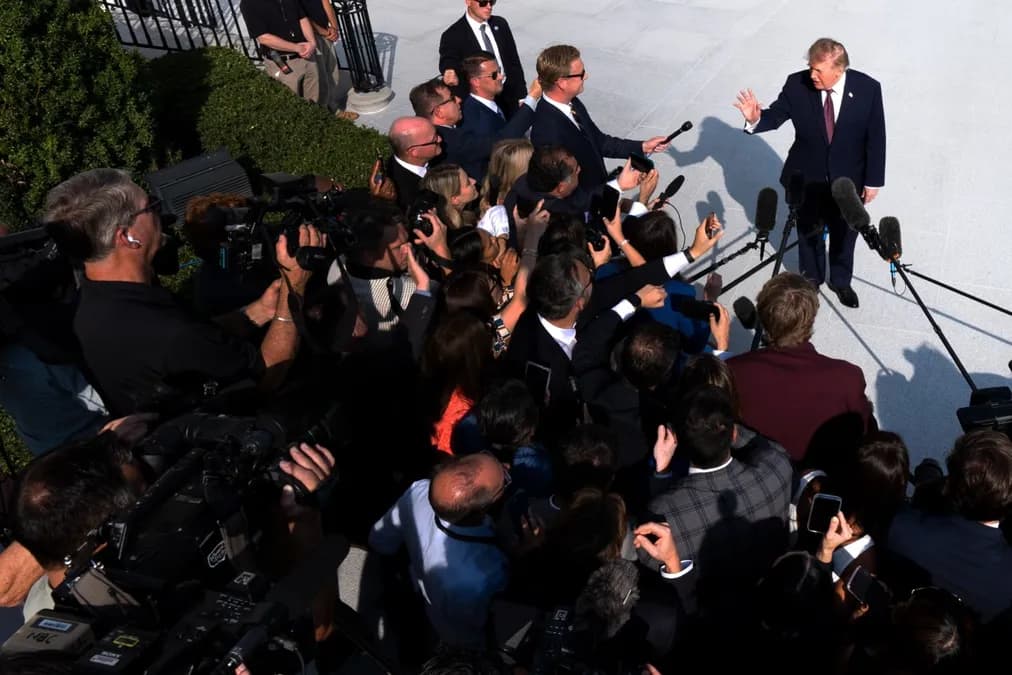
When a piece of legislation frightens Wall Street's biggest institutions into coordinated lobbying campaigns, it pays to understand exactly what is at stake. A bill targeting credit card interchange fees has cleared that threshold — and it just gained a powerful new supporter in former President Donald Trump, a development that reshapes the political calculus around a fight over one of the most lucrative and contested revenue streams in American finance.
What Is the Credit Card Bill That Has Banks Worried
The legislation at the center of this debate is the Credit Card Competition Act, a bipartisan proposal that has circulated in various forms on Capitol Hill for several years. Its core mechanism is straightforward: it would require the largest card-issuing banks to enable at least two competing payment networks on every credit card they issue, rather than routing all transactions exclusively through Visa or Mastercard. The premise is that competition between networks would force interchange fees downward, just as market pressure does in virtually every other industry.
Interchange fees — the per-transaction charges that card-issuing banks collect from merchants every time a customer swipes a credit card — currently run at roughly 1.5 to 3.5 percent of each purchase, depending on the card type and merchant category. Premium rewards cards sit at the upper end of that range. For context, the United States has some of the highest interchange rates among developed economies; the European Union capped similar fees at 0.3 percent for credit transactions in 2015.
The Credit Card Competition Act draws direct lineage from the Durbin Amendment, the debit-card provision tucked into the Dodd-Frank Wall Street Reform and Consumer Protection Act of 2010. Senator Dick Durbin of Illinois sponsored that earlier measure, which capped debit interchange fees for large banks and mandated network competition on debit cards. The Durbin Amendment cut debit interchange rates by roughly half for covered institutions — and the banking industry has spent the intervening fifteen years arguing that consumers ultimately paid the price through reduced rewards and higher account fees.
Trump's Support and What It Means for the Bill's Chances

Political alignment on the Credit Card Competition Act has always been unusual. Its Senate sponsors have included both progressive Democrats and conservative Republicans, united by constituent pressure from small business owners and retailers who absorb these fees as a cost of doing business. What was missing, until recently, was high-profile executive-branch momentum.
Read next Iran's Hormuz Leverage and What It Means for Oil PricesTrump's emergence as a supporter of the bill changes that dynamic considerably. Presidential backing rarely guarantees passage on its own, but it does several things simultaneously: it signals to Republican members of Congress that supporting the bill carries less political risk, it provides the legislation's proponents with fresh rhetorical ammunition, and it forces banking lobbyists to recalibrate their influence strategy in a political environment they may have considered settled.
Trump's base includes a significant proportion of small business owners and working-class consumers who are acutely aware of the costs embedded in card acceptance — either because they run a shop that pays these fees directly or because they notice that cash discounts at gas stations and local retailers implicitly communicate the burden those fees place on prices. Framing the Credit Card Competition Act as a measure that cuts costs for Main Street merchants and American families aligns naturally with economic-nationalist messaging.
The Billions at Stake: How Big Is the Interchange Fee Market

The raw numbers anchor why the banking sector regards this bill as an existential threat to a core revenue line. Industry analysts have estimated total annual U.S. credit card interchange fee volume in the range of $60 billion to $100 billion. That figure has grown substantially over the past decade as Americans shifted spending from cash and checks to credit cards, a trend the pandemic dramatically accelerated as contactless and digital payments became the default mode of commerce.
For the largest card-issuing banks — institutions that issue tens of millions of premium Visa and Mastercard products — interchange revenue is not marginal income. It underwrites a significant portion of the customer acquisition and retention economics that make credit cards profitable. The rewards programs those banks offer, from airline miles to cash-back percentages to hotel points, are funded almost entirely by interchange income. When banks talk about the bill threatening their business model, this is the specific mechanism they mean.
The American Bankers Association and other industry groups have argued consistently that any legislative compression of interchange fees would flow directly into program cuts rather than consumer savings. Their position, reinforced by the post-Durbin debit experience, is that free checking accounts became less prevalent and rewards offerings contracted in the years after debit interchange caps took effect. Critics of that argument counter that banks made those decisions voluntarily to protect margins, not because fee reductions made rewards mathematically impossible.
How Merchants, Banks, and Consumers Are Divided on the Issue
The fault lines in this debate have remained remarkably stable since the Durbin Amendment fight. On one side sit merchant advocacy groups, including coalitions representing retailers, restaurants, and grocery chains, who argue that credit card interchange fees represent an involuntary tax on every transaction they process. These groups have long pointed out that the United States pays interchange rates far above those in peer economies, imposing a structural competitive disadvantage on American merchants relative to their European counterparts.
Small business owners are particularly vocal. A retailer operating on thin margins in grocery or fuel cannot easily absorb a 2.5 percent fee on every credit card sale without either raising prices or accepting lower profitability. Many have moved to surcharge programs in recent years, which are now legal in most states, essentially passing the fee visibly to cardholders. That shift represents a quiet acknowledgment that the cost is real and consequential.
Banks and card networks occupy the other side, backed by consumer finance arguments about the value of the credit infrastructure. Their contention is that interchange fees compensate card issuers for fraud risk, credit losses, and the operational costs of maintaining a sophisticated payments ecosystem. They also note that rewards programs function as a consumer subsidy, redistributing value to cardholders from merchants — an arrangement that millions of Americans have come to expect and depend upon.
What Happens to Credit Card Rewards If the Bill Passes
This is the question that touches ordinary cardholders most directly. Premium travel credit cards that offer two or three points per dollar on purchases, or cards that return one and a half percent cash back on all spending, are structurally dependent on high interchange rates. The math is not complicated: if a bank collects less per transaction, it has less revenue to distribute as rewards.
Whether that reduction in rewards would be partial or severe depends on factors including how aggressively networks compete on price if the bill passes, how banks choose to reallocate cost structures, and whether merchants lower retail prices in response to paying lower fees — a transmission the banking industry argues is theoretical while merchants contend is straightforward economics. The debit card comparison is instructive but imperfect; credit rewards programs are more elaborate and deeply embedded in consumer behavior than debit rewards ever were.
What Comes Next: Timeline and Obstacles Ahead
Legislative passage remains uncertain. The Credit Card Competition Act has cleared committee consideration in prior Congresses without reaching a floor vote, reflecting the enormous lobbying resources that banking interests deploy when the bill advances. The financial sector consistently ranks among the top spenders on federal lobbying, and the specific threat posed by interchange reform gives those institutions a concentrated incentive to invest.
Trump's backing narrows but does not close that gap. Senate rules require sixty votes to advance most major legislation, meaning bipartisan support must be broad enough to overcome a potential filibuster. House passage faces its own arithmetic. Banking committee members from both chambers maintain close relationships with the institutions they oversee, and the industry's geographic spread — major card-issuing banks have significant employment footprints in states represented by key swing votes — provides conventional political leverage.
What has changed is the visibility and momentum of the bill. A proposal that once seemed consigned to periodic reintroduction without real prospect of enactment now carries presidential endorsement and fresh urgency. For merchants who have argued for years that credit card interchange fees represent an unaddressed market failure, that shift is significant. For banks that have spent decades defending this revenue, the fight has entered a new and more demanding phase.
Related coverage
- Paramount Debt Sale Exposes Corporate Credit Crunch
- Newsom Signs $10M Post-Production Tax Credit for CA
- Truist Exits Near-Prime Auto: A Bank Credit Warning
Source: WSJ.com: Markets