Bill Burr Brings Raw Fire to Aaron Sorkin's The Social Reckoning
Thirty-plus years of stand-up comedy will sand a performer down to something essential — no filler, no decorative outrage, just the unvarnished thought landing exactly as intended. That is what Bill Burr has become: a comedian whose comedic voice operates at a frequency that sounds like your most honest friend after two drinks. Aaron Sorkin, who has spent his own career building characters who talk faster and sharper than anyone around them, evidently recognized a kindred spirit.
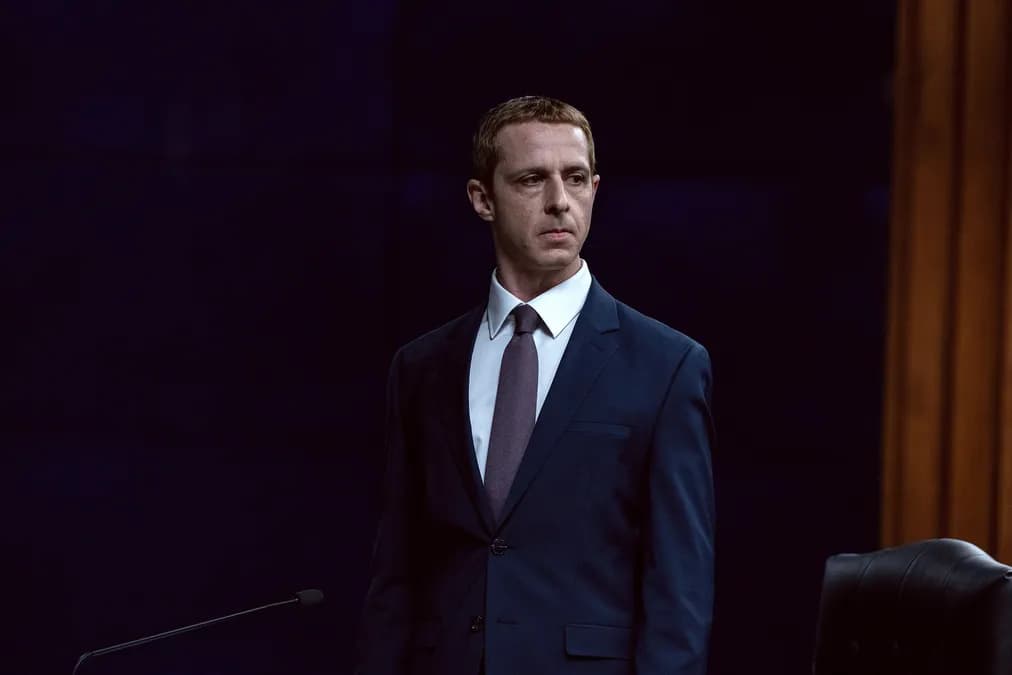
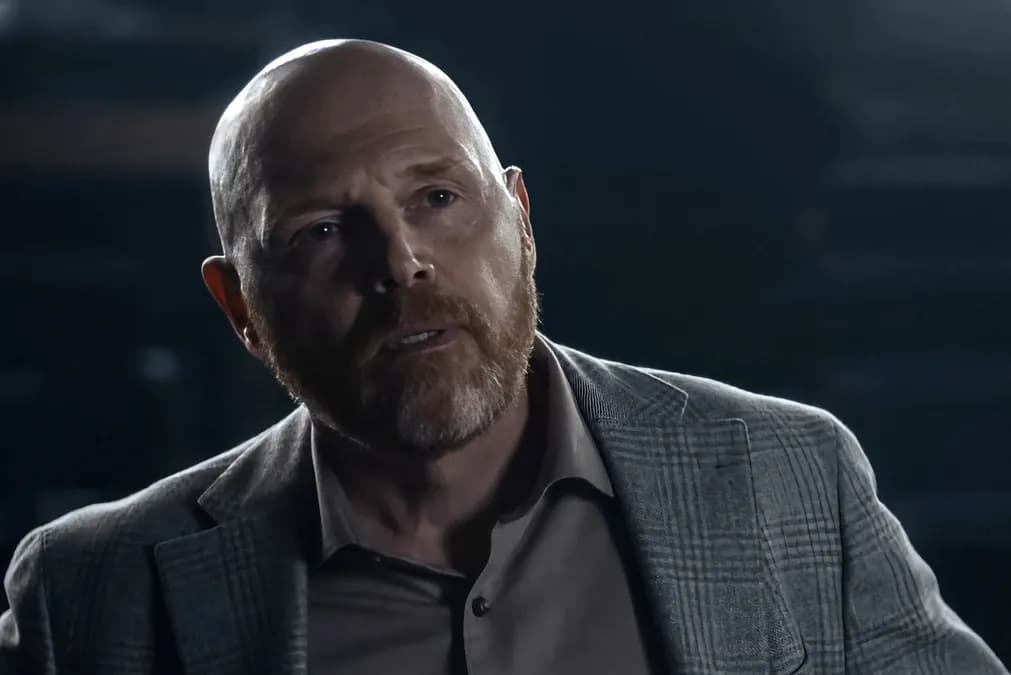
In The Social Reckoning, Sorkin's long-awaited follow-up to his landmark 2010 screenplay, Burr plays a character named Charlie Garrigan — a man positioned, by the very logic of the film's title, to do some reckoning of his own with the architects of our digital era. Burr has spoken about the role with the gruff conviction his fans recognize immediately, and with a directness that suggests he didn't need much convincing that the story was worth telling. The film puts him across from Jeremy Strong, who inhabits Mark Zuckerberg with the same methodical intensity he has brought to every role since his Emmy-winning turn in Succession. The collision of those two energies — Burr's blunt working-class fire and Strong's controlled psychological precision — is the engine the film runs on.
Sorkin chose his cast the way a good composer chooses instruments. Burr is brass. Strong is strings. The tension between them is the music.
Sparring With Jeremy Strong: Playing Off a Zuckerberg for the Ages
Jesse Eisenberg's Zuckerberg in The Social Network was a creature of brilliant, brittle youth — a man so wired into abstraction that ordinary social interaction seemed to process a half-second too slow. Strong's version, by all available evidence, carries the weight of intervening years. This is a Zuckerberg who has testified before Congress, who has watched his platform implicated in election interference, ethnic cleansing, and the mental health crisis among adolescent girls. The youthful sociopathy Eisenberg played has had time to calcify into something more deliberate, and more dangerous.
Read next 1963 : le tube yéyé qui a enflammé la France — reconnaîtrez-vous cette voix ?For Burr, that dynamic creates an ideal dramatic sparring partner. His Charlie Garrigan reportedly brings what Sorkin's dialogue has always demanded from its best characters: someone willing to say the quiet part at full volume. Burr has never been an actor who disappears into a role so completely that his persona vanishes — and for a character positioned as a moral counterweight to tech-industry mythology, that recognizable Burr presence is a feature, not a flaw. Audiences know what it means when Burr leans forward and narrows his eyes. The translation is instant.
The performance also marks a notable evolution in how Hollywood writes roles for comedians with a genuine point of view. The industry has moved, fitfully but perceptibly, away from using stand-up comics as pure comic relief. Burr's recent dramatic work — and here he builds on that — suggests studios are finally willing to let comics carry an argument instead of just defusing one.
The Social Reckoning as a Sequel to The Social Network

The Social Network grossed approximately $224 million worldwide against a production budget of roughly $40 million. It won three Academy Awards, including Best Adapted Screenplay for Sorkin, and sits at a 96 percent approval rating on Rotten Tomatoes. More than that: it functioned as a cultural document. A generation of tech workers and venture capitalists absorbed it not as a cautionary tale but as an origin mythology. Some of them put the poster on their walls. Sorkin has spoken in the years since about the peculiar horror of watching that happen.
The Social Reckoning arrives from a substantially different vantage point — which is precisely what gives the sequel its weight. The first film asked who Mark Zuckerberg was when he was still accumulating power. The new film can ask what he has done with it. That is a harder, more uncomfortable question, and Sorkin's record suggests he will not soften it for the sake of commercial palatability. His scripts for The West Wing, Moneyball, Steve Jobs, and The Trial of the Chicago 7 all share a structural obsession: power examined from the inside, by people who understand its mechanics and are not looking away.
Bill Burr, as Charlie Garrigan, occupies the position Sorkin returns to again and again — the outsider who names what the insiders have normalized.
Tech CEOs and Cultural Ruin: Burr's Unfiltered Take
When Burr frames tech CEOs as figures "leading us to ruin," he is operating within a discourse that has moved well beyond opinion into something measurable. Pew Research Center surveys tracking public confidence in technology industry leaders have shown declining trust over the past several years, with significant majorities of Americans now expressing concern about the amount of power concentrated in a small number of platform companies. Congressional hearings — Zuckerberg appeared before the Senate Commerce and Judiciary Committees in 2018 and before Congress again in 2022 — provided something unusual: a public record of elected officials struggling to articulate, in real time, what exactly they were dealing with.
The frustration Burr voices is not niche. It is ambient. It lives in the gap between the emancipatory promises tech culture made in its first decade and the actual texture of public life in its third.
What Burr does, as a comedian and apparently as an actor in this role, is give that frustration a body and a voice that doesn't reach for abstraction. He doesn't talk about "platform governance" or "regulatory frameworks." He talks about what it feels like when the tools you use every day seem designed to make you angrier, more isolated, and more dependent. That translation — from policy language to lived experience — is precisely what the discourse around tech accountability most desperately needs, and most rarely finds.
The comedic frame matters here too. Satire has historically arrived at political truth before journalism or legislation catches up. Network in 1976. Dr. Strangelove in 1964. The instinct to put a comedian in the room with power and see what happens is neither new nor accidental.
What The Social Reckoning Means for Hollywood's Tech Critique Moment
Industry analysts and film critics tracking the trajectory of prestige drama since roughly 2020 have noted a consistent appetite for tech-industry storytelling. The Dropout, WeCrashed, Super Pumped, The Playlist — the streaming era has produced a subgenre organized around the charismatic founder whose vision curdles into something extractive and harmful. The cultural hunger is real, and it reflects something more than curiosity about how billionaires behave behind closed doors.
The Social Reckoning operates on a larger scale than any of those titles, because Sorkin is working with a protagonist whose platform is not a failed startup but an infrastructure layer of global communication. This is not a story about one company that went wrong. It is a story about systems, incentives, and the question of whether the people who built those systems bear responsibility for what they do to the rest of us.
Bill Burr, as Charlie Garrigan, is the film's vehicle for that accountability. His presence brings something no amount of careful screenwriting can manufacture: the authentic sound of someone who has been paying attention and is no longer willing to pretend the situation is normal.
The Bill Burr The Social Reckoning pairing is, on reflection, exactly the kind of casting that only looks obvious in retrospect. Sorkin writes characters who are always, at their core, trying to say something true in a room full of people with reasons not to hear it. Burr has been doing that from a stage for three decades. The room is bigger now. The stakes, according to the film's premise and the man's own convictions, have never been higher.
Source: Variety