What Are Forests and Why Do They Matter for Climate
Types of Forests Around the World
Tropical rainforests, which cover less than 6% of Earth’s landmass, house a disproportionate amount of life. For instance, the Amazon basin alone contains millions of species of insects, plants, and vertebrates. Global arboreal ecosystems classify into several distinct types, each supporting unique biomes. Temperate deciduous forests, such as those found across Eastern North America, shed their leaves seasonally, defining their biological cycles. Conversely, boreal forests (taiga), dominated by coniferous species like spruce and pine, thrive in colder climates and often blanket vast, continuous stretches of land. Mangrove forests represent a critical, semi-aquatic subtype, stabilizing coastlines while filtering pollutants. These varied structures mean no single type can be categorized as universally valuable; each plays a specialized role in regional climate stability and biodiversity maintenance.
Forests as Carbon Sinks and Oxygen Producers
The sheer scale of terrestrial vegetation makes it central to global climate regulation. Data from the Food and Agriculture Organization (FAO) reveals that Earth loses approximately 10 million hectares of forest annually, a rate that directly compromises global carbon budgets. Critically, intact forests function as massive, natural carbon sinks. The Intergovernmental Panel on Climate Change (IPCC) reports that global forest ecosystems absorb roughly 2.6 billion tonnes of carbon dioxide ($\text{CO}_2$) per year—a volume equivalent to about 30% of total annual human emissions. This absorption capacity mitigates atmospheric buildup. Beyond carbon, these ecosystems are vital oxygen generators. Furthermore, the World Wildlife Fund estimates that an astonishing 80% of terrestrial species rely on these wooded habitats for survival. Degradation of these natural assets does not merely affect flora and fauna; it destabilizes regional weather patterns and accelerates climate feedback loops, demanding immediate conservation action.
The Current State of Global Forest Coverage
The Earth currently loses an estimated ten million hectares of woodland annually, according to the FAO Global Forest Resources Assessment. This persistent loss rates undermine global climate mitigation efforts. These extensive tracts of woodland are critical carbon sinks; the IPCC reports that global forests absorb roughly 2.6 billion tonnes of CO2 each year, offsetting approximately 30% of total human emissions. Degradation is not merely a matter of acreage loss; it fundamentally impacts global biodiversity. World Wildlife Fund analyses confirm that an estimated 80% of all terrestrial species depend on intact woodland ecosystems for survival.
Read next How Climate Change Works: A Clear ExplainerKey Deforestation Statistics and Trends
Tropical deforestation remains the most acute threat. While some regional policies show promise, the global trend points toward continued pressure from agriculture and unsustainable logging. For example, the rapid expansion of cattle ranching in the Amazon basin continues to clear primary growth, fragmenting habitats and increasing carbon leakage. Scientific consensus indicates that maintaining forest cover is a primary economic stabilizer, providing resources far beyond timber.
The ecological function of these natural systems is irreplaceable. Beyond carbon sequestration, intact woodlands regulate regional rainfall patterns and prevent soil erosion, a process that severely degrades agricultural land. A recent study published by the journal Nature modeled that eliminating remaining temperate forest buffers could increase the frequency of extreme drought events across the Mediterranean basin.
Furthermore, the health of these ecosystems is tied to geopolitical stability. The commercial value of standing wood, particularly in the Southeast Asian archipelago, drives complex conflicts over land tenure and resource rights. Addressing this requires governance reform, moving beyond simple conservation mandates. International agreements, such as those modeled after REDD+ initiatives, must enforce verifiable zero-deforestation supply chains. The remaining intact woodlands represent vital natural capital that requires immediate, systemic protection to maintain planetary equilibrium.
How Forests Regulate the Climate System
The scale of atmospheric carbon dioxide removal is staggering: forest ecosystems absorb roughly 2.6 billion tonnes of $\text{CO}_2$ annually, accounting for an estimated 30% of total human emissions, according to IPCC assessments. This function establishes terrestrial vegetation as a primary planetary climate regulator, far surpassing any single technological mitigation strategy.
Carbon Sequestration and Storage Mechanisms
Global forest biomass acts as a massive, complex carbon sink. Carbon enters the system primarily through photosynthesis, where atmospheric $\text{CO}_2$ is converted into organic carbon stored in plant tissues. This captured carbon is then sequestered over decades, or centuries, in the soil and wood structure. The FAO Global Forest Resources Assessment data reveals a critical vulnerability: Earth loses approximately 10 million hectares of forest annually to deforestation and degradation. When these forests burn or are cleared, the stored carbon is rapidly released as greenhouse gases, accelerating the warming cycle. Furthermore, the stability of these carbon pools is directly tied to biodiversity; the World Wildlife Fund estimates that 80% of terrestrial species depend on these habitats, making intact ecosystems essential for long-term carbon retention.
Forests and the Water Cycle
Beyond carbon management, vast tracts of woodland regulate regional and global hydrological cycles. Intact canopy cover intercepts precipitation, initiating evapotranspiration. This process, where water vapor is released back into the atmosphere, drives cloud formation and sustains rainfall patterns thousands of miles away. Tropical rainforests, for example, generate significant portions of their own rainfall through this biophysical feedback loop. The complex root systems of these natural habitats also stabilize soil, dramatically reducing surface runoff and preventing the catastrophic sedimentation that harms freshwater sources. When these vital systems degrade, as seen in areas lacking riparian buffer zones, the capacity for natural water purification diminishes, leading to increased flood risk and prolonged dry seasons.
Major Threats to Forest Ecosystems
The FAO Global Forest Resources Assessment indicates that Earth is currently losing approximately ten million hectares of forest cover annually, a loss driven by systemic economic pressures. This degradation threatens global carbon sinks and biodiversity.
Agriculture Expansion and Logging
Deforestation for agricultural commodity production remains the single largest driver of habitat loss. The conversion of primary woodland into cattle ranching or monoculture palm oil plantations fragments critical ecological corridors. For instance, in the Amazon Basin, the expansion of soy cultivation has historically pushed deforestation rates higher than local governance structures can manage. While sustainable forestry practices exist, the demand for cleared land continues to outpace regulatory enforcement. Furthermore, illegal logging operations strip valuable timber species—such as mahogany or teak—without accountability, often targeting old-growth stands. These activities not only remove biomass but destabilize the underlying soil structure, increasing runoff and erosion rates in previously stable watersheds. Experts at the IUCN emphasize that these direct extractive pressures disproportionately affect keystone species, jeopardizing the intricate balance that underpins these ecosystems.
Wildfires and Climate Feedback Loops
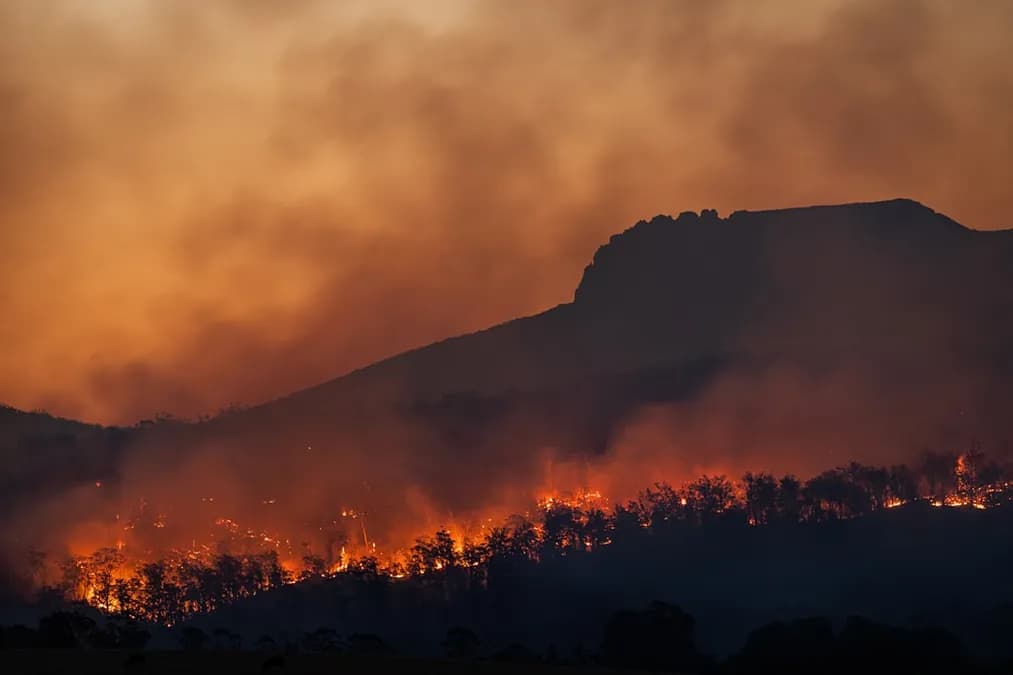
Climate change amplifies forest vulnerability through altered fire regimes. Increased temperatures and prolonged drought periods create tinderbox conditions, allowing natural and human-caused fires to burn hotter and penetrate deeper into forest canopies. A key concern involves the positive feedback loop: burning vegetation releases stored carbon dioxide. IPCC research confirms that intact forests absorb roughly 2.6 billion tonnes of CO2 per year, offsetting about 30% of global human emissions. When these forests burn, they not only lose their ability to absorb carbon but actively release it, accelerating warming. Mega-fires, such as those seen across Siberia or Australia, demonstrate this cycle vividly. The resulting ash and altered microclimates stress remaining woodland populations, making them more susceptible to subsequent outbreaks. Restoring these vital natural assets requires not only curbing local logging but implementing massive, globally coordinated efforts to stabilize regional climate patterns.
Biodiversity and Forest Ecosystem Services
The Earth loses approximately 10 million hectares of forest annually, a staggering rate of degradation that directly compromises global ecological stability. These woodlands provide foundational services essential for human survival, extending far beyond timber production. For instance, the Intergovernmental Panel on Climate Change (IPCC) reports that intact forest ecosystems absorb roughly 2.6 billion tonnes of CO2 each year, offsetting an estimated 30% of current global human emissions. This carbon sequestration function alone positions natural vegetation as a critical climate mitigation tool.
Biodiversity within these complexes is equally vital. Research compiled by the World Wildlife Fund indicates that an estimated 80% of all terrestrial species depend on forested habitats for survival. The complexity of the biome dictates its resilience. Consider the Amazon basin: its unique canopy structure supports millions of insect, plant, and animal species, creating intricate food webs that regulate local climates and nutrient cycles. When these systems destabilize—for example, through uncontrolled wildfires or illegal logging—the cascading effects jeopardize entire regional economies, including those dependent on sustainable harvesting of medicinal plants.
Beyond carbon capture, these wooded areas manage freshwater cycles. Intact forest cover acts like a massive natural sponge, regulating runoff and filtering pollutants. In areas like the Pacific Northwest, the forest canopy intercepts rainfall, allowing slow infiltration that replenishes aquifers and minimizes destructive flash flooding downstream. This natural water purification service, estimated by some hydrological models to save billions in engineered infrastructure alone, underscores the economic value of preservation. The World Bank’s analysis repeatedly emphasizes that maintaining forest health is not merely an environmental goal; it is a fundamental pillar of global economic security and human health. Protecting these vital natural assets requires immediate, targeted policy intervention, moving beyond voluntary conservation efforts to enforceable, science-based land management practices.
Reforestation and Conservation Strategies
Global forest loss continues at alarming rates; the FAO Global Forest Resources Assessment estimates that Earth loses approximately 10 million hectares of forest annually. This continuous depletion jeopardizes vital planetary systems. Conservation efforts must therefore move beyond simple tree planting toward ecological restoration that addresses root causes of degradation. The stakes are immense: the IPCC reports that global forests absorb roughly 2.6 billion tonnes of CO2 per year, accounting for an estimated 30% of annual human emissions. Furthermore, the World Wildlife Fund stresses that 80% of terrestrial species depend directly on intact forest ecosystems for survival.
Successful Reforestation Case Studies
Successful ecological recovery requires species-specific planning, not just monoculture planting. Consider the restoration efforts in Costa Rica, a program that has dramatically increased its tree cover. By establishing protected areas and paying landowners to maintain natural vegetative cover, the country has reversed decades of deforestation, demonstrating that economic incentives coupled with conservation policy yield measurable results. Another critical approach involves supporting indigenous knowledge. In parts of the Amazon basin, local communities manage sustainable harvesting and agroforestry systems, maintaining biodiversity while providing livelihoods.
These localized successes provide models for global action. A notable example of successful large-scale restoration is the work in the Philippines, where community-led initiatives have focused on restoring degraded mangrove belts. Mangroves act as crucial coastal buffers, stabilizing shorelines and providing nursery grounds for marine life. Restoration here involves planting salt-tolerant species like Rhizophora, which rapidly rebuild root structure and enhance local fisheries. These projects prove that effective conservation is not solely about planting saplings; it requires integrating hydrological science, local governance, and economic stability into the recovery framework. Protecting existing, mature forests remains paramount to maintaining the ecological services they provide.
The Role of Sustainable Forestry in Climate Action
Earth loses approximately 10 million hectares of forest annually, a statistic underscoring the urgent need for restorative land management. Sustainable forestry represents a critical mechanism for mitigating climate change, functioning not merely as a carbon sink but as a foundational pillar for ecological stability. Scientific consensus, particularly from the Intergovernmental Panel on Climate Change (IPCC), confirms that intact forest ecosystems absorb roughly 2.6 billion tonnes of CO2 every year—a capacity representing about 30% of total annual human emissions.
Beyond carbon capture, the health of wooded areas underpins global biodiversity. According to research compiled by the World Wildlife Fund, 80% of terrestrial species depend directly on forest habitats. Unsustainable logging and conversion drastically erode these life-support systems. Sustainable management practices, such as selective harvesting and establishing riparian buffer zones, minimize habitat fragmentation while maintaining ecological function. For example, certification programs like the Forest Stewardship Council (FSC) mandate rigorous biodiversity assessments, ensuring that timber extraction does not compromise watershed health or local wildlife corridors.
The sequestration capacity of these natural assets is highly variable. Tropical rainforests, due to high biomass turnover, sequester carbon at different rates than temperate coniferous forests. Implementing advanced monitoring techniques—such as using remote sensing data coupled with ground-truthing—allows forest managers to optimize carbon retention. A successful model is the reforestation efforts in parts of Vietnam, where government-backed programs have successfully regenerated millions of hectares of degraded land, stabilizing regional microclimates and improving soil carbon stocks.
Furthermore, sustainable forest economies provide crucial socioeconomic stability. By integrating local communities into value chains—for instance, through the sustainable harvesting of non-timber forest products like resins or medicinal plants—these practices create economic incentives for conservation. This approach transforms forest management from a resource extraction model into a long-term stewardship commitment, solidifying the role of these natural assets in global climate resilience.
What You Can Do to Protect Forests
Globally, Earth loses an estimated 10 million hectares of forest annually, a staggering rate according to the FAO Global Forest Resources Assessment. Mitigating this loss requires shifting consumer habits and demanding supply chain transparency. One powerful action is drastically reducing consumption of wood pulp and paper products. Many consumer goods, from packaging to furniture, depend on virgin timber sources. Opting for certified recycled paper or purchasing products made from sustainably managed wood sources—such as those bearing the Forest Stewardship Council (FSC) mark—directly reduces pressure on wild woodlands.
Beyond paper, dietary choices exert profound pressure on terrestrial ecosystems. The expansion of cattle ranching and industrial agriculture remains a primary driver of deforestation. Consider the sourcing of beef and soy; demand traceability from producers. Supporting organizations that advocate for agroforestry—integrating trees with crops and livestock—is a practical way to support land-use models that keep natural habitats intact. These mixed systems, exemplified by certain permaculture initiatives in Brazil, prove that productivity and conservation can coexist.
For biodiversity, the connection is undeniable: approximately 80% of all terrestrial species rely on intact forest ecosystems for survival, according to World Wildlife Fund research. This makes protecting woodlands critical for climate stability. Because these biomes absorb roughly 2.6 billion tonnes of CO2 each year—a figure representing about 30% of current global human emissions—their preservation is a climate imperative. Use your purchasing power to favor companies that publicly commit to net-zero deforestation goals. Furthermore, supporting local conservation groups that engage in reforestation projects, such as those in Borneo or the Amazon basin, provides direct, measurable support. These efforts are not merely philanthropic; they are critical components of planetary climate infrastructure.
Related coverage