What Is Hydropower and How Does It Work?
Globally, hydropower provides approximately 16% of the world's electricity generation, according to International Energy Agency (IEA) data. The process relies on the gravitational force of flowing or falling water to spin a turbine connected to a generator. This mechanical rotation converts kinetic energy into electricity. The system's efficiency is remarkably high, a key factor that climate scientists cite when comparing it to fossil fuel sources; for instance, the IPCC reports lifecycle emissions for hydro ranging from 4 to 14 g CO2eq/kWh, significantly lower than coal's 820 g/kWh.
Types of Hydropower Systems
The design of the system dictates its operational profile. Conventional dam systems, like those at the Three Gorges Dam, involve large reservoirs and penstocks. Conversely, run-of-the-river facilities, such as those built in the Pacific Northwest, divert water through channels without creating major storage reservoirs. A third category involves pumped storage, where excess electricity is used to pump water uphill to a higher reservoir, releasing it later when demand peaks. The International Hydropower Association (IHA) sets sustainability benchmarks for these varied designs, emphasizing environmental mitigation during construction.
Key Components of Hydroelectric Generation
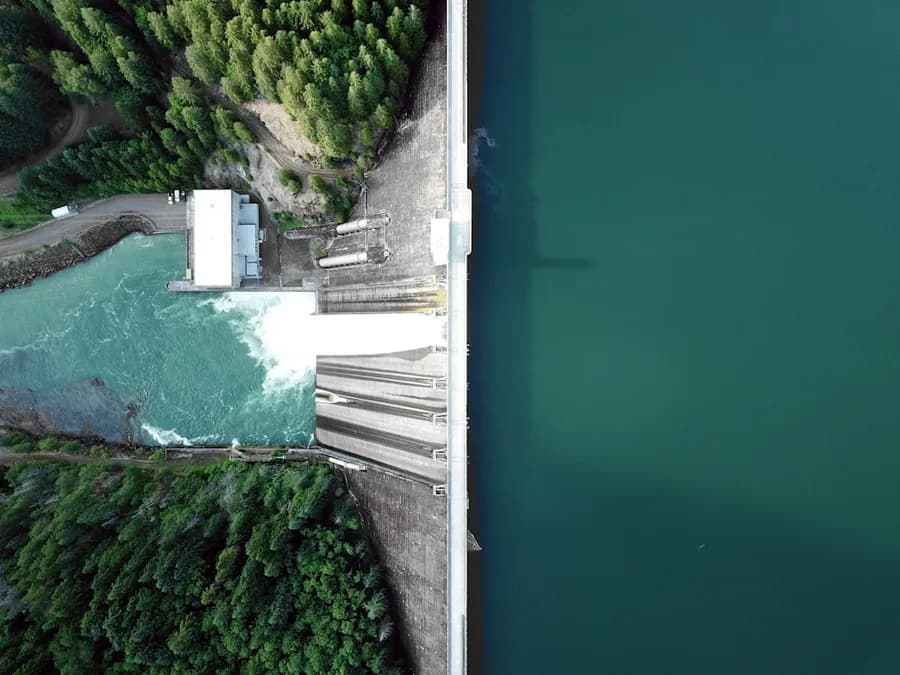
Every operational facility shares three core components: the dam (or weir), the intake, and the powerhouse. The dam creates the necessary head—the vertical drop—which builds water pressure. Water enters through the intake and travels down the penstock, which is the massive conduit. At the base, the pressure turns a turbine, which drives the generator. This conversion process generates usable power. Because of its inherent ability to ramp output quickly, hydro facilities play a crucial grid-balancing role, complementing the intermittent nature of solar and wind sources.
Hydropower's Role in the Global Energy Mix
Asia accounts for the largest share of global installed capacity, housing nearly 15 terawatt-hours (TWh) of potential generating assets, according to the International Hydropower Association (IHA). Currently, global hydropower capacity supplies an estimated 16% of the world's total electricity generation, providing a critical baseline power source. This stability is key; while solar and wind power are inherently intermittent, large-scale pumped storage facilities and existing hydro assets offer dispatchable power that helps stabilize modern grids. For instance, the Tennessee Valley Authority's operational flexibility in the US Midwest allows it to compensate for sudden dips in wind output.
Read next How Climate Change Works: A Clear ExplainerFrom a climate perspective, the operational emissions profile of hydro remains favorable. The IPCC estimates lifecycle emissions for hydropower fall between 4 and 14 g CO2eq/kWh, a stark contrast to the approximately 820 g/kWh emitted by coal. This low carbon intensity makes the source highly valuable in decarbonization pathways. However, the industry faces increasing scrutiny regarding environmental impact, particularly concerning river flow alteration and sediment buildup. Policy researchers now emphasize that maximizing the grid value of this generation requires advanced operational management, optimizing storage capacity to integrate variable renewables efficiently. The sustainable management of this massive resource is central to maintaining its role in the global energy mix.
Current Hydropower Capacity by Region
China and Brazil lead the world in installed capacity, representing the bulk of the continent's potential. Asia Pacific nations hold the largest absolute capacity, while North America and Europe together account for significant, though more diversified, generation. These regional concentrations mean that energy policy decisions in one area—such as the completion of major dam projects in China—have global ripple effects on power trade and carbon accounting. The varied geopolitical and ecological contexts dictate that the sustainable development of these assets must be coupled with stringent environmental benchmarks.
How Hydropower Impacts Climate Change Mitigation
Carbon Emissions Compared to Fossil Fuels
A single metric demonstrates the stark contrast: the IPCC estimates lifecycle emissions for coal-fired electricity generation average around 820 grams of CO2 equivalent per kilowatt-hour (g CO2eq/kWh). By contrast, modern hydroelectric facilities frequently operate with emissions ranging from 4 to 14 g CO2eq/kWh. This drastic reduction in carbon intensity means that when integrated into a diverse energy mix, hydro resources significantly lower regional carbon footprints. For instance, the International Energy Agency reports that hydropower currently supplies approximately 16% of global electricity generation, offering a proven, low-carbon alternative. Careful planning and operational efficiency are key to maximizing the climate benefit of this source.
Lifecycle Greenhouse Gas Analysis
The environmental profile of hydropower requires analysis beyond simple operational emissions. While the power generation itself is clean, the construction phase introduces greenhouse gas emissions, primarily from concrete production and reservoir creation. The International Hydropower Association (IHA) mandates rigorous sustainability benchmarks that assess these upstream impacts. Furthermore, experts highlight that the ability of reliable hydropower energy to provide grid stability is critical for integrating intermittent renewables like wind and solar. When the grid experiences sudden dips in supply—a common issue with variable sources—the dispatchable capacity of reservoirs provides essential balancing power, reducing the need to fire up fast-response, high-emission peaker plants. This grid-balancing function is a major climate benefit often overlooked in pure emission comparisons.
Environmental and Social Challenges of Hydropower
The construction of a single large dam can alter river flow rates by up to 90% downstream, fundamentally reshaping the aquatic environment. This physical transformation creates immediate barriers for migratory species. Pacific salmon, for example, require unimpeded river paths to reach spawning grounds; dams block these vital life cycles, a phenomenon detailed extensively by the International Council for the Exploration of Marine Science. Furthermore, the altered sediment load affects deltas, starving coastal ecosystems and increasing vulnerability to sea-level rise.
Ecosystem Disruption and Fish Migration
Beyond migratory blockage, the rapid change in flow regime damages benthic habitats. While global estimates confirm that hydropower provides approximately 16% of the world's electricity generation, the environmental cost is often underestimated. Turbines themselves pose a direct mortality risk; studies cited by the International Hydropower Association (IHA) quantify fish deaths from passage through turbines, even with modern mitigation designs. Moreover, the altered temperature and oxygen levels—the "thermal pollution"—impact downstream biodiversity.
The IPCC reports indicate that while the lifecycle emissions for hydro are significantly lower than coal (4–14 g CO2eq/kWh versus 820 g), the localized ecological damage remains profound. Engineers now use advanced fish ladders and bypass systems, but these only address one component of a complex ecological network. Experts in energy policy argue that while the reliability of hydro capacity is key for grid stability alongside intermittent sources, mitigating its physical footprint requires comprehensive, site-specific environmental impact assessments that prioritize ecosystem health over raw energy output.
The Future of Hydropower in a Changing Climate
Global electricity generation currently relies on hydropower, which accounts for an estimated 16% of the world's power supply, according to the International Energy Agency. However, altered precipitation patterns present profound challenges to established dam systems. Increased drought frequency, such as the severe low-flow conditions observed in the Colorado River Basin, directly reduce reservoir capacity and generation output. Furthermore, rising temperatures accelerate glacial melt, initially boosting flow but threatening long-term hydrological stability.
This climate stress is driving rapid innovation in decentralized generation. Small-scale and run-of-river systems are proving critical because they rely less on massive storage capacity and more on immediate river flow. These modular designs minimize ecological disruption compared to traditional mega-dams. Such systems can provide vital, reliable power where grid infrastructure is sparse.
The focus on efficiency also addresses climate goals. While conventional coal generation releases approximately 820 g CO2eq/kWh, modern hydropower, when factoring in lifecycle emissions, reports figures between 4–14 g CO2eq/kWh, according to IPCC analysis. To maintain grid stability alongside intermittent sources like solar and wind, the flexibility of hydro resources is unmatched. The International Hydropower Association promotes sustainability benchmarks that guide the development of these smaller plants, ensuring that the next generation of hydropower energy supports climate resilience while minimizing environmental impact.
Is Hydropower Truly Sustainable? Key Takeaways
Global electricity generation relies on hydro sources, which currently account for approximately 16% of the world’s total power capacity, according to the International Energy Agency (IEA). This capacity offers reliable, dispatchable power, a critical asset for grid stability alongside intermittent sources like solar and wind. However, the sustainability profile of hydropower energy remains highly complex. While lifecycle emissions figures from the IPCC range from 4 to 14 g CO2eq/kWh for conventional hydro—significantly lower than coal’s 820 g/kWh—this figure often overlooks methane emissions from tropical reservoirs.
The International Hydropower Association (IHA) benchmarks emphasize responsible development, noting that proper environmental management is key to maintaining sustainable yields. Furthermore, the physical infrastructure of large-scale dams can drastically alter riverine ecosystems, impacting fish migration and sediment flow, as seen in major projects on the Amazon basin. Policy researchers emphasize that the future of hydro power lies not in unchecked expansion, but in modernizing existing facilities and improving reservoir management to mitigate methane release. Efficiently integrating reliable hydropower energy remains essential for decarbonizing grids, but comprehensive lifecycle accounting must include ecological costs alongside carbon savings.
Related coverage