A single cryptic post on Weibo has reignited one of Apple's most persistent hardware conversations. The leaker known as "Instant Digital" — a Chinese social media account with a credible track record on Apple supply chain intelligence — recently posted that the iPad is set to receive significantly narrower borders around its display. The catch: no model name, no timeline, no engineering specifics. Just a claim. And yet, given what's already circulating in the rumor ecosystem about upcoming iPad refreshes, that vague signal lands with more weight than it might otherwise deserve.
iPad Bezel Reduction: What the Latest Leak Reveals
Instant Digital's post amounts to a directional data point rather than a product announcement. The language used points broadly to the iPad lineup receiving iPad thinner bezels, without specifying whether that means the entry-level model, the Pro, the Air, or the mini. That ambiguity is frustrating for anyone hoping for a concrete roadmap — but it's actually consistent with how supply chain intelligence leaks early in a development cycle, when component sourcing decisions have been made but final product configurations haven't solidified into the kind of detail that gets shared outside of Cupertino.
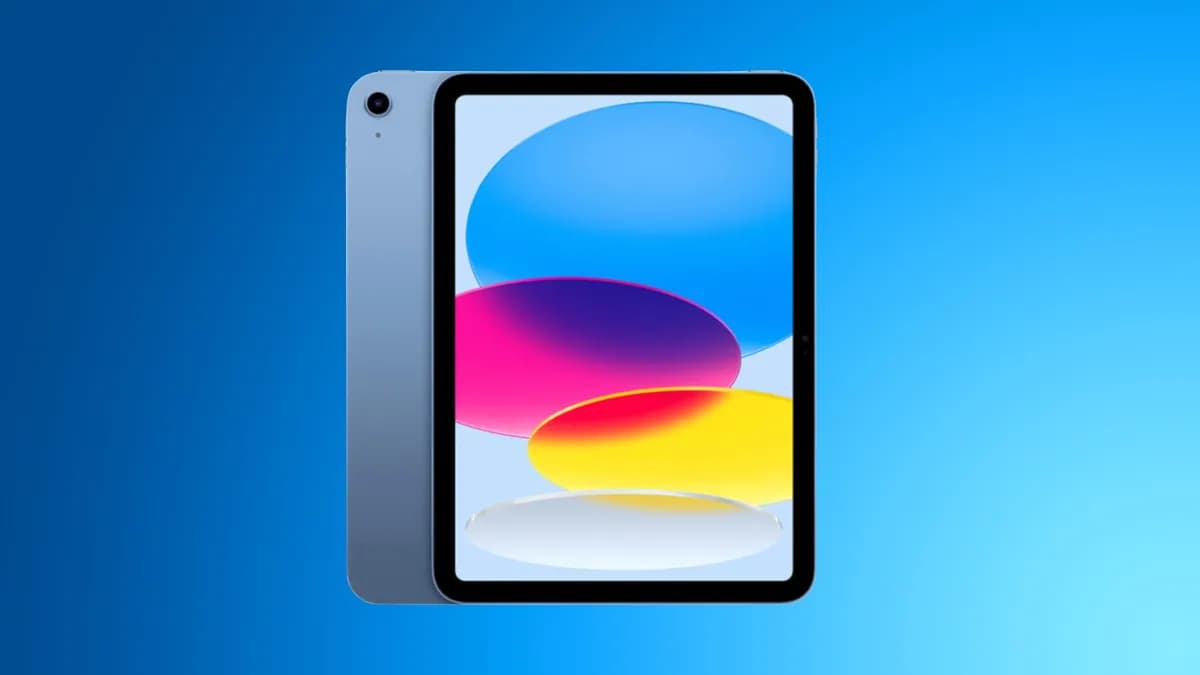
What makes the claim credible is context. Apple has been on a multi-year trajectory of narrowing display borders across its product lines, and the iPad family is one of the last places where that journey has visible room to run. The entry-level iPad still ships with borders noticeably thicker than those on the Pro or Air, and even the Pro's bezels — while dramatically slimmer than they were before the 2018 redesign — haven't reached the near-frameless proportions now common in competing Android tablets.
Which iPad Models Could Get Slimmer Bezels?

With four distinct iPad tiers either confirmed or widely expected to refresh in the near term, narrowing down Instant Digital's claim requires working backwards from what's already known about each model's development status.
Read next iPhone Duo's Hidden Fake Bezel Setting ExplainedThe entry-level iPad sits at one end of the spectrum. It retains the largest bezels in the lineup — a legacy of its cost-optimized design — and has historically been the last to absorb premium display technologies. If this model is the subject of the leak, the implication would be significant: it would suggest Apple is finally planning to bring its base iPad in line aesthetically with the rest of the family. That would be a meaningful change. But it would also be the most technically conservative path, likely relying on LCD rather than OLED.
The iPad Pro, meanwhile, already received an OLED upgrade in 2024 — a shift that display analysts at Display Supply Chain Consultants had been forecasting for several years. OLED panels naturally facilitate thinner bezels because the technology eliminates the backlight assembly that adds bulk behind the glass. Any further bezel reduction on the Pro would be incremental refinement rather than a structural redesign.
That leaves the iPad mini and iPad Air as the most strategically interesting candidates.
iPad Mini: The Most Likely Candidate for a Bezel Overhaul

Of all the models in the lineup, the iPad mini has the most compelling case for receiving iPad thinner bezels in the next product cycle. Leaks and analyst reports have already circulated suggesting the next iPad mini will adopt an OLED display — a jump that would represent the most significant hardware upgrade the compact tablet has received in years. Crucially, OLED's structural characteristics align directly with slimmer border design.
Ross Young of Display Supply Chain Consultants, one of the most consistently accurate analysts tracking Apple's display roadmap, has previously indicated that Apple's OLED expansion beyond the iPhone would move through the iPad lineup in stages — with the iPad Pro serving as the initial beachhead and smaller, more affordable models following in subsequent years. The iPad mini, given its premium pricing relative to its size, fits the profile of an early OLED adopter within the non-Pro tier.
The mini's current design — largely unchanged since Apple removed the Home button and switched to Touch ID in the side button — already uses relatively compact bezels compared to the entry-level iPad. But compared to what's technically achievable with modern panel manufacturing, there's still meaningful real estate to reclaim. A slimmer-bezeled, OLED iPad mini would mark a genuine generational leap for a product that commands loyal users who prioritize portability above all else.
iPad Air and the OLED Roadmap for 2027
The iPad Air occupies a different position on the timeline. Current reporting suggests that Apple's plans for an OLED iPad Air are targeting 2027, a full year or more after the iPad mini's expected transition. That's not surprising — display panel supply chain dynamics mean that Apple typically staggers OLED adoption across product tiers, both to manage production costs and to preserve clear differentiation between the Air and the Pro at any given moment.
If OLED is the enabling technology for serious bezel reduction — and the evidence from the iPad Pro's 2024 redesign strongly suggests it is — then an iPad Air with iPad thinner bezels is likely a 2027 story at the earliest. The current iPad Air, which received USB-C and an M-series chip in recent cycles, still uses a Liquid Retina LCD panel. That underlying display technology sets a ceiling on how aggressively Apple can pull back the borders without a corresponding panel change.
For comparison, Samsung's Galaxy Tab S series has already pushed OLED to its mid-tier lineup, with the Galaxy Tab S9 FE offering an OLED option at a price point well below the iPad Air's current positioning. Google's Pixel Tablet, meanwhile, has taken a different approach entirely — prioritizing smart home dock integration over display hardware advancement, and retaining larger bezels that Google frames as practical for portrait-orientation use. Apple's expected OLED roadmap suggests a more direct competitive response to Samsung than to Google.
What Thinner Bezels Mean for iPad Users
The practical implications of meaningfully narrower bezels extend beyond aesthetics. A more compact frame around the same screen size reduces the device's physical footprint — relevant for a product used in bags, on nightstands, and propped against desks for extended sessions. For iPad mini users in particular, even a few millimeters of reclaimed border real estate translates into a device that's genuinely easier to hold one-handed.
There are also ergonomic considerations that cut the other way. iPad bezels serve as grip surfaces, particularly during video playback in landscape orientation. Apple has previously cited this when defending border dimensions that critics deemed excessive. As bezels narrow, the placement of the front camera and Face ID components — or Touch ID in models that retain it — also becomes a more constrained engineering problem. The iPad Pro's landscape-oriented Face ID integration, introduced when Apple moved to an all-screen design, is one solution, but it added complexity and cost.
Competitors have navigated this with varying success. Samsung's ultra-slim Tab S series models have occasionally drawn criticism for accidental palm rejection issues during heavy creative use. Apple will likely watch those failure modes closely before finalizing its own approach.
When Can We Expect These iPad Updates?
Pinning a timeline to Instant Digital's leak is genuinely difficult. The post offers no window — not a quarter, not a year. Based on the broader pipeline context, the iPad mini refresh with OLED and slimmer bezels appears to be the nearest-term event with supporting evidence from multiple sources. The iPad Air's OLED transition, by contrast, carries 2027 as its most consistently cited target date among analysts.
The entry-level iPad's trajectory is the most uncertain. Historically, Apple has refreshed it on irregular cycles, and a major display upgrade for its most affordable tablet would require either a significant reduction in OLED panel costs or a willingness to absorb margin compression at the low end — neither of which is currently well-supported by supply chain reporting.
What Instant Digital's post establishes, at minimum, is that bezel reduction is an active engineering consideration somewhere in Apple's iPad organization right now. Whether that materializes as one model's headline feature in 2025, a cascade across the lineup by 2027, or something in between will depend on display supply chain economics, Apple's internal product differentiation strategy, and competitive dynamics that shift quarter by quarter.
For now, the safe read is to watch the iPad mini closely. Everything pointing at that product — OLED, slimmer bezels, a loyal user base hungry for a meaningful upgrade — makes it the most probable first mover. The rest of the lineup will follow, as it always does, on Apple's timeline.