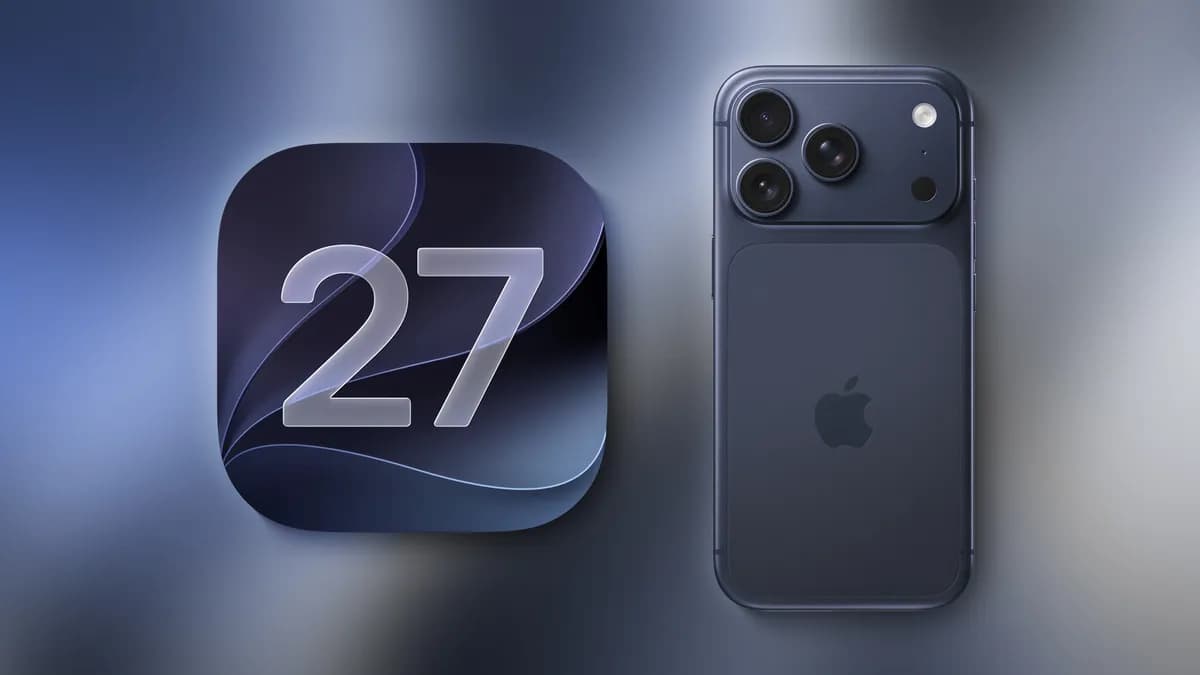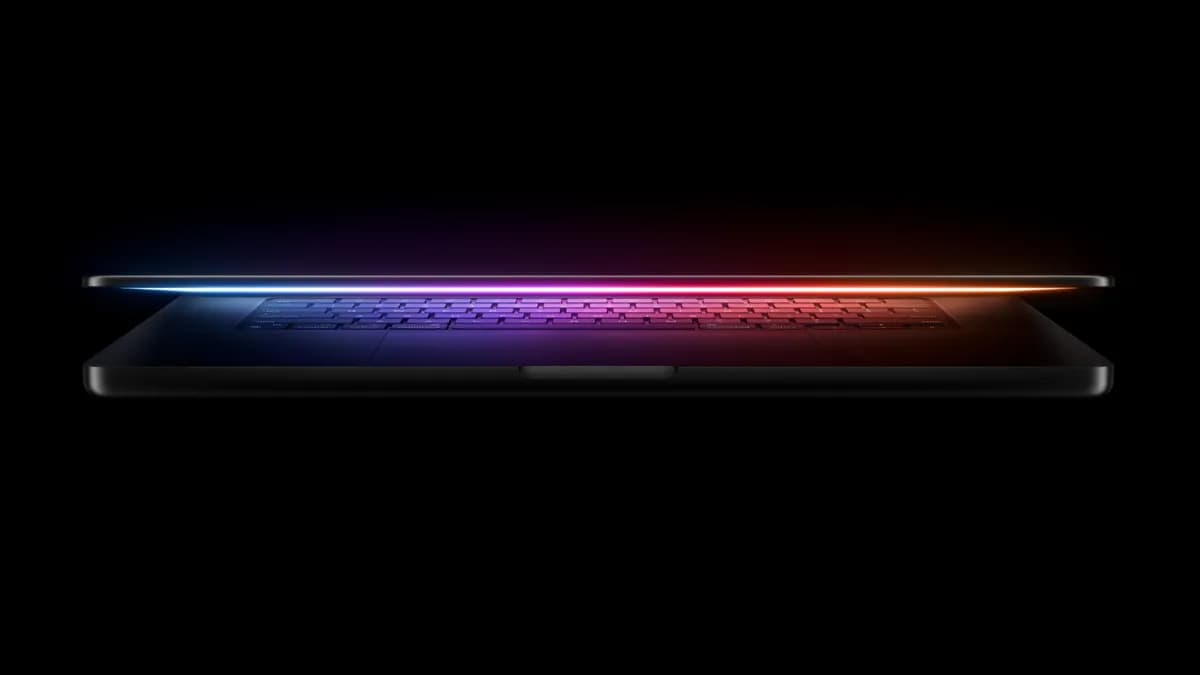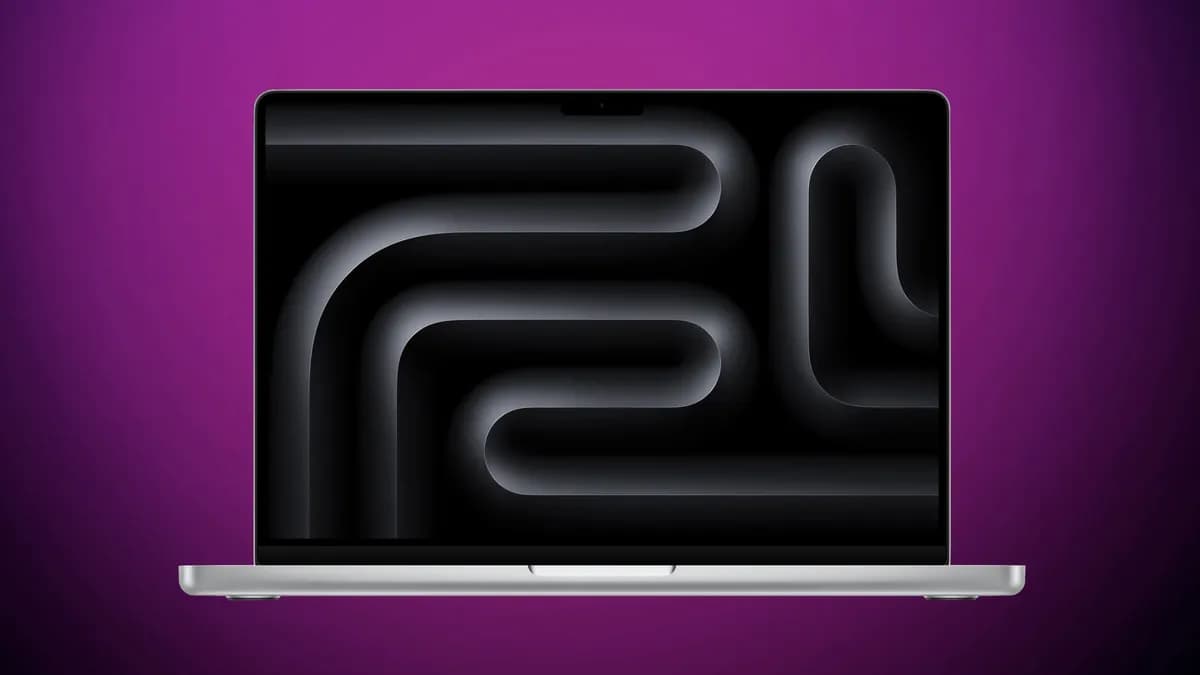
A handful of new API strings buried inside the macOS Golden Gate 27.2 beta have set the Apple leak community on alert. Developers combing through the build discovered gesture recognizer references across Safari, Notes, Photos, and Quick Look — a coordinated cluster of changes pointing directly at one of the most anticipated Apple products in years: a MacBook Ultra touchscreen laptop with an OLED display.
What macOS 27.2 Beta Code Reveals About Apple's Touch Strategy
The macOS 27.2 beta adds touch-specific gesture recognition APIs to at least four first-party Apple apps. That's not a single experimental flag tucked in an obscure framework — it's a simultaneous rollout across flagship apps, the kind of preparation Apple makes when its own software needs to be ready before new hardware ships.
Apple's history of pre-seeding future hardware APIs in OS betas is well-documented among analysts who track software signals. Before the HomePod mini launched, Bluetooth proximity identifiers for the device appeared in iOS code weeks ahead of the announcement. iPhone camera hardware identifiers surfaced in iOS betas before their corresponding sensors were revealed. The pattern is consistent enough that developers and industry analysts treat these discoveries as a recognized methodology for anticipating unreleased products — not speculation, but a documented signal.
The macOS 27.2 beta fits that template precisely. Apple doesn't add touch gesture APIs to desktop apps without a hardware target in mind. The company's software teams typically write these integrations against real devices, then ship the code in OS releases timed to align with — or slightly precede — a product launch. The presence of a MacBook Ultra touchscreen in the rumor pipeline makes those APIs considerably less mysterious.
How Safari, Notes, Photos, and Quick Look Handle Touch

Four specific API strings in the macOS 27.2 beta provide the clearest software-layer evidence yet of an imminent MacBook Ultra touchscreen rollout.
Read next iPhone Duo's Hidden Fake Bezel Setting ExplainedSafari picks up a touch sentinel recognizer — a class designed to monitor touch input and decide whether a gesture should be passed to the web content layer or handled by the browser's own UI. On a conventional Mac, there is no use case for this. Safari already handles trackpad gestures natively. A sentinel recognizer only makes architectural sense when a direct-touch display is present and the app needs to arbitrate between system-level swipes and page-level touch events.
Photos gains PXGTouchDwellGestureRecognizer, a press-and-hold recognizer built for the Photos framework. "Dwell" gestures are standard in touch interfaces for triggering context menus or entering edit mode — behaviors currently handled in macOS Photos by right-click. Introducing a dedicated dwell recognizer suggests Apple is building Photos to respond to a held finger on a display.
Notes adds ICTouchPressGestureRecognizer, most likely tied to the app's drawing and annotation toolset. Notes on iPad already supports Apple Pencil pressure sensitivity and direct touch input. Bringing pressure-aware touch to the Notes framework on macOS would be a natural extension for a MacBook Ultra touchscreen that ships alongside or with stylus support.
Quick Look gains a dragTouch feature — brief and functional. Dragging a file preview, flicking between images, or scrolling a document with a finger rather than a trackpad. Narrow in scope, but unnecessary unless a touch surface is physically attached to the machine.
These are not generic utilities. Each recognizer is app-specific and maps to a distinct user action that only becomes relevant with a direct-touch display present.
MacBook Ultra: What the Code Name Signals

The discovery of a "MacBook Ultra" identifier in macOS code carries weight beyond the gesture API findings. Apple's Ultra branding has, until now, been reserved for M-series chips used inside the Mac Studio and Mac Pro — the company's most powerful desktop configurations. Applying that name to a MacBook form factor marks a significant departure from existing naming conventions.
Two readings are plausible. The MacBook Ultra could represent a new performance tier above the MacBook Pro, targeting professional users who want maximum capability in a portable chassis — and who would accept a touchscreen as a pro-grade feature rather than a consumer one. Alternatively, "Ultra" may simply track the chip inside: if Apple ships this laptop with an M5 Ultra or a next-generation Ultra-class processor, the device name follows naturally from the component.
Either way, the MacBook Ultra touchscreen configuration implied by the code indicates Apple is building touch into the platform at the framework level — not as an accessibility add-on bolted onto an existing product, but as a first-class input method integrated across core applications.
Touchscreen Mac or Expanded Sidecar? The Debate Explained
A legitimate counter-argument exists against reading these APIs as evidence of standalone touchscreen Mac hardware. macOS Golden Gate introduced full touch input support for Sidecar, the feature that lets an iPad serve as a secondary display for a Mac. When connected via Sidecar, the iPad can receive touch input and relay it to macOS — which means macOS already has to understand touch events at the OS level.
The touch APIs in macOS 27.2 could therefore represent Sidecar expansion rather than new Mac hardware. Apple may be deepening Sidecar's gesture library so iPad users connected to a Mac can interact more naturally with Safari, Notes, Photos, and Quick Look without reaching for a mouse or trackpad.
The pull-to-refresh gestures added to Safari, Mail, and Calendar in the macOS Golden Gate launch version are often cited as the origin point for this touch strategy. Those gestures function in Sidecar today. Extending that same logic to app-specific recognizers is not unreasonable.
The naming specificity, though, works against the Sidecar-only interpretation. A touch sentinel recognizer for Safari is a heavier architectural investment than a pull-to-refresh handler — it implies real-time arbitration logic between input modes. The dragTouch addition to Quick Look is narrowly functional for direct file handling, a scenario more naturally associated with touching a laptop display than operating an iPad that mirrors a Mac desktop several feet away.
What to Expect from Apple's First OLED Touchscreen MacBook
Supply-chain reporting tracked by outlets including Bloomberg and The Information has converged on a consistent picture: the MacBook Ultra touchscreen device is targeting a late 2026 launch window, potentially within the holiday quarter.
The hardware profile described in those reports is distinct from anything in Apple's current lineup. The chassis is expected to be thinner and lighter than existing MacBook Pro models — a meaningful engineering challenge given the OLED panel and a presumed high-performance chip combination. OLED brings improved contrast ratios, deeper blacks, and faster pixel response compared to the mini-LED displays in current MacBook Pros. The iPad Pro made the same transition in 2024, demonstrating Apple's supply-chain readiness for OLED at that scale.
The OLED display would be the first of its kind in a Mac laptop. Apple deployed OLED on the Apple Watch from 2015 onward, extended it to iPhone with the iPhone 13 Pro line, and reached the iPad Pro in 2024. The MacBook is the last major product category in the Apple portfolio still running LCD-based panels.
A MacBook Ultra touchscreen with OLED would therefore represent two simultaneous firsts for the Mac platform. That combination explains why Apple appears to be building out its software stack so methodically. Shipping a touchscreen Mac without well-tuned gesture support across core apps would immediately undermine the experience — something Apple's engineering culture consistently works to avoid.
The macOS 27.2 beta code doesn't confirm a ship date or finalize a product name. What it does confirm is that Apple's software teams are actively building for touch input at the application layer, in a beta arriving roughly one quarter before the rumored launch window. That timing aligns with Apple's documented approach: get the APIs into OS releases, let first-party apps absorb the new gesture vocabulary, then ship the hardware when the software is ready to meet it.