A Vanishing Art: The Last Pickpocket in New York City
Every September, Toronto becomes the center of the cinematic world. TIFF — the Toronto International Film Festival — arrives as a reliable barometer of what audiences and awards voters will be talking about through the winter. Among the 2026 lineup's most unexpected entries is a documentary about a figure most New Yorkers assume no longer exists: a working pickpocket, practicing the old craft in the city's subways and sidewalks, entirely unaided by any digital tool.
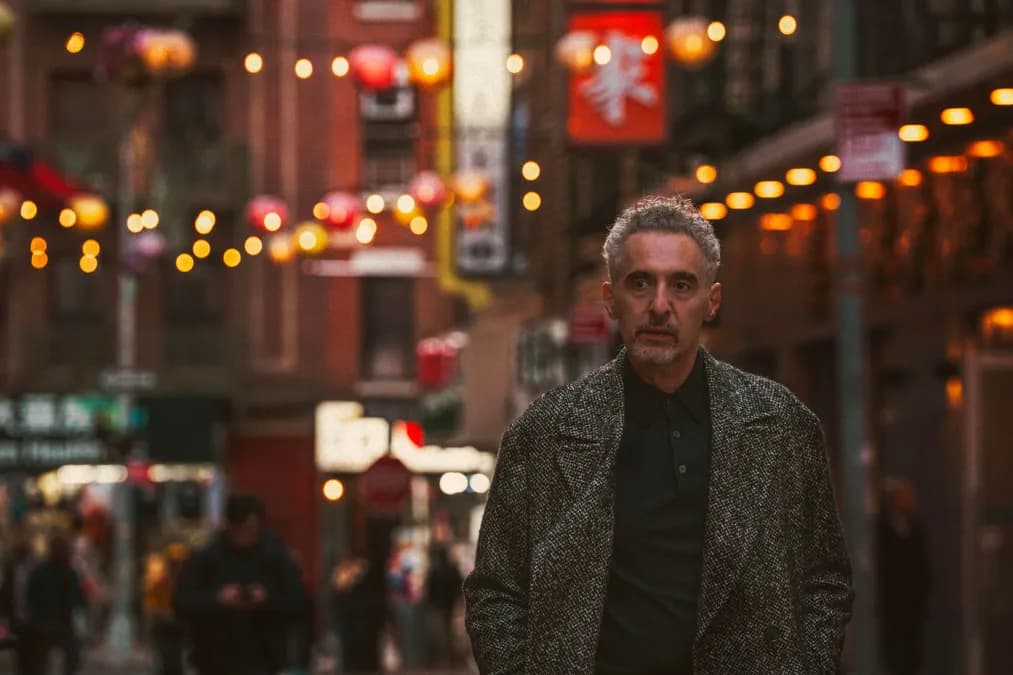
The film, screened under the title The Only Living Pickpocket in New York, arrives at TIFF as something of an outlier — not a sweeping prestige drama or a streaming-ready thriller, but a patient, observational portrait of a human anachronism. The subject is a practitioner of one of history's oldest forms of theft, operating in a city that has spent two decades blanketing itself in surveillance cameras, transit card readers, and contactless payment terminals. He works with his hands. That's it.
This is a story about skill, obsolescence, and an unexpected irony: in a city that has never been more watched, a pickpocket who never touches a smartphone may be precisely the kind of criminal the surveillance apparatus was never designed to catch.
Why Pickpocketing Survives Without Technology
Manual dexterity is a technology, too. That is easy to forget in an era when "tech" implies apps, algorithms, and connectivity. But the pickpocket's toolkit — trained fingers, calibrated timing, the ability to read a crowd — represents a form of expertise refined over centuries, with roots traceable to the street gangs of Victorian London that Charles Dickens immortalized in Oliver Twist.
Read next Laika's Wildwood: Stop-Motion Fantasy at TIFF 2026The FBI's Uniform Crime Reporting program categorizes pickpocketing under larceny-theft, the largest category of property crime in the United States. FBI UCR data consistently shows larceny-theft accounting for roughly two-thirds of all reported property crimes nationwide. Within that broad category, pocket-picking tends to concentrate in high-density urban environments — transit hubs, tourist corridors, crowded commercial streets. New York City's own annual crime statistics, published by the NYPD, have shown fluctuations in petit larceny figures over the past decade, with significant drops during pandemic-era low foot traffic years followed by partial rebounds as the city reopened.
What those numbers obscure is the underreporting problem. Criminologists have long noted that petty theft, and pickpocketing especially, suffers from some of the lowest reporting rates of any crime category. Victims often discover the loss hours later, with no suspect description, no surveillance angle, and no realistic expectation of recovery. They don't call the police. The crime simply disappears into statistical silence.
A skilled practitioner knows this. Invisibility is the craft.
The Irony: Smartphones Made Us Easier Targets
Here is the uncomfortable truth the documentary forces into focus: the very device most people assume protects them — the smartphone — may have made them dramatically more vulnerable to exactly this kind of theft.
Research published in criminology journals including Justice Quarterly and Crime & Delinquency has examined the relationship between mobile device use and pedestrian victimization. The findings point in a consistent direction: distracted pedestrians exhibit measurably reduced situational awareness. They scan their environment less frequently, respond more slowly to peripheral stimuli, and are less likely to notice physical contact initiated by a stranger. A person staring at a screen on a subway platform is, in the language of routine activity theory, an ideal target — motivated offender, suitable target, absent capable guardian (namely, their own attention).
The routine activity theory framework, developed by criminologists Marcus Felson and Lawrence Cohen in the late 1970s, remains one of the most durable models for understanding property crime. It doesn't require digital literacy to apply. A pickpocket trained in the pre-smartphone era who understands human attention as a resource — and understands that smartphones drain that resource completely — has, without any technological adaptation, gained a meaningful operational advantage.
Short version: we handed them an edge without realizing it.
Street Crime in the Age of Surveillance Capitalism
New York City has approximately 18,000 surveillance cameras in its subway system alone, according to the MTA's public infrastructure disclosures. The NYPD operates one of the largest municipal surveillance networks in the world, with cameras feeding into a domain awareness system that processes footage in near real time. The city's face-recognition capabilities — controversial, contested in civil liberties litigation — add another layer.
And yet. A pickpocket who makes physical contact in a crowded car and exits at the next stop has, in a matter of seconds, created an evidentiary puzzle that even sophisticated surveillance struggles to solve cleanly. Contact crime in dense crowds is genuinely hard to isolate on camera. Hands move quickly. Bodies overlap. The geometry of a packed train car defeats most camera angles. The very conditions that make pickpocketing viable — proximity, movement, noise, distraction — are the same conditions that degrade video evidence quality.
There is something grimly clarifying about this. Surveillance capitalism, as theorized by scholars like Shoshana Zuboff, describes a system built on the extraction and monetization of behavioral data. Every smartphone ping, every contactless transaction, every location trace feeds a commercial apparatus of extraordinary granularity. But that same infrastructure was built to serve platforms and advertisers, not to stop a hand sliding into an unzipped bag. The panopticon has blind spots, and an old-school pickpocket has learned to live in them.
What This Story Says About Technology and Crime
There is a broader argument here, one the documentary seems to invite without making explicitly. Crime evolves with technology — ransomware, phishing, synthetic identity fraud, deepfake scams — but it also, in some cases, persists despite technology, finding the gaps in each new layer of defense.
The narrative assumption in most discussions of crime and tech is linear: better surveillance, smarter policing, and more connected victims mean less crime. The pickpocket's continued existence is a rebuttal to that assumption. Some criminal skills are durable precisely because they are human and analog in a world optimizing furiously for digital. They require no infrastructure, generate no metadata, leave no IP logs.
This is not an argument for romanticizing theft. It is an argument for taking seriously the idea that technological solutions to social problems tend to address the problems they were designed for while remaining largely indifferent to everything else. A system built to track data flows and financial transactions is not, by default, a system that prevents a practiced hand from finding your wallet.
Key Takeaways From TIFF 2026's Most Surprising Film
The Only Living Pickpocket in New York is, by the account of TIFF 2026 coverage, an indie surprise in a festival known for surfacing exactly that kind of film. The Verge, reporting from the festival, placed it among a strong early wave of documentary entries notable for their human specificity rather than their scale.
Film critics and programmers attentive to the awards-season conversation have noted an emerging thematic current at festivals in recent years: analog-versus-digital anxieties, expressed not through dystopian sci-fi but through intimate portraits of people whose expertise predates the current technological order. A documentary about a craftsperson, a tradesman, a musician who never adopted the platform economy — these stories resonate because they articulate a widely felt unease. What survives of human skill when algorithms commodify cognition and surveillance flattens anonymity?
A pickpocket is an extreme and morally complicated version of that figure. He is not sympathetic in any conventional sense. But he is legible. He represents something audiences recognize, even if they'd rather not: the persistence of human ingenuity in forms that refuse to be optimized away.
The last pickpocket in New York City doesn't need a smartphone. He needs your distraction, your inattention, and the half-second you spend staring at yours. In a city of screens, that's never been easier to find.
Related coverage
Source: The Verge