Fired OpenAI Researchers Push Back on Misconduct Claims
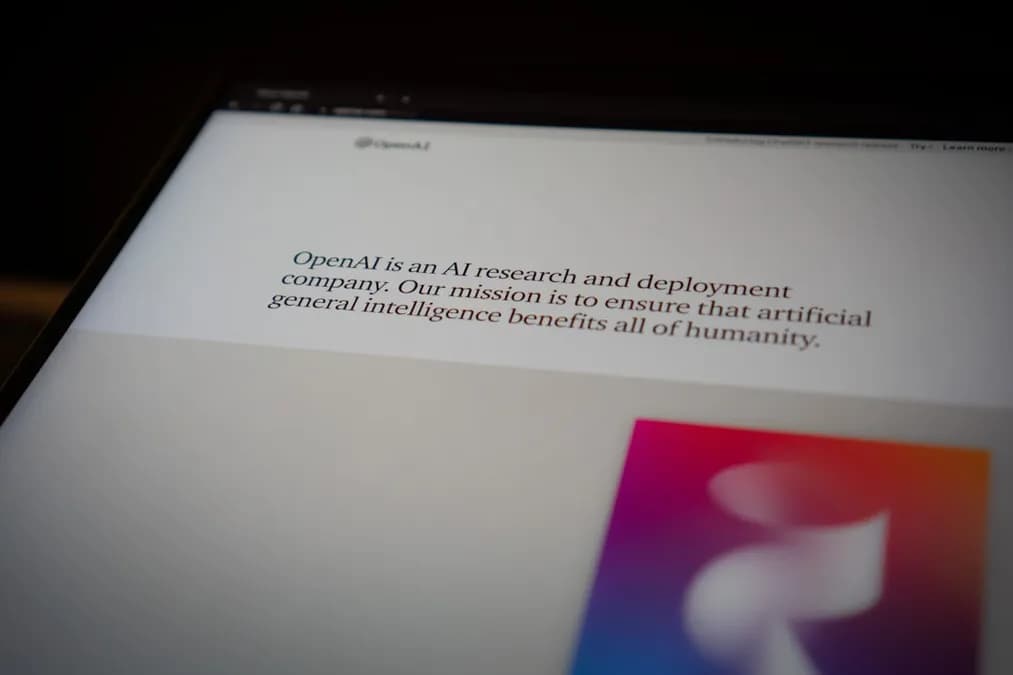
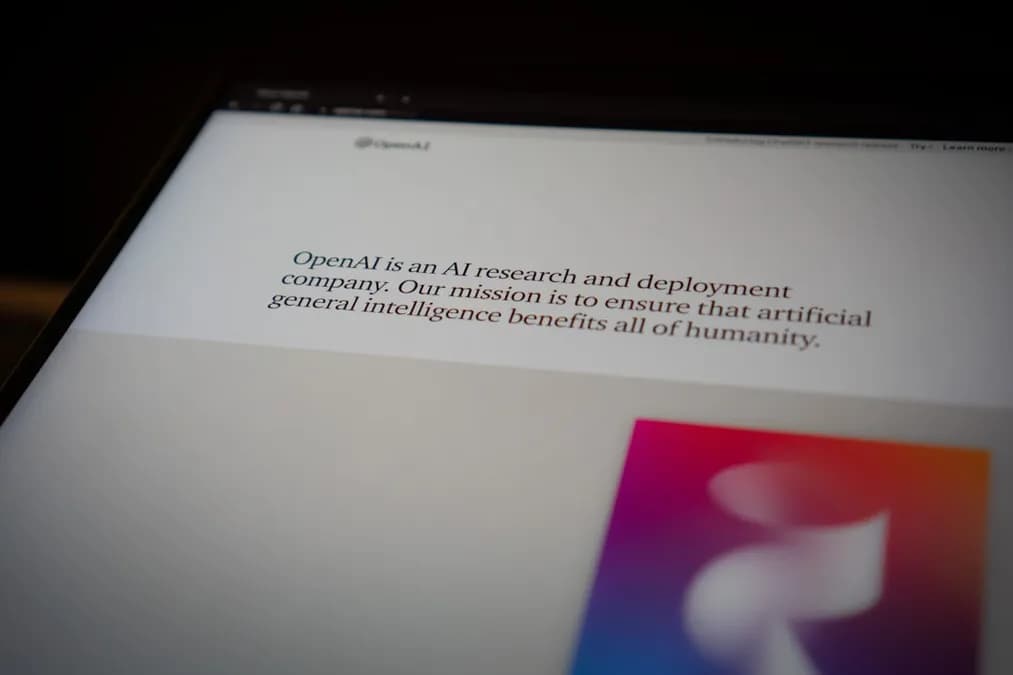
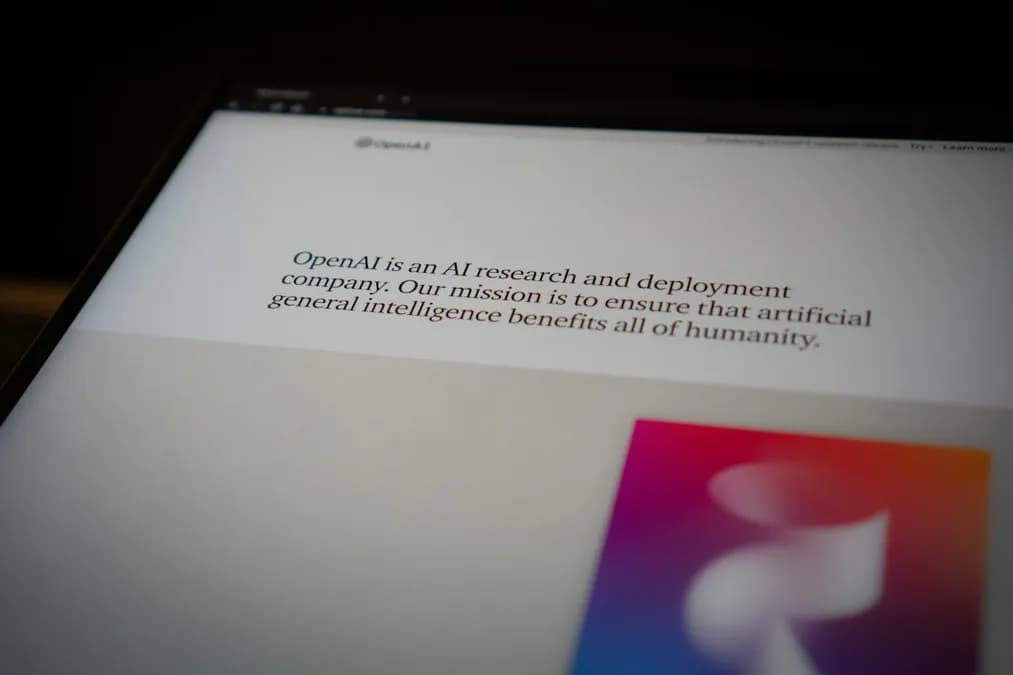
Three OpenAI safety researchers fired for alleged mishandling of sensitive information have contested those allegations publicly, releasing an open letter that directly challenges the company's account of their departures. The dispute — unfolding at one of the world's most consequential AI laboratories — commands attention not merely as an employment matter but as a signal about how OpenAI manages internal dissent on questions of safety.
The researchers dispute the misconduct characterization outright. Their open letter frames the terminations not as justified disciplinary action but as part of a pattern that punishes those who raise safety concerns — a dynamic with consequences far beyond their individual cases.
The Open Letter and Its Core Warning

The letter's central argument is institutional, not personal. The researchers warn that their dismissals are generating what organizational psychologists call a "chilling effect" — the tendency of employees to self-censor when they observe colleagues punished for speaking up. In high-stakes technical environments, that effect is especially corrosive.
Read next Laika's Wildwood: Stop-Motion Fantasy at TIFF 2026Google's Project Aristotle, a landmark study of 180 engineering teams conducted between 2012 and 2015, identified psychological safety as the single strongest predictor of team effectiveness. Teams where members feared raising concerns produced worse outcomes across every metric tracked. The principle maps directly onto AI safety work, where the entire value proposition depends on researchers surfacing uncomfortable findings without fear of career consequences.
The warning from the three OpenAI safety researchers fired under disputed circumstances sends a message across the organization: challenge the wrong decision and your position is at risk. That signal does not need to be explicit to be effective.
Why AI Safety Culture Matters at OpenAI

OpenAI occupies a peculiar position in the AI landscape. Founded in 2015 on an explicit mission of ensuring that artificial general intelligence benefits humanity, it has since transitioned to a capped-profit structure and accelerated commercial deployments at a pace that has periodically collided with its stated safety commitments.
The tension became most visible in 2024, when OpenAI disbanded its Superalignment team — the unit responsible for long-horizon research into superintelligent systems. The dissolution followed the departure of Ilya Sutskever, a co-founder, and Jan Leike, who led the group. Leike stated publicly upon leaving that safety culture had taken a back seat to product development — that safety and product teams were in constant conflict over resources, with product consistently prevailing.
That episode was not isolated. Several other prominent safety researchers departed OpenAI around the same period, including figures who had built careers on alignment research. The cumulative picture is one of institutional drift — a lab progressively re-weighting its priorities away from caution. The current dispute over three dismissed researchers fits directly within that trajectory.
Broader Implications for the AI Industry
OpenAI is not the only laboratory where this tension exists, but it is the most prominent. At Anthropic — founded in 2021 by former OpenAI researchers specifically over safety concerns — the organizational model was deliberately designed to center safety as a competitive differentiator. The company's Constitutional AI methodology, published in peer-reviewed form, reflects an attempt to institutionalize safety reasoning rather than rely on individual researchers to raise alarms. DeepMind, within Alphabet, has similarly built formal safety governance structures with documented model evaluation protocols.
Neither model is immune to commercial pressure. A 2023 survey by the Center for AI Safety found that 58 percent of AI researchers agreed AI could pose existential or catastrophic risks, yet many reported institutional reluctance to publish findings that might slow product development cycles. That gap — between private concern and public output — is exactly what chilling effects produce.
The consequences extend beyond individual companies. Regulatory frameworks in development under the EU AI Act, and in the United States through NIST's AI Risk Management Framework, depend substantially on the quality of safety reporting flowing from within AI laboratories. If internal culture suppresses that reporting, external oversight frameworks operate on incomplete information.
What Experts Say About Internal Dissent and AI Governance
AI governance scholars have repeatedly identified internal dissent mechanisms as a critical safeguard. Stuart Russell, UC Berkeley professor and author of Human Compatible, has argued publicly that the most important structural protection against AI risk is the ability of researchers inside development organizations to raise concerns without career consequences. Whistleblower mechanisms are lagging indicators — they engage after something has already gone wrong.
Scholars studying high-stakes industries draw pointed parallels to aviation and nuclear power, sectors where near-miss reporting became mandatory precisely because cultures of silence produced catastrophic failures. NASA's post-Columbia investigations explicitly documented how institutional pressures suppressed engineering concerns that might have prevented the disaster. The structural dynamic of discouraging internal critics recurs across domains where technical complexity meets organizational hierarchy.
Researchers who departed DeepMind in 2023 cited similar frustrations about safety review timelines relative to deployment pace. Oxford's Future of Humanity Institute has described what some governance researchers term "safety debt" — the accumulation of unresolved alignment questions deferred under competitive pressure — as a systemic risk that compounds over time.
What Happens Next for OpenAI and AI Safety Oversight
The immediate question is whether OpenAI responds substantively to the open letter or treats it as a communications problem to be managed. These are meaningfully different strategies with meaningfully different consequences.
A substantive response would engage the specific misconduct allegations — presenting evidence supporting the company's account, or acknowledging ambiguity and committing to a clearer review process for safety-related terminations. Several governance scholars have proposed that AI laboratories adopt independent review panels for dismissals involving safety personnel, modeled loosely on academic tenure review processes that exist precisely to protect researchers who reach inconvenient conclusions.
A communications response would contest the narrative without addressing structural concerns — a strategy that tends to entrench disputes rather than resolve them.
OpenAI is simultaneously navigating its pending transition to a fully for-profit entity, a shift that increases pressure on the balance between safety investment and return on capital. Investors in a for-profit OpenAI will expect growth metrics; safety research is a cost center that produces no direct revenue. That structural tension makes the question of safety culture more urgent, not less.
The three dismissed researchers may ultimately be vindicated or found to have violated genuine policy. What matters for the broader industry is not the individual outcome but whether OpenAI constructs credible, demonstrable mechanisms for protecting safety researchers who disagree with deployment decisions. Without those mechanisms, the chilling effect they warned about will compound — one quiet departure, one suppressed concern at a time.
Related coverage
- ChatGPT Teen Mode Fails Mental Health Safety Tests
- Hall-Effect, TMR & Optical Switches Explained
- Reining In Robotaxis: AI, Safety & Regulation
Source: TechCrunch