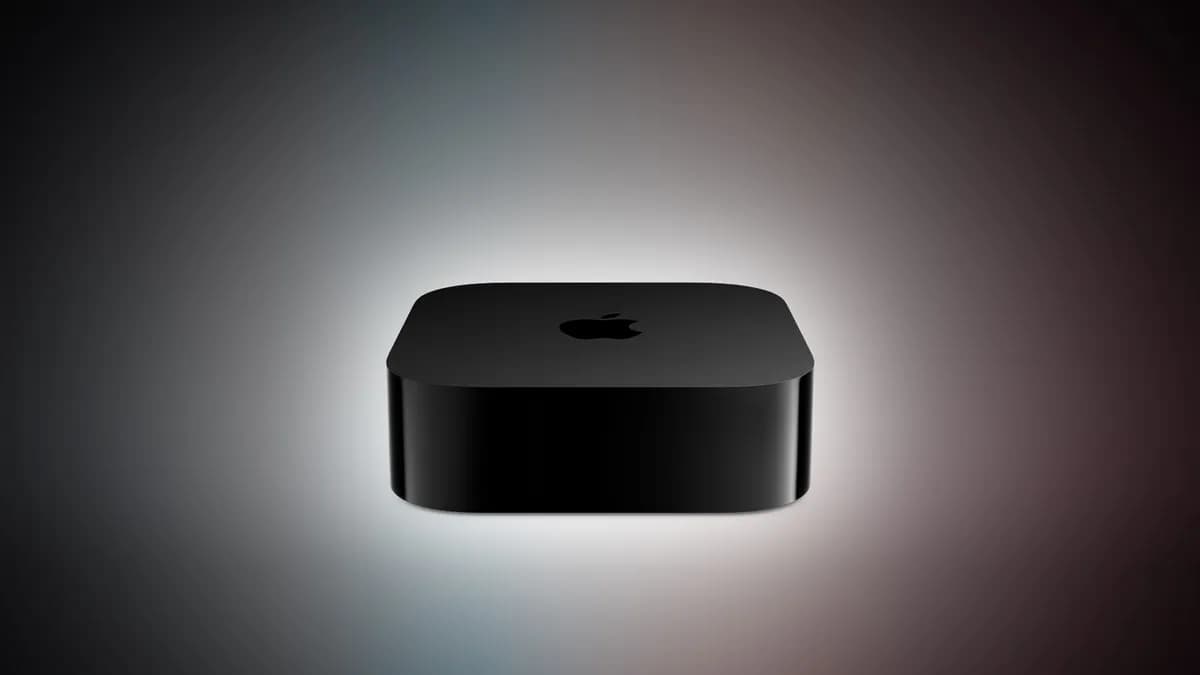
A string of code buried inside a beta software release has a way of spoiling Apple's biggest surprises before the company is ready to talk. The latest example: tvOS 27.2 beta carries unmistakable fingerprints of Apple TV Apple Intelligence support — suggesting the next-generation streaming box will be a meaningfully more capable device than the hardware it replaces.
What tvOS 27.2 Beta Code Reveals About Apple Intelligence on Apple TV
The clearest signal sits in the Settings app. Developers and code analysts examining the tvOS 27.2 beta discovered a new toggle labeled "Improve Siri & Apple Intelligence" — a label that does not appear on any current Apple TV hardware, because no current Apple TV supports Apple Intelligence.
The accompanying privacy disclosure text reads: "Help improve foundation models and Siri by allowing Apple to collect and use your text and audio interactions with Siri, Dictation, and Translate." That specific phrasing is not arbitrary. It mirrors, word for word, the disclosure language Apple uses on iPhone 16, iPhone 15 Pro, and iPad models that already run Apple Intelligence. On devices that do not support Apple Intelligence — including every Apple TV sold today — the same menu reads "Improve Siri & Dictation." The distinction is deliberate.
Critically, the new Apple Intelligence code was added alongside the existing Siri data-sharing code, not as a replacement. That architecture strongly implies the feature is gated behind a hardware capability check. Only Apple Intelligence-capable hardware would surface the new toggle; everything else continues showing the older label.
The beta also contains a new Siri Messages UI framework — a framework that does not exist in any shipping version of tvOS. It points toward a future in which Siri on Apple TV can surface message content from a paired iPhone directly on the television screen, along with smart reply options. The current Siri implementation on Apple TV has no such capability.
Taken together, these two additions — the Apple Intelligence privacy toggle and the Messages UI framework — represent the strongest in-software evidence to date that Apple TV Apple Intelligence is not a rumor but an engineering reality already in development.
What Apple Intelligence Would Mean for the Apple TV Experience

Think about what the living room has always lacked: genuine conversational intelligence. Siri on Apple TV today can search for content and toggle playback controls, but it cannot summarize what you missed in a show, compose a response to a text, or answer nuanced follow-up questions.
Read next iPhone Duo's Hidden Fake Bezel Setting ExplainedApple Intelligence changes that calculus entirely. With the Messages framework identified in tvOS 27.2, Siri could read incoming texts from a linked iPhone and display them on screen — letting users respond during a movie without reaching for their phone. Smart replies generated on-device, without sending data to a remote server, would make the interaction feel fluid rather than interruptive.
Beyond messaging, Apple TV Apple Intelligence could unlock writing assistance in apps, image generation capabilities, and the kind of contextual Siri awareness that understands multi-step requests. The remote — already a precise, well-designed input device — could become the interface to a genuinely intelligent home assistant anchored in the living room.
How Apple Intelligence Works on Other Apple Devices

Apple Intelligence launched in fall 2024 with iOS 18.1, iPadOS 18.1, and macOS Sequoia 15.1. It is not a cloud-only service. The system runs a combination of on-device processing for sensitive tasks and Private Cloud Compute for heavier inference — the latter designed so that Apple servers cannot read user data even during cloud processing.
On supported iPhones and iPads, Apple Intelligence powers writing tools that can rewrite, proofread, and summarize text across virtually any app. The Photos app gained the ability to generate custom images from text descriptions. Siri gained the ability to act across apps — for example, finding a flight confirmation in Mail and sharing it directly to a contact in Messages.
The privacy disclosure string found in tvOS 27.2 — referencing "foundation models" — aligns precisely with this architecture. Foundation models are the large, general-purpose AI models that underpin the whole system. Their presence in the tvOS codebase confirms Apple is not simply porting a Siri feature; it is laying groundwork for the full Apple Intelligence stack.
What Hardware Would a Next-Gen Apple TV Need to Support Apple Intelligence?
This is where the Apple TV's hardware history matters. The Apple TV 4K (3rd generation), released in 2022, runs on the A15 Bionic — the same chip that powered iPhone 13. The A15 is capable for streaming and casual gaming, but it falls short of Apple Intelligence requirements by at least one full chip generation.
Apple Intelligence currently demands an A17 Pro or any M-series chip. The A17 Pro, introduced with iPhone 15 Pro in 2023, was the first Apple chip built on TSMC's 3-nanometer process. That manufacturing node roughly doubled transistor density compared to the 5-nanometer A15, which is what enables the on-device AI workloads Apple Intelligence requires.
For Apple TV Apple Intelligence to function, the next Apple TV would need at minimum an A17 Pro — and more likely something from the A18 family given Apple's typical product cadence. That chip upgrade would represent the most significant internal jump the Apple TV line has seen in years, pushing it beyond a streaming device into a genuine smart home hub with real computational muscle.
The precedent for Apple making this kind of internal leap exists. The Apple TV 4K jumped from the A10X Fusion in the second generation to the A15 Bionic in the third, skipping the A12 and A14 generations entirely. A similarly bold step to A17 Pro or A18 territory is entirely plausible.
Timeline and Expectations: When Could an Apple Intelligence Apple TV Arrive?
Apple has a well-documented practice of seeding feature code into beta software releases months — sometimes years — before the hardware required to activate that feature ships to customers. AirPlay receiver hints appeared in tvOS code before Apple formally announced expanded AirPlay support. HomeKit architecture updates preceded hardware releases by similar margins.
The presence of Apple Intelligence scaffolding in tvOS 27.2 beta does not mean an announcement is imminent. What it does signal is that hardware planning is underway and engineering teams are already writing software against a target specification. Apple does not write production-grade privacy disclosures for features with no hardware roadmap behind them.
The next Apple TV hardware cycle has been the subject of persistent industry speculation. Given that the 3rd-generation model arrived in late 2022, a 2025 or 2026 refresh would align with Apple's roughly two-to-three-year update cadence for the line. A device with Apple Intelligence support would need a chip announcement to precede or accompany it — and Apple's silicon pipeline, based on publicly available supply-chain analysis and chip announcements, has the right ingredients in production.
Bottom Line: Should You Wait for the Next Apple TV?
If you bought an Apple TV 4K in the last eighteen months, there is no urgent reason to hold off on enjoying it. The device remains an excellent streaming box. But if you are on an older model — particularly the HD-only version — or you are buying for the first time, the tvOS 27.2 evidence makes a compelling case for patience.
Apple TV Apple Intelligence appears to be a genuine, code-confirmed feature in active development. The specific privacy disclosure text, the hardware-gated toggle architecture, and the new Siri Messages UI framework are not artifacts of wishful interpretation. They follow the exact pattern Apple uses when it prepares a software ecosystem for hardware it has not yet announced.
The next Apple TV, whenever it arrives, looks likely to be the most significant update to the platform since the move to 4K. An on-device AI system, conversational Siri with real capability, and messaging integration on the living-room screen would reposition the Apple TV from premium streaming box to smart home centerpiece. The beta code is already pointing the way.