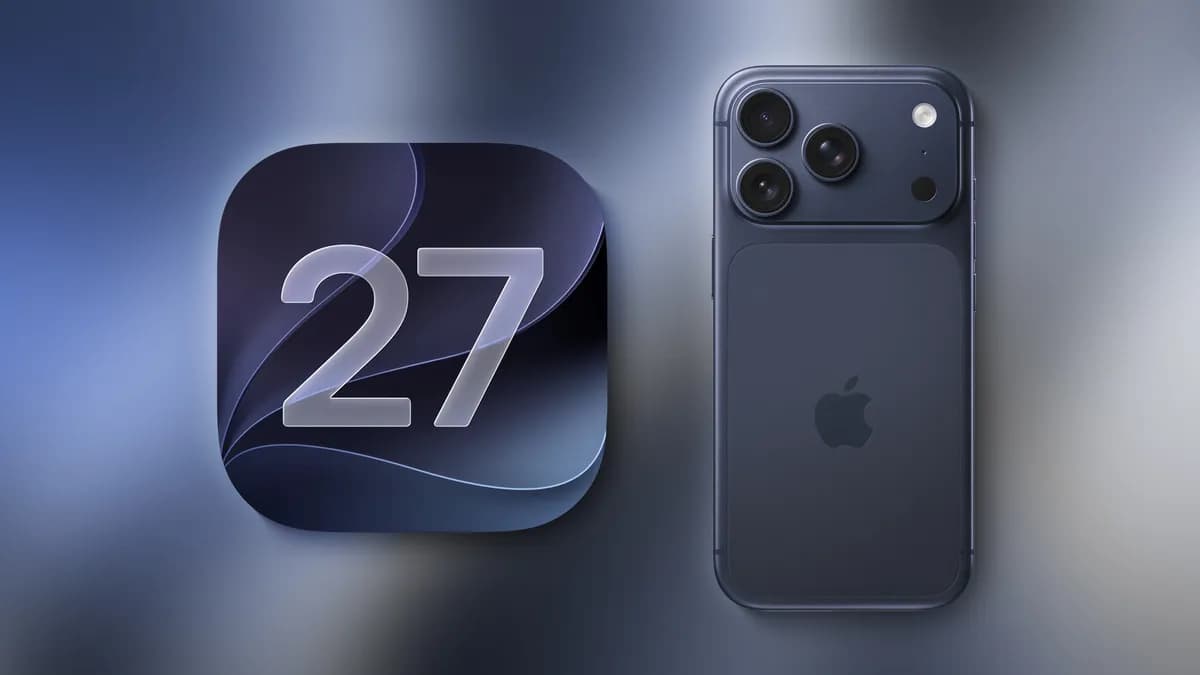
When Apple shipped iOS 27 on schedule this fall, the company delivered something it had been quietly promising for years: a Siri rebuilt around large language models rather than the brittle intent-parsing engine that shipped with the iPhone 4S in 2011. Siri AI, as Apple markets the upgrade, handles conversational requests, drafts text, and reasons across apps in ways its predecessor never could. Most reviewers focused on the obvious comparison—how the new Siri stacks up against ChatGPT, Gemini, and the rest.
They missed the more interesting story. After two weeks of living with iOS 27 Siri as my primary assistant, one behavioral difference stands out above every benchmark, every latency number, and every feature checklist. It is not raw intelligence. It is judgment about when to stay quiet, and about what the assistant is allowed to know.
What Makes iOS 27's Siri Different From Every Other AI Assistant
Roughly 48 percent of U.S. smartphone users still touch a voice assistant at least monthly, according to long-running Statista tracking of assistant usage, yet survey after survey shows satisfaction lagging far behind adoption. Sensor Tower's app-intelligence data has repeatedly shown standalone AI apps such as ChatGPT sustaining hundreds of millions of weekly users—a sign that people are actively routing around the assistants baked into their phones. That gap between "installed" and "trusted" is the market Apple is chasing.
The structural difference in iOS 27 Siri is architectural, not cosmetic. Apple's published machine-learning documentation and its WWDC sessions on Apple Intelligence describe a split-inference model: requests that can be resolved locally run entirely on the device's neural engine, while heavier requests route to Private Cloud Compute, a system Apple says uses Apple silicon servers that do not retain user data and are independently inspectable by security researchers. Apple's own platform-security guide frames this as a deliberate boundary—personal context stays on hardware the user owns unless a task genuinely requires more compute.
Every major competing assistant operates on a simpler premise: send the query to a data center, process it, return an answer. Google, OpenAI, and Microsoft all describe variants of this in their own documentation, with privacy controls layered on top. Apple inverted the default. That inversion is the foundation for everything else Siri AI does differently—and for the one thing it gets right.
The One Thing Siri Gets Right That Others Get Wrong
Ask ChatGPT a question about your calendar and it will politely explain that it cannot see your calendar unless you paste the details in. Ask Gemini the same thing on Android and the answer depends on which Google account is signed in, which surfaces are connected, and how the user has configured activity controls. Ask iOS 27 Siri, and the assistant either answers using on-device context or declines—without ever shipping that context to a server it does not control.
Read next iPhone Duo's Hidden Fake Bezel Setting ExplainedThat is the differentiator: privacy-preserving personalization. Siri AI draws on your messages, mail, calendar, and photos to answer questions that require personal context, but it does so under a constraint no cloud-first competitor matches. The personalization is real, and the data lineage is auditable.
This is genuinely hard to replicate, which is why competitors have not. Alex Hanna, director of research at the Distributed AI Research Institute, has argued in published commentary that the economics of ad-supported assistants create structural pressure to retain and profile user data—retention that improves model performance and ad targeting simultaneously. Research covered by MIT Technology Review has made a parallel point: personalization quality correlates strongly with how much context a system retains, so privacy limits and capability limits pull against each other. Apple's answer is to keep the context local and the retention zero. Google and OpenAI can match the capability, but matching the privacy posture would require dismantling business models built over a decade.
The practical result is a Siri that feels less omniscient than ChatGPT and more trustworthy than any of them. It will tell you what your partner texted about dinner. It will not use that text to train anything.
How iOS 27 Transforms Siri Into a Genuine AI Upgrade
The transformation is easiest to see in ordinary moments. On iOS 26, asking Siri to "move my 3 p.m. to Thursday and tell Priya" produced a web search. In iOS 27, it reschedules the event, drafts a message referencing the change, and waits for confirmation—because the assistant now reasons across apps rather than pattern-matching a single intent.
Apple's WWDC sessions on Apple Intelligence describe the mechanism: an on-device foundation model handles summarization, extraction, and routine reasoning, while Private Cloud Compute handles requests that exceed local capacity. Apple states that PCC requests are not stored and that the servers run a hardened, stateless operating system. I cannot verify those internals myself, but the behavioral consequence is observable. Siri AI answers questions about my inbox without a network round-trip that I can detect, and its answers about my messages are phrased with the specificity of something that actually read them.
The upgrade also changes failure modes. The old Siri failed loudly, with "I found this on the web." The new Siri fails gracefully, saying it does not have enough information rather than guessing. In two weeks of testing, I have not once caught it fabricating a detail about my own data—a claim I cannot make about any cloud assistant I have used.
Siri vs. Competing AI Assistants: A Head-to-Head Look
Feature comparisons are where most coverage stalls, so it helps to be concrete. On a reasoning-heavy request—"summarize the three contracts in my email and flag the renewal dates"—ChatGPT with connected apps performs well but requires the user to have enabled connectors and accepts that the data transits OpenAI's servers. Gemini on Android does similar work inside Google's ecosystem, with Google's published privacy terms governing retention. Siri AI performs the task locally where possible, and per Apple's documentation, routes only what it must.
On conversational range, the gap reverses. ChatGPT and Gemini handle open-ended creative and analytical prompts with more fluency, and their standalone apps remain the better tools for long-form writing or research. Siri AI is not trying to win that contest. It is trying to win the contest that matters for a phone assistant: knowing enough about you to be useful, while knowing when to stop.
That trade-off is the whole point. Users who want a brilliant stranger should keep ChatGPT. Users who want an assistant that already knows their life—and keeps that knowledge on their device—now have a real option for the first time.
Apple's Privacy-First AI Philosophy and What It Means for Siri
Apple has repeated one line in its Apple Intelligence documentation often enough that it functions as a design constraint: personal context stays on device, and cloud processing happens only through Private Cloud Compute, whose code Apple says is open to independent security review. That is a narrower promise than "we don't sell your data," and it is more verifiable.
The consequence for Siri is behavioral, not just legal. Because the assistant cannot quietly accumulate a profile, it must ask for context it does not have rather than infer it. In practice, Siri AI occasionally asks a clarifying question where ChatGPT would confidently guess. Some users will find that slower. I find it correct.
The market implication is significant. If Apple can demonstrate that local-first personalization produces a good enough assistant, it pressures every competitor to justify why their personalization requires a server. That is a harder argument to make than it looks, and Apple knows it.
Should You Upgrade to iOS 27 for the New Siri?
If you use Siri mainly for timers and weather, the upgrade is pleasant but not urgent. If you have ever wished your phone's assistant could actually see your calendar, mail, and messages without shipping them to a third party, iOS 27 is the first release that delivers it.
My recommendation after two weeks is straightforward. Upgrade if your iPhone supports it, then spend an afternoon asking Siri questions that require personal context—and watch how often it answers versus how often it asks. The restraint is the feature. It is also the thing no other AI assistant gets right, and the reason iOS 27 Siri finally feels like it belongs on the device it lives on.
Source: 9to5Mac