The Design Leadership Void Jony Ive Left Behind
When Jony Ive announced his departure from Apple in 2019 after 27 years, the company lost more than its most recognizable creative voice. It lost the only person in Apple's modern history to hold the title of Chief Design Officer — a role Apple created for Ive in 2012, elevating industrial aesthetics to a C-suite concern and signaling that design was not simply a function but a competitive philosophy.
What followed was an organizational gap Apple struggled to fill cleanly. The company's design operation runs across two distinct disciplines: industrial design, which shapes the physical form of hardware — the curves of an iPhone chassis, the hinge geometry of a MacBook — and human interface design, which governs the visual and interaction logic of software. Under Ive, both teams reported through a unified creative authority. After his exit, that coherence frayed.
Former COO Jeff Williams stepped into design oversight, an arrangement that reflected practical necessity more than strategic intent. Williams is a supply chain and operations expert — the architect of Apple's manufacturing relationships in Asia — not a designer by background. Analysts at Bernstein noted at the time that Apple's design function risked becoming a coordination layer rather than a generative force. For roughly five years, the question of who truly owned Apple's visual and physical identity remained, at best, ambiguous.
Williams himself departed Apple last year, removing even that interim structure. The void, already deep, became complete.
John Ternus Steps Into Apple's Design Arena
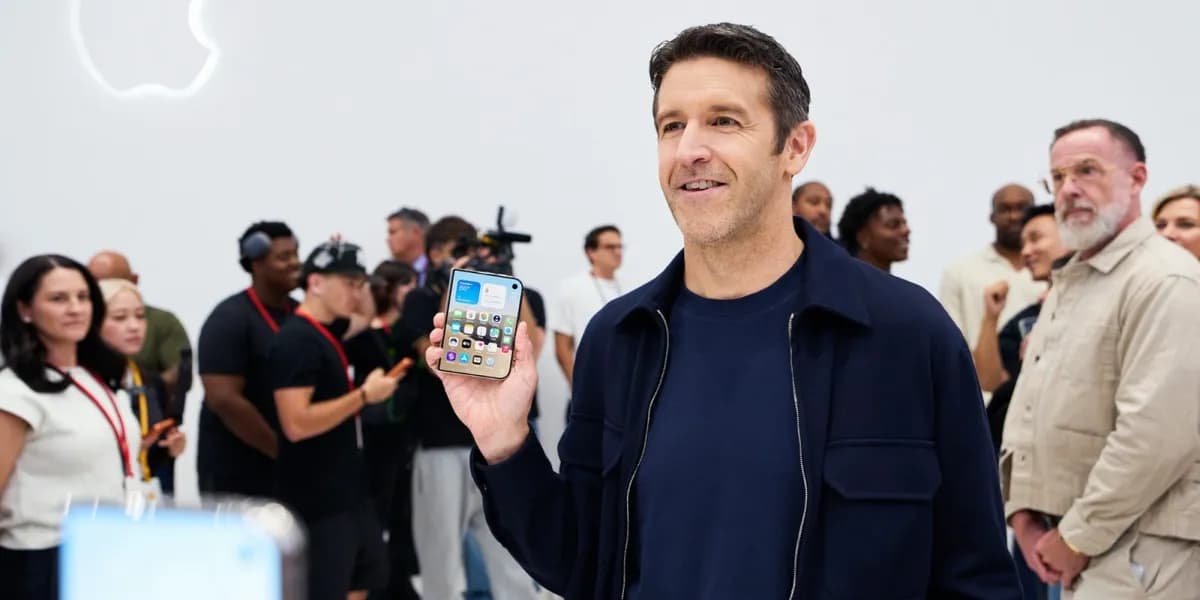
Into that gap steps John Ternus. According to Bloomberg's Mark Gurman — whose track record of Apple organizational reporting is arguably unmatched in the industry — the current Apple CEO has taken a direct and significant interest in both the industrial design group and the human interface team. This is not passive executive interest. Gurman's reporting suggests hands-on engagement, a material shift from the arm's-length arrangement that characterized the Williams years.
Read next iPhone Duo's Hidden Fake Bezel Setting ExplainedJohn Ternus Apple design involvement marks a structural pivot. Ternus arrived at the CEO role with hardware credentials that distinguish him from his predecessor: he led Apple's hardware engineering division before his promotion, overseeing product lines including iPhone, Mac, and Apple Silicon. That technical grounding gives him a credibility with the design teams that Williams, whatever his operational gifts, could not claim.
The significance of Gurman as the source deserves emphasis. His Power On newsletter and Bloomberg reporting have accurately predicted Apple product roadmaps, personnel shifts, and strategic pivots well ahead of official announcements. When Gurman characterizes a CEO's involvement in design as "significant," the word carries weight calibrated against years of sourcing.
What a CEO-Led Design Vision Means for Apple Products

The separation between industrial design and human interface design is not a technicality. It represents two fundamentally different creative disciplines with historically different cultures inside Apple.
Industrial designers think in materials, tolerances, and manufacturing processes. They debate whether aluminum should be machined or extruded, whether a display notch is a necessary compromise or an aesthetic failure. Human interface designers work in pixels, motion curves, and interaction affordances — the spring physics of a scroll gesture, the hierarchy of a settings menu. Under Ive, both groups reported to a single CDO who could arbitrate between hardware constraint and software expression. That unified authority produced the coherence Apple products became known for: the physical and digital felt like one continuous thought.
When design and hardware engineering operate in silos, results tend toward compromise. Products accommodate engineering constraints that design would have pushed back on; software aesthetics drift from the hardware they inhabit. The iPhone 6's protruding camera module — a protrusion design purists found jarring — is often cited as an early symptom of a period when hardware engineering began asserting more authority over form.
With John Ternus Apple design oversight now centered in the CEO's office, both teams once again answer to someone with the authority and hardware credibility to hold the line. Morgan Stanley analysts covering Apple have noted that unified design-engineering leadership correlates with product cycles that command stronger consumer pricing power — a margin dynamic Apple depends on given its premium positioning.
How Ternus Compares to Apple's Past Design Leaders
Apple's design history runs through a short list of consequential figures. Hartmut Esslinger's frogdesign defined the Apple II-era aesthetic. Ive arrived in 1992, spent years in relative obscurity under John Sculley and Gil Amelio, then found his moment when Steve Jobs returned in 1997. The iMac G3, the original iPod, the unibody MacBook — those products made Ive a household name in design circles and eventually earned him the CDO title.
Ternus is not a designer. That distinction matters. His influence over John Ternus Apple design direction will flow from executive authority and technical judgment rather than from an innate visual sensibility developed over decades. What he brings instead is deep knowledge of what Apple's supply chain and manufacturing ecosystem can realistically produce — knowledge that shapes what design can actually achieve at scale.
The comparison that may prove most instructive is not to Ive but to Jobs himself, who was not a trained designer yet exercised fierce design authority through a combination of aesthetic conviction and organizational power. Jobs famously involved himself in typeface choices, packaging details, and the color of internal circuit boards. Whether Ternus possesses or intends to exercise that level of granular judgment remains an open question.
Risks and Opportunities in Apple's New Design Structure
CEO-led design oversight carries real organizational risks. A CEO's attention is finite and competes with financial performance, regulatory scrutiny, supply chain decisions, and investor relations. Apple's design teams have historically operated with a degree of protected focus — Ive was famously insulated from day-to-day corporate pressure. Embedding design accountability in the CEO role eliminates that buffer.
There is also a succession question. If Ternus eventually promotes someone else to oversee design, Apple faces another discontinuity in an already-disrupted lineage. The CDO role existed precisely to create a durable institutional home for design authority outside the CEO's bandwidth.
The opportunity, however, is real. A CEO with hardware engineering roots who genuinely engages with both design disciplines could end the coordination failures that have occasionally produced products feeling inconsistent — software rounded corners that don't match hardware radii, UI motion that feels disconnected from the physical device experience. Tighter CEO-level integration of John Ternus Apple design decisions could restore the holistic product coherence that drove Apple's valuation from near-bankruptcy to the world's most valuable company.
What Comes Next: Apple's Design Identity in the Ternus Era
The practical question is whether Ternus formalizes his design involvement or leaves it as soft executive interest. Appointing a new CDO would signal long-term institutional commitment. Keeping design under informal CEO oversight preserves agility but depends on one person's sustained attention across competing demands.
Apple's product pipeline over the next two to three years will serve as the real test. Analysts will be watching for visual and functional cohesion across hardware and software, particularly as Apple pushes deeper into spatial computing with Vision Pro and continues the Apple Silicon transition across its Mac lineup. Those are exactly the product categories where industrial design and human interface design must operate in lockstep.
John Ternus Apple design leadership — however it ultimately gets formalized — arrives at a moment when Apple's design identity is genuinely unsettled. The Ive era defined a visual language that lasted nearly two decades. The Ternus era has both the opportunity and the responsibility to define what comes next.
Source: 9to5Mac