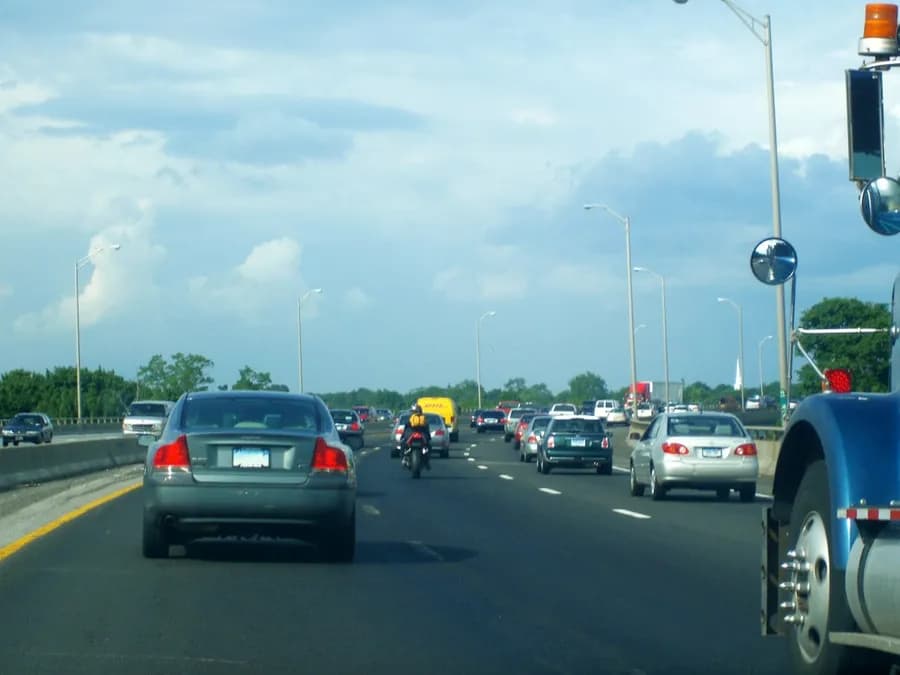
A Regulatory Milestone for Autonomous Trucking
Roughly 70 percent of all freight moved across the United States travels by truck, according to the American Trucking Associations — a dependency so deep that even modest disruptions to the supply chain send shockwaves through the broader economy. Against that backdrop, a recent regulatory development reported by TechCrunch signals a meaningful shift for the autonomous vehicle industry: a significant roadblock standing between self-driving trucks and widespread commercial deployment on American highways has cleared.
The specifics of this development sit within a larger story about how the United States has struggled to build a coherent federal framework for autonomous commercial vehicles. For years, the industry has operated in a fragmented patchwork of state-level rules, waiting for clearer federal guidance that would let companies plan, invest, and scale with confidence. That wait, it appears, is beginning to end.
The State of Self-Driving Truck Technology in 2026

Autonomous trucking technology has matured considerably over the past decade, though the gap between capability and commercial readiness has never been purely technological. By 2026, several companies have accumulated millions of miles of testing data on open highways, refining sensor fusion systems, AI-driven perception models, and fail-safe redundancies to the point where supervised autonomous operations on long-haul routes have become routine in select corridors.
Read next Laika's Wildwood: Stop-Motion Fantasy at TIFF 2026The technological focus has shifted from proving basic highway autonomy — which most leading developers consider largely solved for structured interstate conditions — to tackling the harder edges: dense urban freight yards, adverse weather at scale, and the intricate choreography of merging onto and exiting high-volume interchange systems. Platooning technology, where a human-driven lead truck is followed by one or more autonomous trailers in close formation, has served as an intermediate step, already delivering fuel efficiency gains in the range of 7 to 10 percent according to various industry trials.
What has lagged behind the technology is the regulatory architecture needed to permit truly driverless Class 8 commercial vehicles to operate commercially at scale. That asymmetry — tech ahead, rules behind — is precisely what makes the current moment significant.
Why Regulation Has Been the Biggest Roadblock

The Federal Motor Carrier Safety Administration, operating under the Department of Transportation, holds primary jurisdiction over commercial vehicle safety standards in the United States. The National Highway Traffic Safety Administration, meanwhile, sets equipment and performance standards for motor vehicles broadly. For autonomous trucks, both agencies have roles to play, and for much of the past decade their rulemaking calendars moved slower than industry timelines demanded.
The deeper problem has been jurisdictional fragmentation. Unlike passenger autonomous vehicles, which at least operate in a consumer market where state-level experimentation created some useful data, commercial trucking crosses state lines by definition. A truck running a freight lane from Dallas to Chicago passes through the regulatory environments of multiple states, each of which has adopted its own rules — or declined to adopt any at all — governing autonomous commercial vehicle operation. The resulting compliance burden has been enormous, forcing companies to negotiate individually with state departments of transportation while simultaneously engaging federal agencies.
Transportation policy analysts have long described this situation as one of the central structural barriers to the industry. The debate between federal preemption — in which a single national standard supersedes state rules — and state autonomy over public roads has played out in congressional hearings, industry white papers, and agency comment periods for the better part of a decade. Advocates for federal preemption argue that the interstate nature of trucking makes a uniform standard not just preferable but logically necessary. Critics worry about stripping states of oversight authority over roads they maintain and emergency services they fund.
Progress toward resolution has been incremental. The AV START Act, which sought to establish a federal framework for autonomous vehicles, stalled in the Senate in 2018. Subsequent legislative efforts have faced similar obstacles. What has advanced, more quietly, is the administrative rulemaking process at FMCSA — and it is within that process that the current development appears to carry weight.
Potential Impact on American Highways and the Trucking Industry
The commercial implications of a clearer regulatory path are substantial. The United States faces a structural driver shortage that the American Trucking Associations has estimated at tens of thousands of positions, a gap projected to widen as the existing driver workforce ages out. Autonomous long-haul technology does not eliminate the need for human labor in trucking — loading, unloading, local delivery, and vehicle maintenance all remain labor-intensive — but it does address the specific bottleneck of long-distance highway driving, which is physically demanding, isolating, and increasingly difficult to staff.
Beyond workforce dynamics, the efficiency case is compelling. Autonomous trucks are not subject to the Hours of Service regulations that cap how long a human driver can operate a vehicle without rest. A compliant autonomous system can, in principle, run a freight lane continuously, dramatically compressing delivery timelines and improving asset utilization. For shippers and logistics operators, that translates directly into cost and speed advantages.
The environmental argument also deserves attention. Long-haul trucking accounts for a disproportionate share of transportation-sector emissions. Autonomous systems, by maintaining more consistent speeds and reducing hard braking, can improve fuel economy in diesel fleets. Combined with the gradual electrification of commercial vehicle fleets, the combination of autonomy and cleaner powertrains represents one of the more credible pathways to reducing freight's carbon footprint at scale.
Challenges That Remain Before Full Deployment
A regulatory green light is not a commercial launch. Even with an eased federal framework, autonomous trucking companies face a sequence of operational, liability, and infrastructure challenges that will shape the pace of deployment.
Insurance and liability frameworks for driverless commercial vehicles remain unsettled. When a human driver is behind the wheel of a commercial truck, established tort law and Federal Motor Carrier Safety regulations assign liability with reasonable clarity. When the vehicle is operating autonomously, questions about manufacturer liability, fleet operator responsibility, and the evidentiary standards for incident investigation are still being worked out in courts, legislatures, and insurance markets simultaneously.
Infrastructure readiness is another variable. Autonomous trucks perform best on well-marked, well-maintained interstate highways. Significant portions of the US highway network fall short of the marking consistency and road condition standards that optimize autonomous system performance. The interaction between federal infrastructure investment and AV deployment timelines is not incidental; the two policy tracks need to be coordinated if deployment is to proceed at scale.
Cybersecurity also demands ongoing attention. Commercial vehicles increasingly operate as connected nodes in logistics networks, receiving routing updates and transmitting telemetry continuously. An autonomous truck is, in part, a software system — and software systems are targets. The FMCSA and Department of Homeland Security have both flagged commercial vehicle cybersecurity as a priority area requiring standards development.
What Comes Next for Autonomous Trucking Policy
The clearing of a regulatory obstacle does not end the policy conversation; it reframes it. With a federal framework taking shape, attention will shift to implementation: how companies demonstrate compliance, how FMCSA conducts oversight of deployed autonomous fleets, and how incident reporting requirements will work in practice.
Congressional interest in the space remains active. Bipartisan concern about supply chain resilience — heightened by the disruptions of the early 2020s — has given autonomous trucking a receptive audience among legislators who might otherwise be skeptical of automation's effects on employment. The policy challenge will be managing that tension honestly, which means pairing deployment frameworks with workforce transition support rather than treating the two issues as unrelated.
For the technology companies that have spent years and billions of dollars on development, the regulatory shift represents a signal to accelerate commercial programs that were held in a kind of policy limbo. For the broader freight and logistics industry, it marks the moment when autonomous trucking stopped being a future possibility and started becoming a present-tense planning assumption. How quickly that assumption translates into trucks on the road depends on how well the remaining gaps — in liability law, insurance markets, infrastructure, and cybersecurity — get addressed in the years immediately ahead.
Source: TechCrunch