Elgin Community College's Flock Safety Dilemma
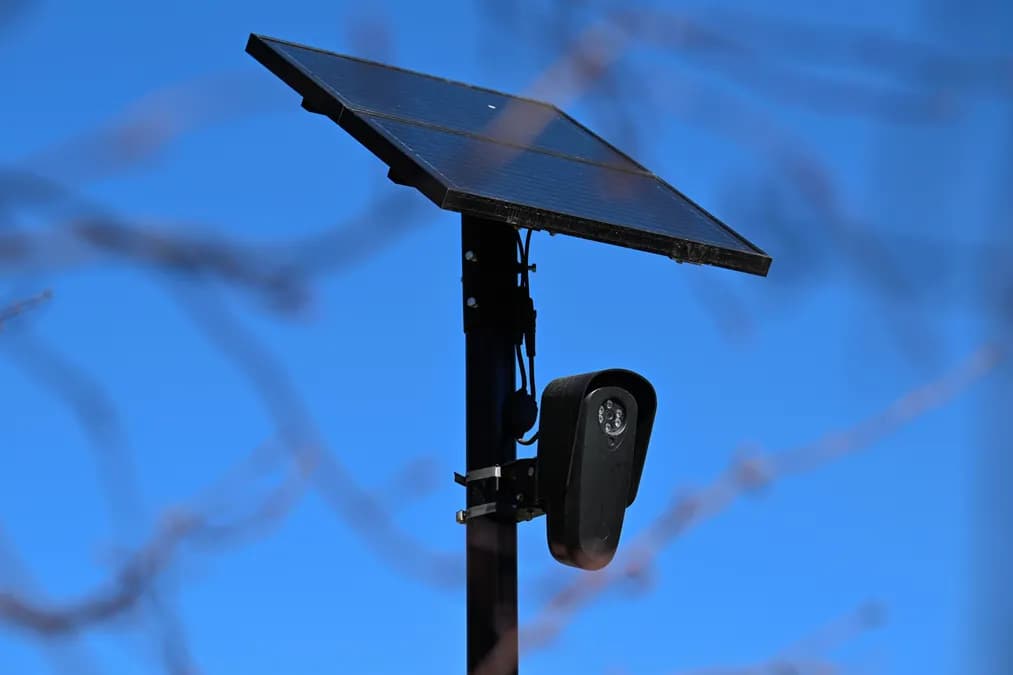
Six cameras. That was the scope of Elgin Community College's initial investment in Flock Safety's automatic license plate reader technology, installed in April 2025 to bolster campus security. The pitch was familiar: a passive, scalable system that could help campus police identify stolen vehicles, flag criminal activity, and respond to emergencies faster. For a community college serving a diverse student population in suburban Illinois, the appeal was understandable.
By September 2025, however, the school's administration had reached a starkly different assessment. College officials had grown alarmed by evidence that Flock Safety was sharing vehicle data with U.S. Customs and Border Protection, that the camera feeds themselves were not adequately secured against unauthorized access, and that law enforcement agencies beyond those the college had explicitly authorized were apparently able to query the system. The school wanted out. Flock Safety, it turned out, had other ideas.
The Elgin situation is not an isolated procurement misstep. It is a window into a much larger tension building across American campuses — between the administrative pressure to deploy visible security technology and the civil liberties consequences of embedding federal immigration enforcement infrastructure into the daily rhythms of student life.
The ICE and CBP Data Connection That Changed Everything

The central concern driving Elgin's reversal was the documented link between Flock Safety's data network and federal immigration enforcement agencies. Customs and Border Protection, an arm of the Department of Homeland Security, has operational jurisdiction that extends well beyond physical borders — it can conduct immigration enforcement activities within 100 miles of any U.S. boundary, a zone that covers roughly two-thirds of the American population, including the Chicago metropolitan area where Elgin Community College sits.
Read next Laika's Wildwood: Stop-Motion Fantasy at TIFF 2026When a license plate passes one of Flock Safety's roadside cameras, the system logs the plate, the timestamp, and the location. Aggregated across thousands of deployments, that data becomes something more than a local security tool — it becomes a nationwide vehicle movement database. The Electronic Frontier Foundation has documented, through public records requests and policy analysis, that Flock Safety's platform enables data sharing among participating agencies through a feature called "Falcon," which allows police departments to query plate reads collected by other jurisdictions. The concern at Elgin was that this network effect extended to federal immigration authorities, meaning a student driving onto campus could, in theory, generate a record accessible to CBP agents conducting immigration enforcement operations.
For an institution that enrolls significant numbers of students from immigrant communities — as many community colleges in the Chicago region do — that is not an abstract risk. It is a direct threat to the trust relationship between the college and the students it serves.
Why Flock Safety Wouldn't Let the College Walk Away
The college's attempt to terminate its contract exposed a structural problem common to many public-sector technology agreements: the terms that govern entry into a vendor relationship are rarely as straightforward as the terms governing exit. Flock Safety, which has built its business model on rapid adoption by local law enforcement and institutional clients, was not prepared to simply release Elgin from its obligations when the college's concerns surfaced.
The precise contractual mechanisms at issue were not fully disclosed publicly, but the pattern is well-documented in public procurement law. Vendors in the surveillance technology space frequently write agreements that include multi-year terms, early termination penalties, and data retention provisions that continue even after a customer relationship officially ends. That means even a college that successfully cancels a Flock Safety contract may not have control over what happens to the historical plate-read data already collected.
Higher-education procurement specialists have long flagged this dynamic as a systemic vulnerability. Institutions often sign technology contracts at the department or campus-police level, without full legal review of data-sharing provisions, third-party access clauses, or the jurisdictional scope of who can query the system. By the time administrators realize the implications of what they've agreed to, the data has already flowed and the exit ramp has a toll on it.
The Broader Pattern: Flock Safety and Immigration Enforcement
Elgin's experience sits within a documented national pattern. Flock Safety has reported partnerships with more than 5,000 law enforcement agencies across the United States, making it one of the most widely deployed automatic license plate reader networks in the country. That scale is precisely what makes the immigration enforcement question so significant — each new institutional client added to the network expands the geographic footprint of a surveillance system that federal agencies can potentially access.
The American Civil Liberties Union has raised specific concerns about how Flock Safety data flows between local police departments and federal immigration enforcement, arguing that the company's inter-agency data-sharing architecture effectively turns local security infrastructure into a tool for immigration surveillance regardless of the stated intentions of individual clients. A school district or community college that installs Flock cameras to manage parking lot security does not necessarily intend to contribute to deportation enforcement. But intent and outcome diverge when the data architecture connects local deployments to a national network accessible by CBP.
The concern is compounded by the camera security vulnerabilities the Elgin administration identified. Improperly secured camera feeds represent a separate but related risk — not just to student privacy, but to the integrity of any data the college might seek to contest or have deleted if a contract dispute escalates.
What This Means for Colleges and Campus Safety Tech Procurement
The Elgin case should function as a procurement audit trigger for every American higher-education institution currently operating, or considering, automatic license plate reader technology. The questions that Elgin's administrators found themselves asking in September 2025 — after installation, after the data had already been collected — are questions that legal and technology officers should be asking before a single camera goes up.
Procurement experts in higher education consistently identify several due-diligence steps that institutions routinely skip under pressure to move quickly on security upgrades. First, any contract for surveillance technology that generates continuously updated location data should require a full data-flow audit: where does the data go, who can access it, under what legal authorities, and for how long is it retained? Second, institutions should explicitly prohibit, in contract language, any sharing of student-related data with federal immigration enforcement agencies, and should require vendors to certify compliance with those restrictions on a regular basis. Third, exit terms deserve as much negotiation as entry terms — including data deletion timelines, termination-for-cause provisions that cover federal data-sharing violations, and explicit limitations on post-contract data retention.
Community colleges in particular face a structural disadvantage in these negotiations. They are often smaller institutions with limited legal staff, operating under public procurement rules that constrain their ability to negotiate freely with vendors. Flock Safety, by contrast, has experience closing contracts with thousands of agencies and has likely encountered and managed objections similar to Elgin's before.
Conclusion: Surveillance Contracts Are Harder to Exit Than to Sign
Elgin Community College's experience with Flock Safety is a case study in how quickly a security investment can become a liability. Six cameras, installed with reasonable intentions in April 2025, had generated enough concern about Flock Safety ICE data sharing by September that the school's administration was actively seeking to exit the relationship — only to find that the vendor was not obligated to let them go cleanly.
The lesson is not that campus security technology is inherently illegitimate, or that automatic license plate readers serve no useful purpose. The lesson is that surveillance infrastructure connected to a national data network carries consequences that extend far beyond the campus perimeter, and that those consequences land hardest on the students — often from immigrant communities — who have the least power in the equation.
Colleges that sign these contracts believing they are purchasing a bounded, locally controlled security tool are, in many cases, purchasing entry into a federal data-sharing ecosystem they did not agree to join. Getting out, as Elgin discovered, is a different matter entirely. The time to read the fine print is before the cameras go up, not when the concerns about CBP data access are already on the superintendent's desk.
Source: The Verge