Apple's M7 MacBook Pro Redesign Arrives Earlier Than Expected
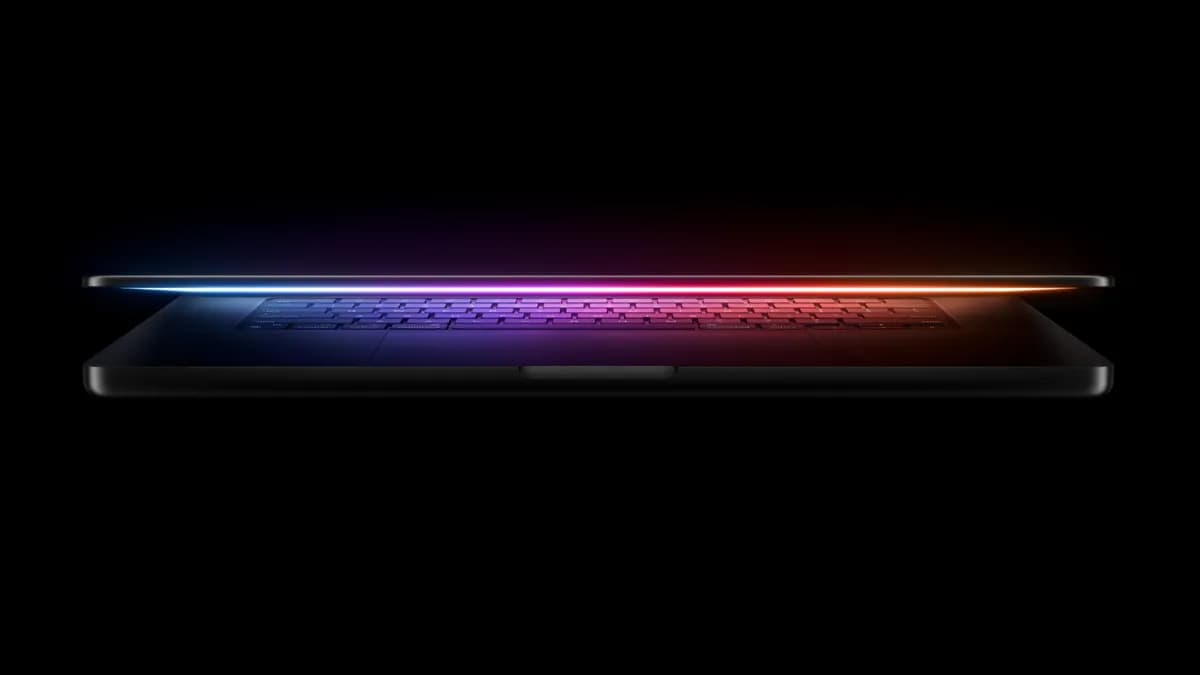
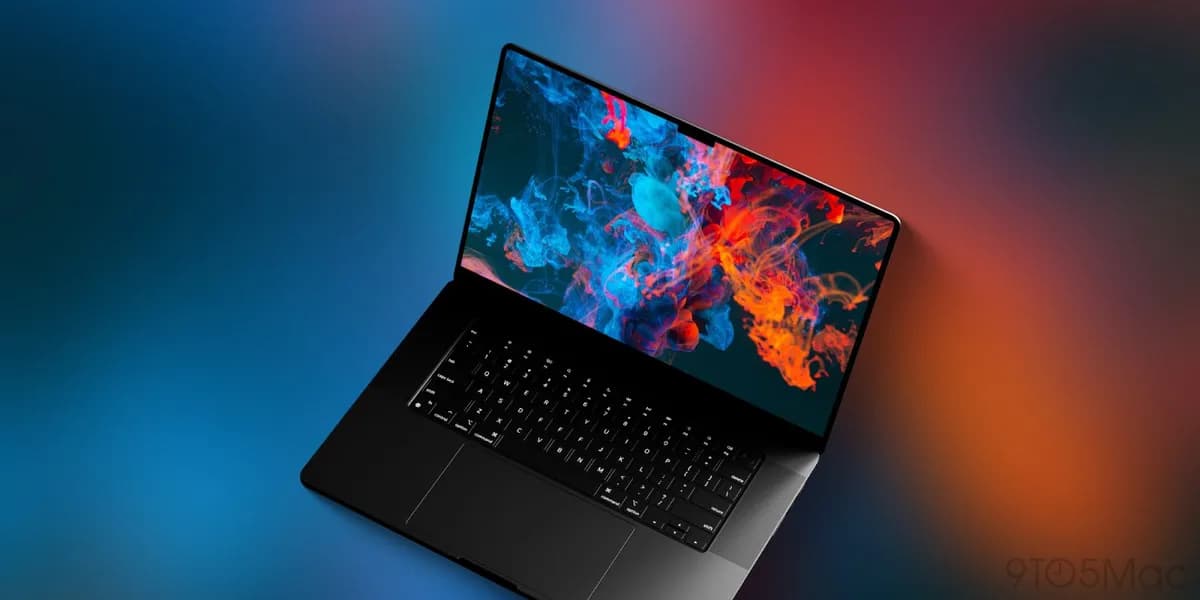
Spring 2027 is shaping up to be a significant moment for Apple's notebook lineup. According to Bloomberg's Mark Gurman — the journalist with perhaps the most consistent track record of reliable Apple reporting over the past decade — an M7-powered entry-level MacBook Pro is on its way, and it carries a detail no one anticipated: a full redesign. Not a spec bump. Not a quiet processor swap. A genuine structural overhaul applied to Apple's most accessible MacBook Pro configuration.
Gurman's reporting on Apple hardware has proven accurate across dozens of product cycles. His advance coverage of the 2021 MacBook Pro redesign, the return of MagSafe, the notched display, and the M1 Pro and M1 Max chips were all confirmed at launch. His Apple Silicon roadmap reporting has consistently landed within a cycle or two of actual announcements. When Gurman says Apple is building something, the industry listens — and right now, he's saying the entry-level MacBook Pro is getting redesigned sooner than anyone's models suggested.
That single word — redesign — is doing a lot of heavy lifting in this story. It changes the calculus for buyers considering a MacBook Pro purchase in the next six to twelve months.
Why the Entry-Level Getting the Redesign First Is Surprising

Apple's design refresh history for the MacBook Pro reveals a clear pattern: the premium configurations get new industrial designs first, and the entry-level catches up later, sometimes much later.
Read next iPhone Duo's Hidden Fake Bezel Setting ExplainedThe 2021 redesign — which introduced the squared-off chassis, the notch, the restored HDMI port and SD card slot, and the dramatic improvement in battery life — launched exclusively on the 14-inch and 16-inch MacBook Pro models powered by M1 Pro and M1 Max. The 13-inch MacBook Pro, the entry-level option at the time, kept its old rounded design and Touch Bar through 2022 before eventually being replaced by the 14-inch M2 MacBook Pro in early 2023. That transition meant entry-level buyers waited roughly 18 months before gaining access to the new form factor.
The 2023 M3 cycle followed a similar logic. Apple prioritized the higher-end 14-inch and 16-inch models with the most powerful chip variations, while the base 14-inch M3 joined the lineup somewhat as a bonus rather than the headliner.
The M7 report breaks that pattern entirely. According to Gurman's reporting from earlier in 2026, the redesign is coming to the entry-level model first — or at minimum, simultaneously with higher-tier configurations. That's a departure worth examining closely, because Apple's entry-level MacBook Pro is not a niche product. It regularly ranks as one of the best-selling premium notebooks globally, appealing to students, creative professionals, and professionals who want MacBook Pro capabilities without paying for the M-series Pro or Max chip variants.
Whether Apple is restructuring its rollout strategy, responding to competitive pressure from Windows on ARM devices, or simply aligning manufacturing timelines differently than in previous years remains unconfirmed. But the signal from Gurman is clear: the standard assumption that entry-level buyers would wait longest for new hardware does not apply in this cycle.
What We Know About the M7 Chip and Spring 2027 Timeline

The M7 chip itself carries no confirmed specifications at this stage. What the industry can reason through is Apple's demonstrated cadence. Apple moved from M1 to M2 in roughly 18 months, M2 to M3 in about 14 months, and M3 to M4 in approximately 12 months. If that pace of annual or near-annual iteration continues, M5 chips are expected to reach Mac products in 2025 and early 2026, with M6 following in 2026 and M7 arriving in 2027 — consistent with the spring 2027 window Gurman reported.
Each generational jump in Apple Silicon has delivered meaningful performance and efficiency gains. The M1-to-M2 transition brought approximately 18 percent faster CPU performance and 35 percent faster GPU performance by Apple's own benchmarks. M3 introduced hardware ray tracing and Dynamic Caching for GPU workloads. M4 pushed neural engine performance further. If historical improvement rates hold — and Apple has been remarkably consistent — the M7 should offer another substantial step in both raw compute and machine learning tasks, alongside likely improvements in memory bandwidth and media engine capabilities for video professionals.
The spring 2027 timeline aligns with Apple's consistent pattern of using its annual spring event window for Mac refreshes. The M3 MacBook Pro launched in November 2023, but Apple has used March and May windows for Mac announcements in multiple recent years. A spring 2027 announcement would give Apple maximum runway from any late 2026 Mac updates and set up the back-to-school and summer creative seasons effectively.
Implications for MacBook Pro Buyers in 2026 and Early 2027
For anyone actively considering a MacBook Pro purchase right now, the Gurman report creates a familiar but genuinely difficult decision point. The current MacBook Pro lineup offers strong performance and the existing design remains functional and premium. But a redesign on the horizon — reportedly less than a year away — changes the equation.
Historically, buyers who purchased the pre-redesign MacBook Pro in 2020 and 2021 saw their machines become visually outdated within 12 months of purchase when the notch-era redesign arrived. Resale values for the older form factor dropped faster than typical Apple depreciation curves. That same dynamic could apply here for anyone purchasing a current MacBook Pro in the second half of 2026.
The practical guidance is straightforward: if the current MacBook Pro meets your needs and timing is pressing — a broken machine, a job requirement, a student starting school — buy now. Apple Silicon performance at any generation remains excellent. If timing is flexible and aesthetics or having the latest hardware matter, waiting until spring 2027 appears warranted based on available information.
There is also the consideration of what the redesign itself might include. Apple's last major MacBook Pro redesign introduced features that became defining — MagSafe, HDMI, SD card slot, improved keyboard, face ID-adjacent camera changes. A new redesign could bring similar functional shifts, not just cosmetic ones. Those features are currently unconfirmed, but the pattern suggests form and function changes tend to travel together at Apple.
How This Fits Into Apple's Broader Mac Roadmap
Apple's Mac business has been one of the company's strongest segments since the transition to Apple Silicon began in late 2020. Mac revenue has grown substantially in the years following that transition, with the professional MacBook Pro line serving as the halo product that validates the entire lineup's premium positioning.
The decision to bring a redesign to the entry-level MacBook Pro early suggests Apple may be thinking strategically about the market for premium Windows on ARM competitors. Qualcomm's Snapdragon X Elite chips and Microsoft's Copilot+ PC initiative have made ARM-based Windows notebooks more credible than they've been in any previous cycle. Apple maintaining a visible hardware advantage at the entry-level price point matters commercially, not just technically.
It also suggests Apple has sufficient manufacturing confidence and supply chain maturity with whatever the new design requires. Earlier redesigns were often limited to high-end models first partly because new manufacturing processes need time to scale. Bringing the redesign to the entry-level — the higher volume SKU — immediately implies Apple has resolved those scaling challenges.
What to Expect When Apple Officially Announces the M7 MacBook Pro
Apple has not confirmed any of the details in Gurman's reporting, and the company does not pre-announce products. What buyers and observers can expect is that Apple will announce the M7 MacBook Pro through its standard channels — likely an online event, a press release, or an in-person product announcement — and that the machine will be available for order within days of that announcement, consistent with recent Mac launch patterns.
The spring 2027 window means an announcement could come anywhere from February to May 2027. Apple has shown willingness to announce Mac hardware outside of major fall events, and the Mac lineup has become increasingly decoupled from iPhone announcement schedules.
The M7 MacBook Pro redesign, if it arrives as Gurman reported, will be among the more consequential Mac updates in several years — not because of the chip alone, but because it would represent the first time the entry-level MacBook Pro has led a design generation rather than followed one. That matters for where Apple positions the product, who buys it, and how the Mac lineup is perceived in a market where Apple Silicon's competitive edge remains formidable but no longer uncontested.
Source: 9to5Mac